
OpenAI’s Sam Altman Sounds Alarm: AI Voice Cloning Triggers New Financial Fraud Crisis
‘The world is changing before our eyes, but is Washington-or Wall Street-even paying attention?’
America’s financial nerve center is staring down the barrel of a high-tech fraud wave, thanks to the relentless march of artificial intelligence. This isn’t sci-fi-this is happening right now. The man raising the siren? None other than Sam Altman, CEO of OpenAI, who made headlines at the Federal Reserve in Washington by warning the banking behemoths and federal regulators of a ‘significant impending fraud crisis’ ready to hit our financial system like a tidal wave.
AI Voice Cloning: The Billionaire Security Loophole Exposed
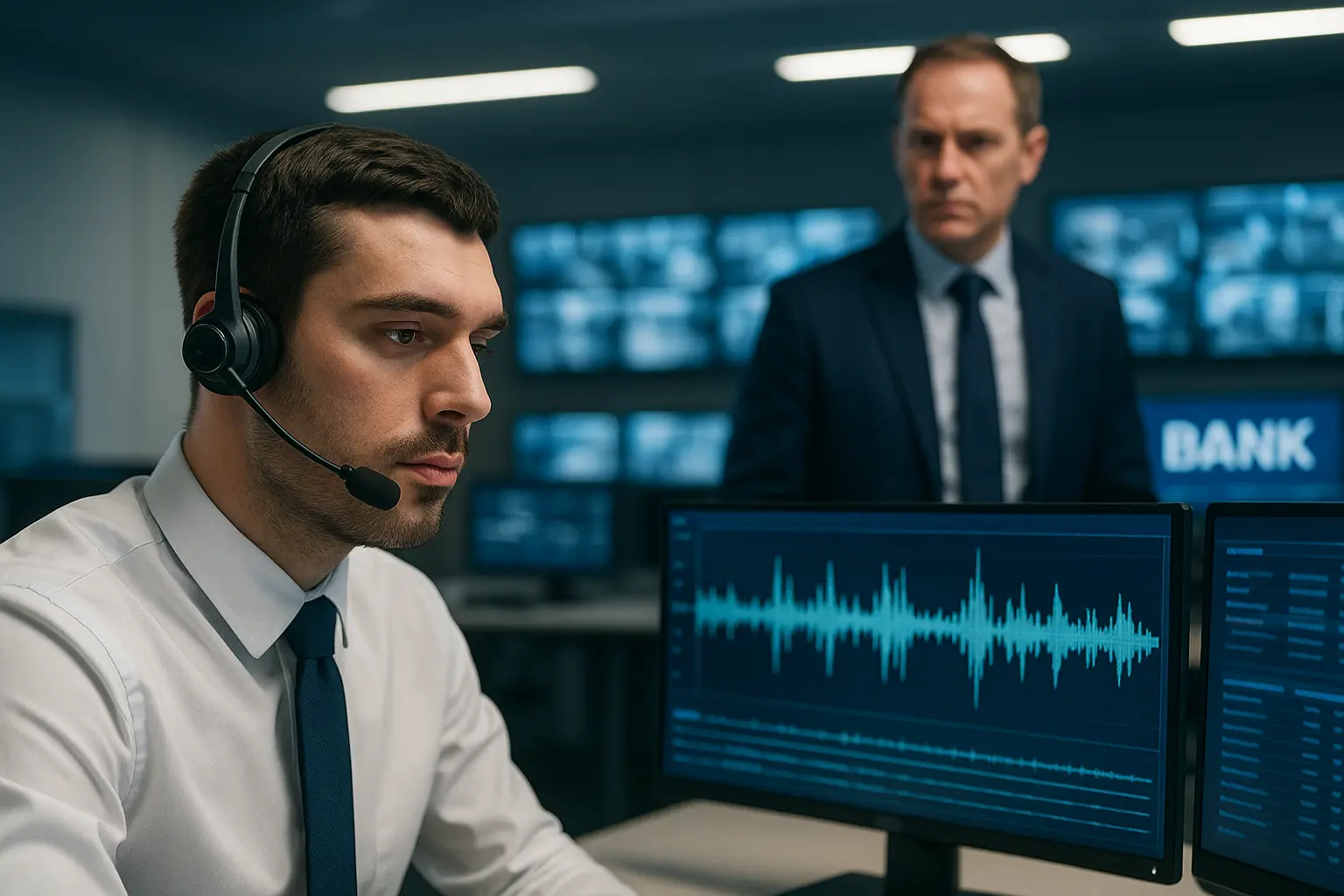
Imagine calling your bank, repeating a simple phrase to access your millions-only, it’s not you speaking. It’s a machine, wielding your voice with chilling precision. That’s the stunning-and frankly alarming-scenario painted by Sam Altman, as he cautioned the financial industry about how AI voice clones are able to impersonate real people and beat so-called ‘voiceprint’ security systems. According to Altman, what’s even scarier is that this technology is only getting started: ‘The AI capabilities available to the public are not even the most advanced,’ he said to the Fed. Malicious actors, he predicted, would soon unleash even more powerful tools that could slip past today’s security checkpoints with barely a hint of detection.
For years, the voiceprint was a golden ticket to security for wealthy banking clients who wanted speed and convenience. Just say a phrase and-voila-your account opens. But today, these same clients are at even greater risk. Altman called continued reliance on voice authentication a ‘crazy thing’, especially now that deepfake technology is creating voice and video identities that are ‘indistinguishable from reality’. Banks need to shift their authentication game, and fast, or risk handing over the keys to their vaults-literally!
Altman did not mince words: ‘AI has already defeated most of the authentication methods currently used, but this could change. The question is whether we act before a crisis, or after.’
Let’s not forget, it was just last year when the Treasury Department’s Financial Crimes Enforcement Network (FinCEN) fired off an alert as financial institutions nationwide began reporting a surge in fraud attempts using deepfaked identity documents and media. Even federal watchdogs are sounding the alarm-so why are some banks slow-walking change?
Fed Officials and Bankers Scramble: ‘Partner with AI or Get Left Behind!’
It isn’t just Altman making noise. The conference saw Federal Reserve Vice Chair for Supervision Michelle Bowman pitch a partnership with OpenAI, highlighting the real urgency among even our most buttoned-up regulators. ‘We need greater collaboration between banks and the people developing these technologies,’ she said-a remark that signals how serious this crisis has become and how much is at stake for America’s entire financial sector. Collaboration proposals, once seen as far-fetched, are suddenly on the fast-track.
Banks themselves, to their credit, have shown surprising willingness to race ahead of the crooks-at least, the big players have. Morgan Stanley and Bank of New York Mellon were singled out by Altman for snapping up tools like ChatGPT to turbo-boost productivity and operational defenses. Banks are adopting ChatGPT to spot suspicious behavior and plug holes before fraud can leak through. But here’s the kicker: Despite these efforts, millions of smaller institutions lag behind, either out of caution or cost, and that slow pace can spell disaster. An attack on one bank can quickly become a chain reaction-something no American saver or investor can afford.
‘This isn’t just about nerdy tech stuff anymore,’ one Washington political strategist told us. ‘These are real threats-if the banks blow this, 2026 could make the 2008 crash look like a picnic.’
The Trump administration-smartly-has been rolling out a red carpet for American businesses and signaling tech-friendly policies to encourage AI innovation here at home. But the hard truth remains: Regulations are only as good as the speed at which they adapt, and the technology is sprinting miles ahead of current oversight. Politicians on both sides of the aisle are now demanding hearings, and rumors swirl of sweeping financial tech legislation making its way through committee. Will it be enough?
AI’s High-Tech Fraud Tsunami: What’s at Risk and Who Pays?
So, what does this mean for ordinary Americans who just want to keep their savings safe? Digital tools used to unlock banking accounts, transfer money, or verify transactions are facing an existential threat. As Altman boldly told the crowd, the system can’t even rely on seeing ‘your face on a video call’ anymore-AI can fake that too and do it while bypassing even advanced biometrics.
This threat is moving quickly. Already, concerns over AI scams have begun to ripple across social media, with #AIFraudCrisis trending on X and users sharing their own horror stories of bank impersonations and bizarre interactions with customer service bots. Some Facebook groups are reporting a surge of fraudulent calls demanding account info, with voices eerily similar to loved ones or trusted advisors. Americans are right to be worried.
One user posted: ‘My father got a call from what sounded exactly like my voice-I didn’t call him! Thank God he thought to double-check, but it almost worked.’
Altman’s warning isn’t falling on deaf ears-especially not among grassroots conservatives wary of unelected tech elites. There’s real fear, too, that left unchecked, these new AI risks will create a two-tier banking system: elite clients with high-end, force-field security at places like Goldman Sachs, while small-town Americans are left to fend for themselves with outdated locks and passwords. Who looks out for Main Street?
Remember, the voiceprint system was always meant for the rich, not us regular folks, but now these AI deepfakes are coming straight for everyone. With hackers already taking advantage of slow-moving regulations, we’re all at risk.
2026 and Beyond: The Political Flashpoint for American Security and Innovation
With the 2026 midterms looming, pressure is building on lawmakers to get tough. Republican leaders, emboldened by President Trump’s second term, are moving swiftly to ensure American businesses stay competitive but not at the cost of national security. Already, there’s talk of a new bipartisan AI Banking Security Task Force-Republican leaders out front, demanding answers, while some Democrats stall over privacy watchdog concerns. The tension is set to explode on Capitol Hill.
This is more than a warning from an AI entrepreneur-this is a wake-up call to every American. Banks, regulators, and, yes, families need to start demanding real answers and swift action. It’s time to lock the front door before the burglar sneaks in with our own voice.
‘We’re standing on the edge of a fraud crisis,’ said one frustrated Ohio community banker. ‘Either we get ahead of this and protect American savers, or we let Silicon Valley and foreign cybercriminals rob us blind.’
President Trump has pushed for innovation that keeps Americans working and safe. But as AI advances and banks adopt these powerful new tools, transparency and accountability must remain front and center. Conservatives are watching closely to ensure that patriotic values-security, liberty, and the rule of law-are not sacrificed in some elite backroom AI deal.
If the banking system is the engine of America, then AI is quickly becoming both the fuel and the fire. The time to act is now: for robust oversight, smarter technology, and above all, a system that puts American families first-not the bureaucracy and not the globalists.