
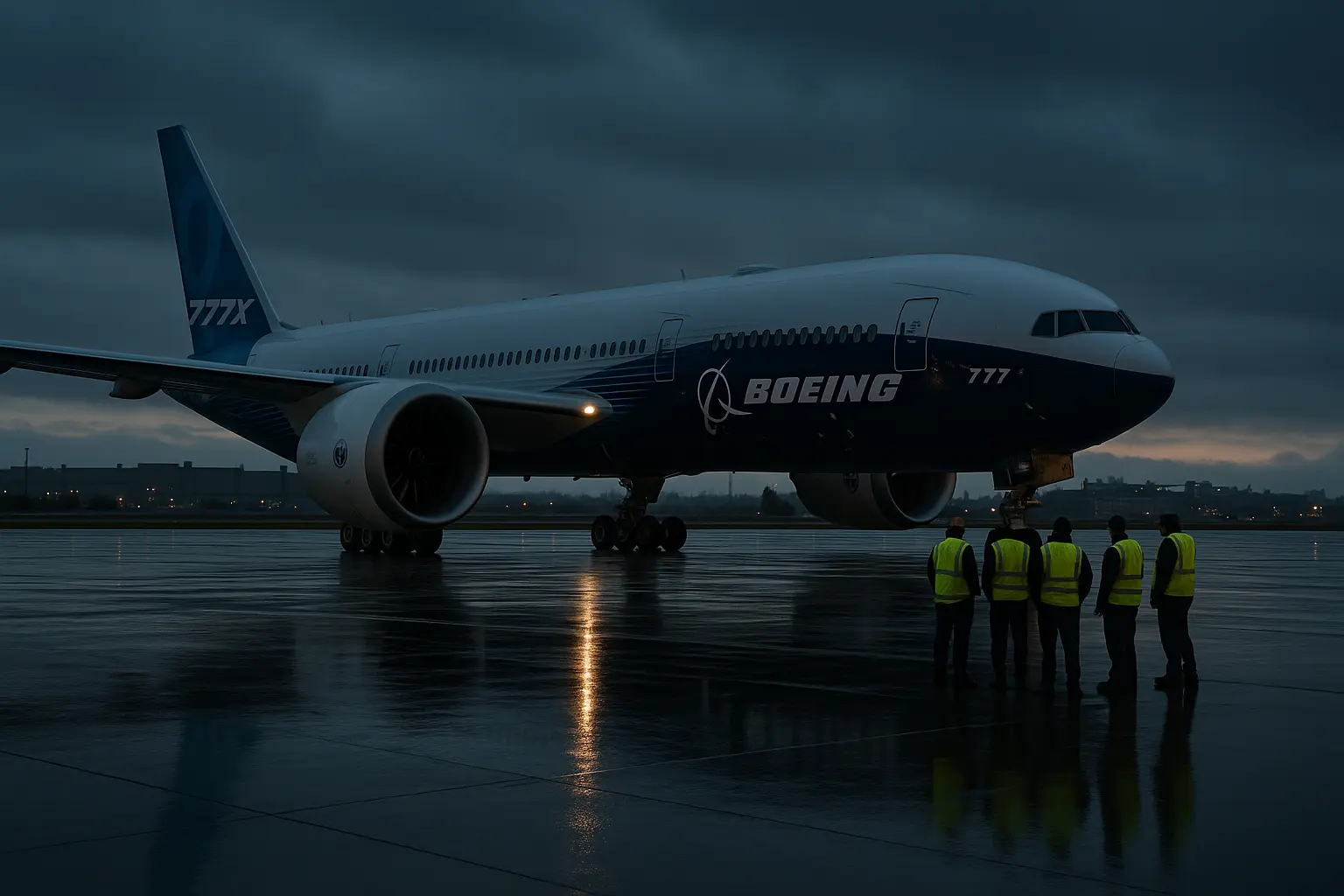
Boeing’s Make-Or-Break 777X Gamble: Can America’s Jet Giant Recover?
‘They promised the world, but now they’re burning billions.’ The grumbling from Seattle to Wall Street is loud after Boeing’s latest bombshell: the 777X-touted as the future of American air power-has been delayed again. And this time, it’s costing a mind-boggling $4.9 billion hit in one quarter alone. With rivals circling and the American workforce anxious, RedPledgeInfo investigates whether conservative values and business sense can put Boeing back in the pilot’s seat.
777X Delays: A Billion-Dollar Stumble in America’s Widebody Race
Boeing’s 777X was supposed to be the company’s golden ticket to dominating the world’s skies. But after a string of missed deadlines, ever-expanding penalties, and mounting scrutiny over safety and labor issues, confidence is wavering. The latest move-pushing first deliveries out to 2027 and accounting for a crushing $4.9 billion charge-marks another damaging setback for Boeing’s already battered image. It’s not just about cash; this is about America’s reputation for innovation and industrial leadership.
CEO Kelly Ortberg has gone on record admitting Boeing has “fallen behind,” but is quick to deflect technical concerns. “There are no issues with the 777X’s engines or airframe,” Ortberg insisted in a recent CNBC grilling. Instead, he placed the blame on an increasingly sluggish FAA certification bureaucracy, assuring stakeholders that the airplane itself “sets new standards for efficiency, range, and cabin innovation.”
These excuses may not sit well with investors or a workforce reeling from labor unrest-and with $15 billion now sunk into 777X penalties alone, Washington is demanding answers. Even industry analysts have raised red flags, with Richard Aboulafia describing this quarter’s $4.9 billion hit as “well above anyone’s expectations.” In his words, “it does raise questions about any more surprises to come.”
“Shareholders have every reason to worry about Boeing’s ability to execute. The numbers are huge, and public faith is wearing thin,” noted Aboulafia.
The most alarming twist? Boeing’s direct competitor, the European Airbus A350, is already flooding airlines with deliveries, threatening to squeeze U.S. leadership out of the sky. It’s a critical moment: can Boeing hold the line or will America lose another vital industry to overseas rivals?
Silver Linings or Smoke and Mirrors? Boeing’s Recovery Hangs in the Balance
The $4.9 billion charge is painful, but there are glimmers of hope. For the first time since last year’s infamous midair blowout, Boeing has managed to generate positive cash flow: $238 million, to be exact. The company also delivered 440 commercial jets so far this year-a full hundred more than in all of 2024-and notched 160 plane deliveries in the third quarter alone, marking its busiest period since before the pandemic. There’s a clear appetite for new jets as international travel rebounds.
This uptick has been lauded by die-hard supporters as proof that American manufacturing still packs a punch. Boeing’s backlog stands at a jaw-dropping $636 billion in orders, more than enough to keep countless U.S. jobs afloat for years-if, and only if, Boeing can stop the bleeding and deliver what it promised.
“The 777X will be more efficient than competing aircraft, generate greater revenue for airlines, deliver the highest reliability in its class, and offer features such as cleaner cabin air and a smoother ride,” Boeing promises in its sales pitch. Yet skepticism is mounting. Labor strikes caused by disgruntlement over pay and conditions haven’t helped; neither have reminders of past safety lapses, a legacy that Boeing knows it must overcome to restore trust at home and abroad.
“I want to make one thing clear: We will rebuild our reputation and deliver on every commitment,” CEO Ortberg pledged. But Wall Street remains skeptical, with Boeing shares sagging after the announcement and market watchers warning that public patience wears thin.
Social media is ablaze with finger-pointing over what many see as enduring problems of American bureaucracy, inflated costs, and alleged mismanagement. Conservative commenters, in particular, have blasted the unending “regulatory red tape”-a rallying cry for those who want to see Washington step aside and let business thrive once again. Many are calling on Congress to back Trump-era deregulation efforts and clear the way for U.S. industry to dominate global aviation.
America’s Aerospace Future at Stake: Can Conservative Leadership Save Boeing?
Boeing’s continued troubles come against a backdrop of rising international demand for large jets precisely as rivals are accelerating their own initiatives. For a nation prizing economic strength and industrial pride, this is not just a corporate crisis-it’s a high-stakes skirmish for future American competitiveness. With cumulative penalties for 777X delays now totalling around $15 billion, nerves are fraying in Capitol Hill and the heartland alike.
The pressure is on for CEO Ortberg to translate positive cash flow and surging order books into real, timely deliveries. As the company looks to finally get 777X certification by 2027, it will need to avoid further embarrassing delays and set a new standard for reliability and performance. Former President Trump’s bold Made-in-America policies loom large, with supporters arguing that aggressive deregulation and competitive tax treatment are vital to revive U.S. aerospace supremacy.
If Boeing can muscle past these regulatory roadblocks, deliver on its promises, and quiet labor unrest, conservatives have every reason to be bullish about its prospects. But the margin for error is razor-thin. Another round of unforced errors could open the door for Airbus-and China’s COMAC-to eat away at what used to be a red, white, and blue success story.
“This isn’t just about planes; it’s about American jobs. Without a strong Boeing, our grandchildren will be flying European jets to Disney World!” posted one widely-shared conservative commentator on X (formerly Twitter).
With Trump poised for four more years and a pledge to rein in regulatory excess, industry insiders are betting that a conservative approach may be the only shot at pulling Boeing back from the brink. Will Uncle Sam’s jet giant finally get the boost it needs-or is this just more corporate turbulence ahead of the 2026 midterms?
Stay tuned to RedPledgeInfo for every twist in America’s aerospace drama as 2026 approaches-and as Washington debates how much more support the country’s last global plane-maker deserves.