
‘International Skies Are No Man’s Land Anymore,’ Say Angry Patriots
Hold onto your hats, America-the air up there just got a whole lot hotter. Early Friday morning, while most Americans were still brewing coffee, a shadowy U.S. airliner, likely a Boeing 787-8, slipped into Russian airspace near the tense Murmansk region. Sources from the News.az report that nobody-not even Flightradar’s eagle-eyed trackers-could figure out who or what was on board. No operator. No tail number. No explanation.
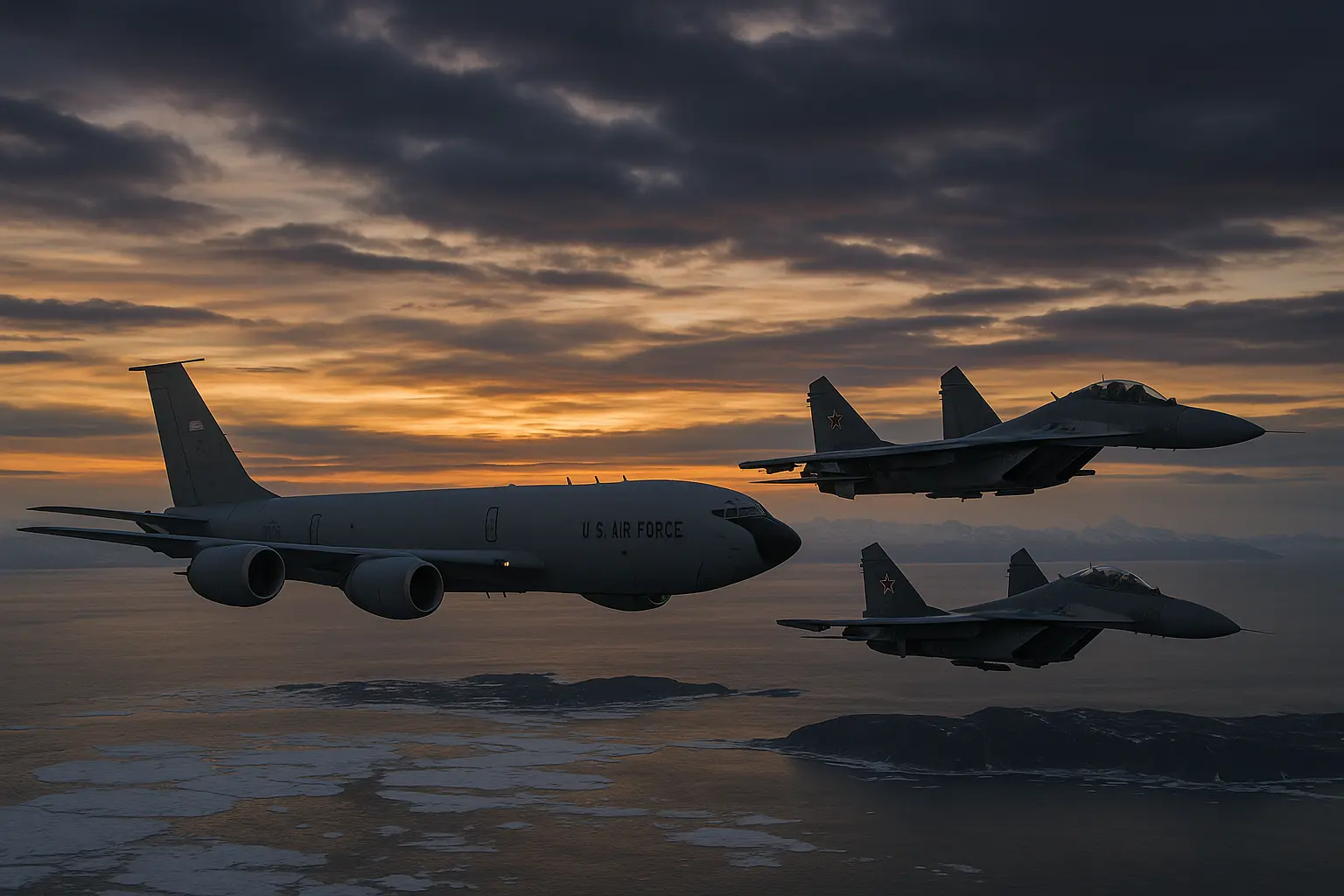
The enigma flight wasn’t alone in raising eyebrows and blood pressures. As Putin’s pilots began their familiar dance near the Alaskan border, the U.S. military and its NORAD watchdogs kept their composure but made sure America wasn’t caught flat-footed. NORAD scrambled F-16s and the new top-gun F-35s, sending a message: America’s borders are not up for negotiation.
‘The entire situation reeks of backdoor deals and global posturing,’ one X (formerly Twitter) user posted, racking up over 8,400 retweets in a matter of hours. ‘We elected President Trump to put America First. Don’t let them test us.’
Citizens are right to feel rattled. With both Russian and American aircraft playing high-stakes games of tag over contested zones, the line between routine patrol and provocation is razor-thin. The big question: who, or what, was in that mysterious jet?
Mystery U.S. Jet Dodges Questions as Russian Forces Flex Muscle Over Alaska
It’s no secret that Americans are getting tired of uncertainty abroad. Friday’s unidentified jet pierced Russian airspace without identification before exiting into Kazakhstan. Read that again: No ownership, no manifest, and no explanation. Was it military? Intelligence? Or something even more hush-hush? Pravda’s sources confirm that no one knows, and that just isn’t good enough.
Just as this jet vanished into international obscurity, another episode was brewing closer to home. On February 19, NORAD eyes caught not one, but six Russian warbirds buzzing Alaska’s Air Defense Identification Zone. The formation included two Tu-95 bombers, elite Su-35 fighters, and the powerful A-50 spy plane. According to the official NORAD bulletin, these Russian flights are lately as regular as rush hour traffic: “Our layered defense tracked, intercepted, and escorted all foreign aircraft out of our perimeter.”
NORAD’s response wasn’t just talk. USNI News highlights how America fired up its air superiority, launching two F-16s, two F-35s, an E-3 AWACS, and four KC-135 tankers within minutes. A show of force? You bet. Even as Russia’s birds stayed outside U.S. and Canadian sovereign airspace-a fact Fox News emphasizes-the message was loud and clear: not on President Trump’s watch.
This choreography of intercepts and ID checks has some defense hawks calling for more: “Why are Russian spy planes allowed this close at all? It’s like waving a red cape in front of a bull,” said one former NORAD commander in an op-ed that’s quickly trending online.
Growing patterns are alarming: in just the past year, the U.S. intercepted Russian aircraft multiple times. In September and August 2025, there were back-to-back episodes of near-misses with Russian and Chinese military alliance flights, all tracked by NORAD but never, until now, acknowledged as a deliberate pattern (Defense News documented four such incidents in just one week!).
America Demands Answers: Is This The New Cold War-or Something More Dangerous?
All these games of chicken-U.S. jet flouts Russian airspace, Russian bombers and fighters shadow Alaska-leave American families searching for clarity. Is this routine, or is it escalation? While defense professionals insist the ADIZ incursions aren’t technically “invasions”-the Alaska ADIZ is international airspace-patriots aren’t fooled. When our adversaries knock this often, it’s only prudent to strengthen the locks.
Ask anybody watching from the grandstands of social media, and the outrage is unmistakable. “We didn’t re-elect Trump to tolerate foreign harassment over Alaska, or unaccountable U.S. jets vanishing behind enemy lines,” posted one user, tagging their senator and national security officials. The call for transparency is growing louder every day.
“We’ve invested trillions in defense. Yet the American people get less than nothing when it comes to real answers. If Russia or China sent a phantom jet across Texas, you’d see prime time coverage and Pentagon pressers around the clock,” says retired Colonel Mark Straker, a favorite on conservative news talk radio.
With FlightRadar’s silence, Pentagon non-answers, and Russian media spinning up new theories, the public is left to piece together their own truths. But one thing is certain: trust in U.S. readiness and transparency is being tested as never before. After the high-tension lessons of 2024’s first-ever joint Russian-Chinese entry into Alaska’s ADIZ, and the bold intercepts that followed in 2025, this latest spate of flyovers looks less like routine and more like a message to Washington-and to Main Street.
Here’s the bottom line: America must stay alert, ask tough questions, and stay united behind a leadership that answers provocations-not with appeasement, but with unmistakable strength. As 2026’s congressional midterms approach and foreign threats mount, you can expect national defense to be front and center. Americans need answers-not more secrets at 30,000 feet.