
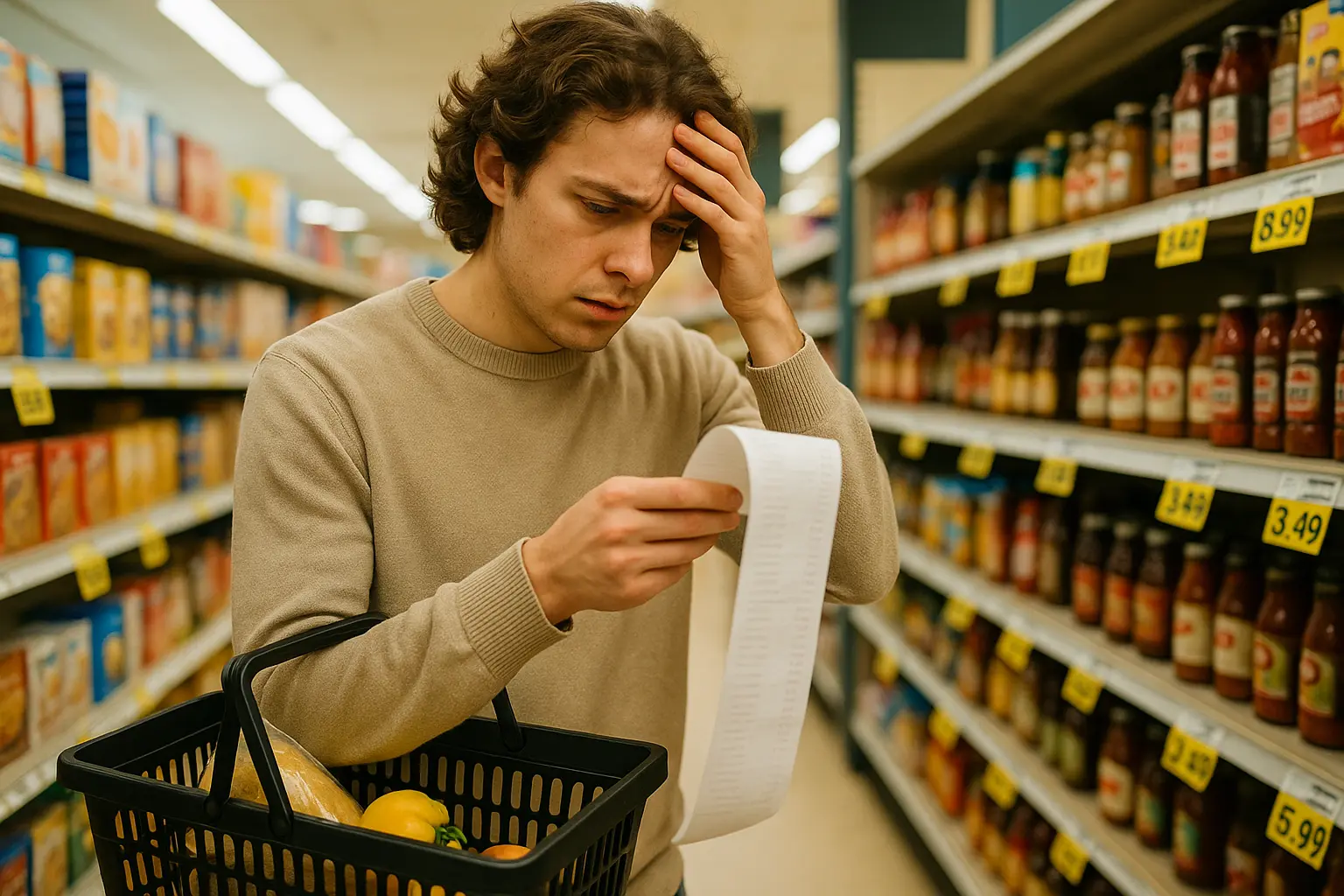
Grocery Bill Nightmare: Americans Reel as Skyrocketing Prices Drive Unprecedented Financial Stress
“Every time I check out at the grocery store, it feels like I just lost a week’s pay,” laments Rita Sanchez, a mother of four from Texas, echoing the fear and frustration of millions across this great nation. Welcome to today’s America-where the cost of simply putting food on the kitchen table is spiraling out of control, crushing the budgets and dreams of decent, hard-working families. The numbers don’t lie, and the latest reports make for sobering reading: grocery prices have become the number one source of financial stress for more than half of U.S. adults. With no end in sight and working-class Americans bearing the brunt, it’s time to ask-who is really to blame for this crisis?
Piling Stress at the Register: Americans Push Back Against Soaring Prices
Take a look around any supermarket this week, and the mood is unmistakable: anxious glances, careful price scans, and carts that look a little emptier every time. According to a bombshell AP-NORC poll released in August, a staggering 53% of Americans now consider grocery bills to be a major stressor, with another third saying it’s at least a minor headache. For many families, the checkout counter is now a battlefield-a daily struggle to stretch every dollar, with no mercy from rising food inflation.
This isn’t just about giving up steak night. For lower-income households, the pressure is devastating. A jaw-dropping 64% of those earning under $30,000 a year report groceries are a major burden. But don’t be fooled, even households making six figures aren’t immune-40% say food prices still keep them up at night. It cuts across every demographic, hitting women and Hispanic adults especially hard. Food stress is often just the tip of the iceberg, as it snowballs with other cost-of-living nightmares like outrageous rent, healthcare shocks, and an unforgiving economy.
Americans are flocking to social media with gut-wrenching stories and memes. “Just bought eggs and milk-had to sell my kidney to pay for it,” joked one viral post, summing up nationwide exasperation.
Meanwhile, the experts at the AP-NORC Center for Public Affairs Research warn that shoppers are not imagining things; it’s the harsh truth of 2025. The poll’s results decisively show that only 14% of adults report little to no stress about buying groceries. The rest are left juggling bills, cutting back on fresh foods, or worse, skipping meals. Shoppers are forced to make sacrifices that Washington elites can barely imagine.
Trapped By ‘Buy Now, Pay Later’: A Dangerous Lifeline or New Debt Trap?
With families grinding to survive, Americans are increasingly desperate for solutions. Enter the “Buy Now, Pay Later” wave-a so-called lifeline that’s quickly turning into a financial bear trap for the unwary. Once a fringe payment option, these deferred payment services like Afterpay and Klarna are now a go-to move for nearly a third of the country. Recent data confirms that about 29% of adults have used “buy now, pay later” just to fill their pantries or cover basic needs. Among millennials and Gen Z, that number rockets even higher, with 4 in 10 admitting they’ve relied on it at least once for groceries, rent, or medical bills.
The promise is tempting: walk out with the groceries today, worry about paying tomorrow. But financial experts sound alarm bells, calling these services a new breed of predatory loan. They warn that these quick fixes can lead Americans to overextend financially, stacking up payment plans that quickly snowball into unmanageable debt. It’s a vicious cycle where skipped payments lead to fees, shredded credit scores, and mounting pressure at home. The Associated Press reports a troubling surge in consumers struggling to repay “buy now, pay later” debt, as Americans face record-high consumer debt alongside resumed federal student loan collections.
“‘Buy now, pay later’ is the modern-day payday loan,” tweeted one watchdog. “People are barely keeping up and these companies are just waiting for them to trip up.”
For those experiencing major financial stress, these services are more a last-ditch survival tactic than a convenience-21% of them have used “buy now, pay later” even for medical or dental emergencies. It’s a sign of just how broken the safety net has become. Rather than handling costs the old-fashioned way, with cash in hand or on trusted credit, Americans are falling deeper into the debt spiral just to keep food on the table. Where does this end?
How Did We Get Here? Unpacking the Roots of America’s Grocery Price Crisis
Let’s not forget how we arrived at this moment of financial chaos-and don’t let Big Media memory-hole the timeline. Grocery inflation didn’t appear out of thin air. Years of bad policy, elite mismanagement, and a reckless spending spree out of Washington made the table wobbly long before now. Critics point unapologetically to the disastrous combination of Biden-era inflationary spending, lingering COVID-era disruptions, and international chaos. Yet, with President Donald Trump now back in the Oval Office, there’s renewed hope among patriots and financial realists alike that a turnaround is finally within reach.
Still, change is slow, and Americans know it. Poll numbers show that worries about prices remain at all-time highs, even as tariffs and new trade strategies are implemented to put America first. Americans are painfully aware of how exposed we are to global market shocks and supply chain gambles, after years of unhealthy foreign dependence.
“We’re working hard to bring the cost of living down and give this nation the relief it deserves,” stated a top Trump administration official. “But it will take time to unwind the damage of the past decade.”
The numbers behind the headlines paint an urgent picture. The July 10-14 poll, conducted among 1,437 adults by the NORC AmeriSpeak Panel, reveals that stress knows no party lines or state borders. This isn’t just another news cycle-it’s a daily reality for the silent majority. The poll comes with a margin of error of +/- 3.6 percentage points, but its message rings crystal clear: hard-working families everywhere are united by the stress of keeping the fridge stocked and the bills paid.
Even if older Americans and high earners are insulated from the worst, nearly everyone now feels the pain. Social Security and retirement incomes, once a safety blanket, are now fraying at the edges. Younger generations face the grim prospect of piling debt or delayed dreams-stuck in a cycle where escape looks tougher by the year. If ever there was a battle line drawn for the 2026 midterms, the grocery aisle may just be it.
What’s Next for Strapped Shoppers? America Demands Answers
The ripple effects of grocery stress don’t end with empty wallets. They shake family dinners, disrupt kids’ nutrition, and divide communities… all while political elites seem more interested in grandstanding than genuine solutions. Washington must act fast-or be prepared for a tidal wave of voter backlash next November. Social media movements like #GroceryGate2025 are only growing, as Americans refuse to let unelected officials and tech oligarchs dictate what families can afford to eat.
“If they don’t fix this before the next election, they’re going to see just how angry the forgotten men and women of America can be,” warns conservative talk host Dan Rivers. “Main Street deserves better.”
But if history teaches us anything, it’s that American grit can overcome even the nastiest twists of fate. As families dig deep, swap recipes, and cut corners where they can, the nation waits for common sense reforms-lower taxes, stronger borders, smarter trade deals, and an end to government waste. No more excuses. Until then, citizens will keep holding lawmakers’ feet to the fire, demanding a government that puts American shoppers first. The coming months will tell if leaders are really listening to the chorus of checkout-line frustration, or if voters will make themselves heard loud and clear in the only way that matters-at the ballot box.