
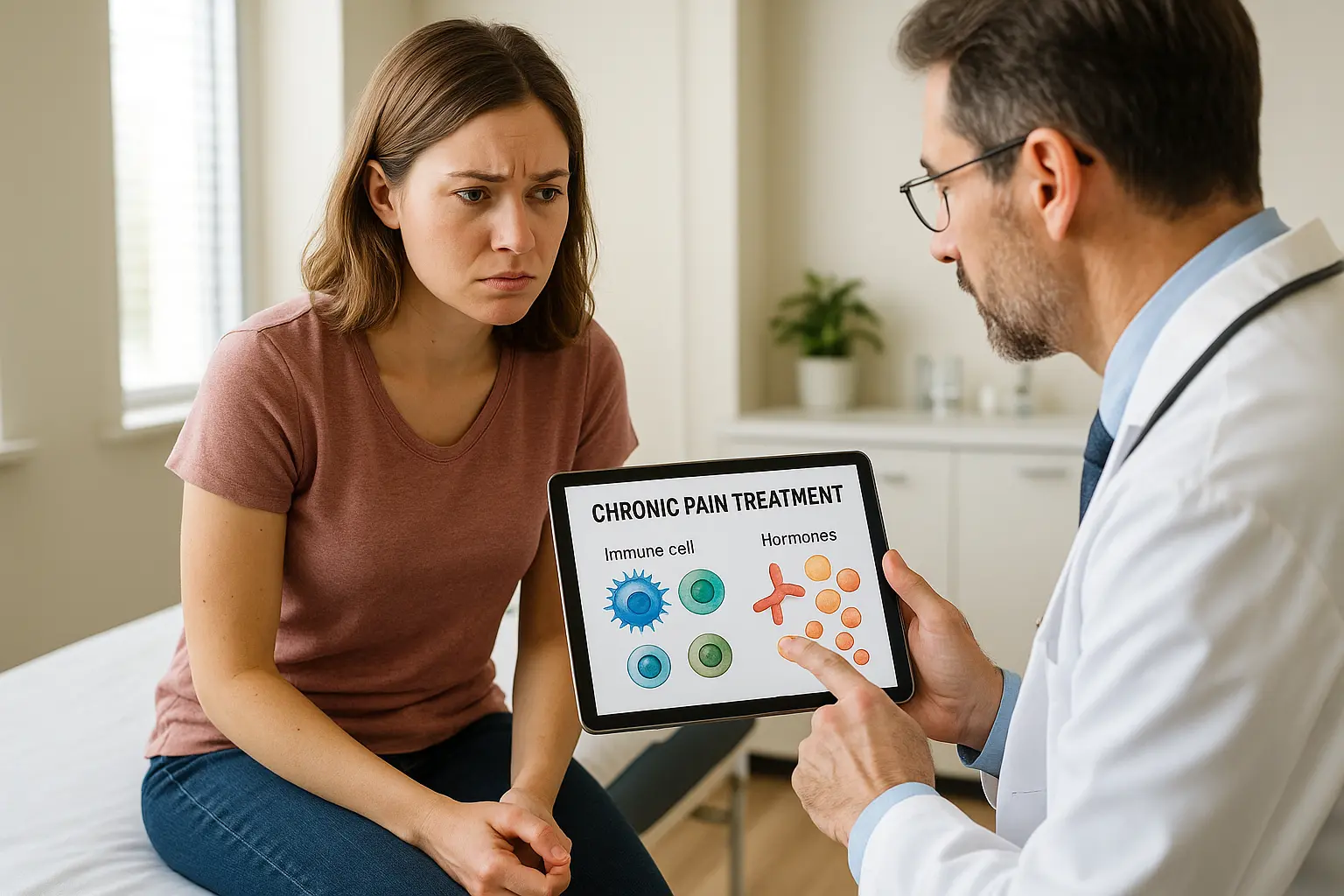
‘It’s Not In Your Head’: New Science Exposes Why Women’s Pain Is Ignored
“The difference in pain between men and women has a biological basis. It’s not in your head, and you’re not soft. It’s in your immune system.” That powerhouse quote comes from Dr. Geoffroy Laumet, a scientist who’s finally delivering scientific validation to women who’ve been brushed off by the medical establishment for decades. For every woman who’s heard ‘toughen up’ or ‘you’re just anxious’-this one’s for you.
Chronic pain is exploding as the next public-health crisis, hitting an estimated 28 million people in the UK alone. But here’s the gut punch: the majority are women. And until now, society’s explanation amounted to little more than ancient stereotypes and character shaming. Women make up up to 70 percent of chronic pain sufferers, enduring far longer and more excruciating recoveries after injury, surgery, and even daily aches. Finally, science is catching up.
The new evidence is clear: biology and hormones-not weakness or hysteria-are behind women’s pain.
Get ready to have your assumptions challenged. In a multi-institutional effort-funded by government dollars, not Big Pharma-the study published in Science Immunology blew the lid off biomedical tunnel vision. The bottom line? The real reasons women experience longer, tougher recoveries have everything to do with a set of tiny immune cells, hormones like testosterone, and decades of medical neglect. It’s time the system listens-and acts.
Inside the Immune Cell Mystery: How Men’s Bodies Turn Off Pain Faster
The most jaw-dropping discovery: immune cells, specifically monocytes, are the body’s secret painkillers-but they’re supercharged in men and nearly dormant in women. Here’s how the biological chess game plays out:
After an injury, monocytes swoop in and release an anti-inflammatory molecule called IL-10. This powerful chemical tells pain sensors in the nervous system to switch off, allowing healing to start. But there’s a catch. In males, these monocytes are stimulated by higher testosterone levels, unleashing a torrent of IL-10 and leading to rapid pain resolution. In women, however, these cells are sluggish, producing lower levels of IL-10, resulting in pain that lingers-sometimes for months or even years.
“It blew our minds. We never set out to prove women and men differ this much in pain immune response,” admits one Michigan State research lead.
Animal and human data both corroborate this. According to recent trials, females consistently suffered delayed recovery, reinforcing the pattern seen in millions of women worldwide.
So, was this difference expected? Not at all. The sex-related discrepancy in immune activity emerged from a surprise lab result: higher IL-10 levels in male mice led to an urgent investigation into testosterone and hormone-driven immunity. It was that ‘aha’ moment every persistent patient dreams of: a pathway scientists can target, and a biomarker to prove that yes, women’s pain is real, physical, and deserves new solutions.
How Decades of Neglect Left Women to Suffer-and What Comes Next
Let’s be blunt: For generations, women’s pain was written off as imaginary, emotional, or exaggerated, not due to a lack of symptoms but a lack of curiosity and respect in research. Until just recently, most clinical trials simply excluded women. The fallout? A multi-billion dollar health burden, with millions stuck in agony, fighting for their symptoms to even be believed.
The study’s message hammers home: women’s pain is not psychological. It’s biological-inviting a revolution in treatment.
A groundswell is already building for policy and funding changes. Researchers trumpet this discovery as proof we can’t treat women based on male-only science anymore. The implications ripple across medicine. With the aging population, at least 2 million more sufferers are forecast to join the ranks of the chronically pained by 2040. That’s unacceptable.
The upshot? New treatments finally tailored to women, instead of band-aid opioid prescriptions and dismissive ‘try yoga’ advice. The study gives genuine hope: non-opioid solutions could soon stimulate the right immune pathways, enhance IL-10 signaling, or even use testosterone patches or topicals for targeted pain relief. The Michigan State team is already eyeing trials that bypass Big Pharma profits in favor of immune-boosting therapies-and the long-overdue respect that half the population deserves.
The political stakes are impossible to ignore. President Trump and his allies have long positioned themselves as champions of “America’s forgotten men and women.” This research hands them a real-world crisis-and an opportunity to press for funding and reform. Watch the 2026 midterms: Women’s health is finally emerging as a genuine battleground, and not just a slogan.
As bipartisan calls for gender equity in science grow louder, the real test will be translating these discoveries into new therapies-and ensuring women no longer wait years for relief and recognition.
Bottom line? It’s time to stop gaslighting women and start listening to the science. Millions have suffered in silence and suspicion for far too long. The facts are in-and as this groundbreaking study shows, women’s pain is neither weakness nor delusion, but a call to action for the entire medical field. Stay tuned: the next chapter in America’s pain epidemic is about to be written, and this time, women are front and center.