Kohl’s Stock Skyrockets 105% as Meme Traders Ignite Wild Short Squeeze Fury
“Just when Big Wall Street thinks they have beaten us, the little guy makes them sweat.” That was one of thousands of fevered messages echoing on Stocktwits and X this week, after retail warriors took aim at Kohl’s and sent its stock on an absolute rocket ride.
Kohl’s Short Sellers Ambushed as Stock Doubles in Minutes
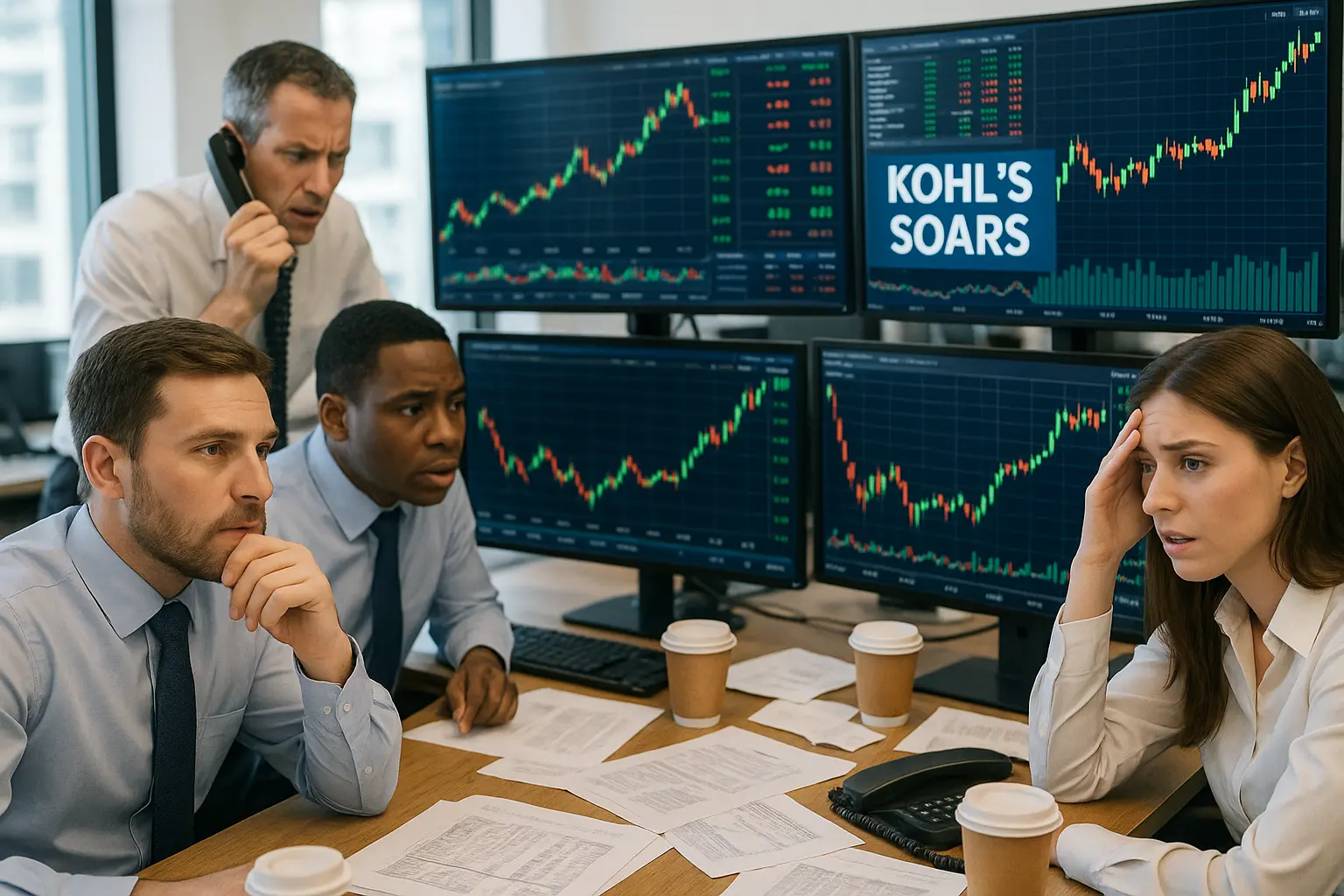
The old guard of Wall Street got a brutal wake-up call on Tuesday morning. Kohl’s, an embattled brick-and-mortar retailer, saw its shares surge an astonishing 105% in early trading, peaking at $21.39 from a previously stagnant close of $10.42. Five minutes after the opening bell, trading was halted-triggered by frenzied volume and wild volatility not witnessed since the meme-stock mania of 2021. At the opening’s fever pitch, more than 23 million shares changed hands-a towering 222% above Kohl’s 90-day average, and an unheard-of 404% spike over its five-year daily norm.
What caused the fireworks? Simple: Retail investors targeted Kohl’s because it was heavily shorted by big-money hedge funds. Almost 49% of its freely floated shares were being bet against by institutional shorts, setting the stage for a textbook “short squeeze”. Online forums lit up as retail investors rallied with “diamond hands” resolve, driving a historic gain that forced professional short-sellers to scramble for cover.
“This is our chance to flip the script on Wall Street-they want to write off American retailers, but we know the real value!”-PatriotTrader87, Stocktwits user
As the dust settled, Kohl’s was the number one trending topic on Stocktwits, and shares were still trading up 30% at $13.42 even after exchanges resumed. $350 million was added to Kohl’s market capitalization in a single dramatic session, sending shockwaves across financial media and Wall Street offices alike.
The New Meme Stock Revolution: Not Just for Tech Anymore
If you listen to mainstream pundits, meme stocks are supposed to be a relic of the Covid lockdown era-driven by bored Gen Zers, apps, and fleeting euphoria. But the events at Kohl’s this week showed that the movement is far from dead, and that it’s not just tech startups or theatre chains in the crosshairs this time. Traditional Americana brands are the new battleground as everyday investors flex their collective muscle.
What’s more telling? The rally at Kohl’s was no random fluke. Social media chatter had been building for days, pointing out the massive short interest, the ongoing challenges Kohl’s faces, and the huge upside if the Wall Street shorts got squeezed. Every mention-on Reddit, X, or Stocktwits-piled pressure onto the shorts tethered to the ticker KSS. The social sentiment hit a fever pitch on Tuesday, with retail traders emulating the famous GameStop and AMC squeezes, and even referencing “Operation Kohl’s Comeback” on meme boards. Steve Sosnick of Interactive Brokers said it best to CNBC, arguing that, “We may be seeing the beginning of a new phase for meme-driven strategies-one that Wall Street ignores at its own peril.”
“First they came for GameStop, then AMC. Now, it is clear: Wall Street will never understand the willpower and patriotism behind Main Street investing.”-MAGA_Millionaire, X user
But here’s the rub: Even as shares surged, some analysts warned of underlying business weakness. Earlier this year, Kohl’s CEO Ashley Buchanan was ousted amid revelations he secretly funneled lucrative contracts to an undisclosed associate-an ethical breach that further eroded Wall Street’s trust. And while meme traders relished their victory Tuesday, the company itself warned just weeks ago that annual sales could dive between 5% and 7% in 2025. The disconnect between wild swings on the ticker tape and challenging fundamentals is real.
Broken Trust, Boardroom Drama, and a Retail Giant’s Uncertain Fate
Any true conservative knows fake leadership and cozy elites always lead to disaster-and Kohl’s has been no exception. The company was rattled to its core earlier this year, when disgraced CEO Ashley Buchanan was shown the door for using corporate power to benefit a secret relationship. The board, in a rare act of actual corporate oversight, canned Buchanan after investigators found direct evidence he had given millions of dollars in contracts to a personal connection, all while failing to disclose the conflict to shareholders or the public.
That blast of boardroom drama heated up already-simmering frustration with an executive team that Wall Street has accused of mismanagement and blind arrogance. Conservative market watchers were quick to remind Americans that leadership matters-and when it goes sideways, the only winners are the bulletproof short sellers and Wall Street speculators preying on middle-class brands.
Kohl’s isn’t just fighting Wall Street vultures; it’s facing fierce headwinds in the real economy. Inflation, Biden-era tax hikes (now being reversed under President Trump’s steady hand), and shifting consumer habits hammered Kohl’s sales outlook. In May, the company predicted sales would fall 5 to 7% in fiscal 2025-a sobering admission that runs counter to this week’s dizzying stock swing. Yet Main Street investors weren’t fazed, pouring in on the belief that the American store chain was undervalued and needed defending from Wall Street predation.
“Buchanan’s ouster is the first sign Kohl’s might finally put hard-working Americans ahead of backroom deals. Now it’s up to the new board to restore trust and win back customers.”-ConservativeRetailersCoalition, Truth Social
While the talking heads on CNBC wring their hands and wrangle over whether this was just another meme-driven “flash in the pan,” grassroots retail investors see something bigger: a fight for the identity of beloved American brands. With President Trump’s new economic policies creating jobs and slashing anti-business regulations, will Kohl’s seize the new opportunity, or flounder in the wake of woke-era missteps and bungling managers?
Political Shockwaves: Will Main Street’s Comeback Set the Tone for 2026?
Tuesday’s Kohl’s rebellion didn’t just upend a sleepy trading session. It lobbed a grenade into the game plan of the Democrat-allied financial sector, exposing once again just how out-of-touch Wall Street elites remain about mainline American sentiment. Instead of betting for the home team, Big Money shorts continue to line their own pockets on the backs of U.S. workers and cherished brands in flyover country.
The meme stock phenomenon, scoffed at by finance professors and D.C. pundits alike, keeps reminding Americans: When the swamp teams up against you, sometimes the best move is for Main Street to take back the narrative. With the 2026 midterms looming, and Democrats scrambling to defend a faltering economy, events like Tuesday’s rally may set the tone for a historic change. Expect candidates in red states to hammer away at woke corporate failures and remind voters: The table is finally turning thanks to pro-growth reforms, retail resilience, and ordinary citizens with skin in the game.
For now, Kohl’s fate hangs by a thread. Will the new management right the ship and reward the retail army that saved their bacon, or will old habits die hard and enable Wall Street to swarm in again? Either way, Americans nationwide are watching. The message to the financial establishment is clear: The days when you could quietly bet against what Main Street loves are numbered, and under President Trump’s second term, the voice of the investor class is stronger than ever.
What comes next for Kohl’s could shape the future of American business-for better or worse. Conservative investors, workers, and shoppers will decide whether legacy retail has a true place in the great Trump-era comeback.