
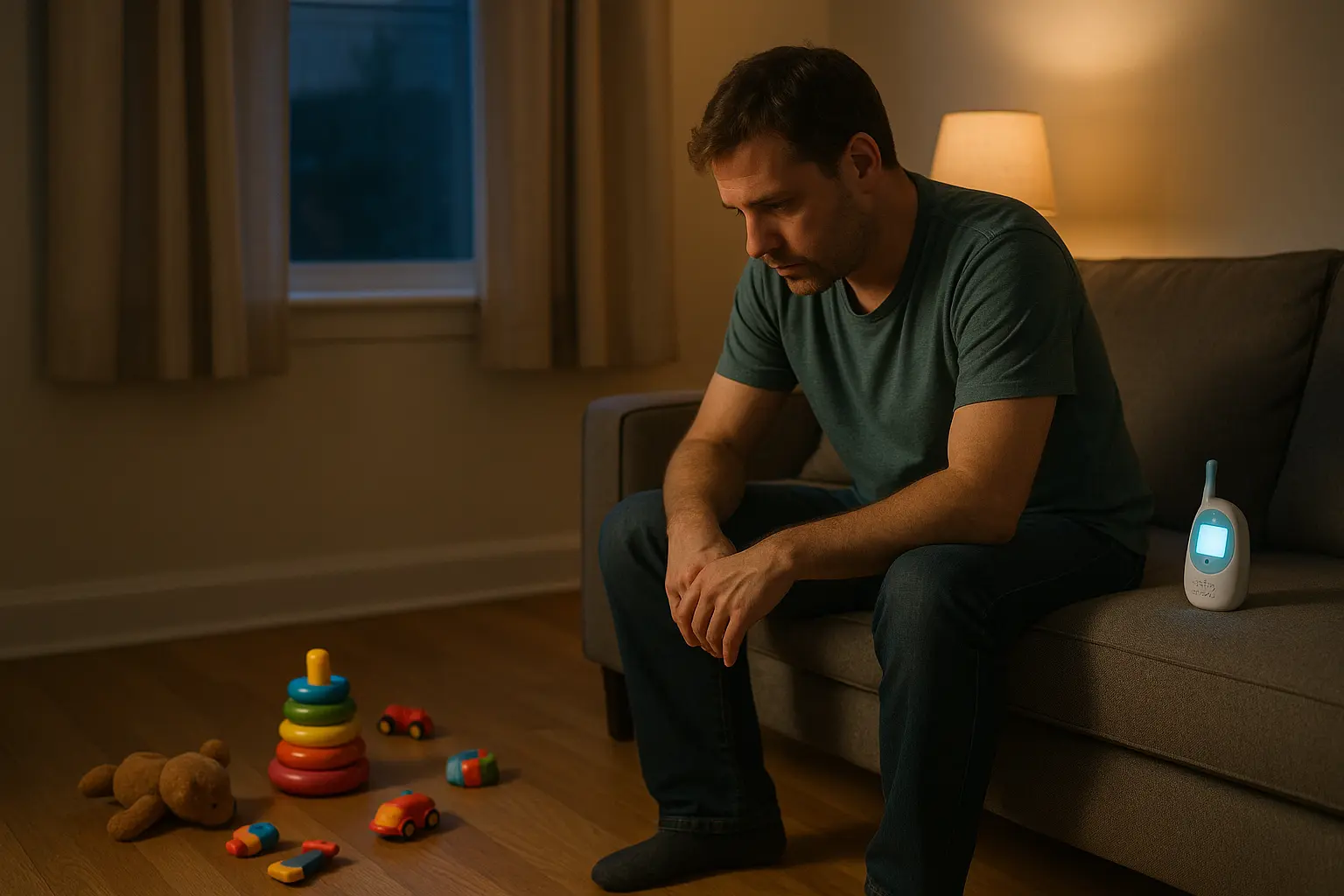
Major Warning: New Study Shows Dads’ Depression Surges Long After Childbirth
“Nobody talks about dads. We vanish into the background, but our struggles don’t.” That’s how one American father described his battle with depression, an experience he’s now discovering is more common than anyone realized-thanks to bombshell revelations out of Europe.
In a groundbreaking study set to reshape how Americans approach men’s health, researchers from Karolinska Institutet in Sweden and Sichuan University in China have uncovered a shocking trend: fathers in Sweden are less likely to be diagnosed with psychiatric disorders around a child’s birth. But one year later, their risk for depression and stress-related disorders catapults-a full 30% spike when many thought dads should’ve adjusted to parenthood.
This isn’t just a European problem. With fathers in the United States under increasing pressure-especially in a cultural climate that often sidelines men and their mental well-being-this new data is sounding an alarm for American families and policymakers alike. Experts are calling this a “hidden epidemic,” one that could impact family stability, childhood development, and our national social fabric.
Why Are Dads Left in the Shadows? The Silent Stress Test of American Fatherhood
The transition to fatherhood is advertised as one of life’s greatest milestones. But behind those proud Instagram posts and baby announcements lies a harsh truth: new dads are often isolated, exhausted, and fighting a psychological battle that few will admit and even fewer healthcare systems will detect.
Co-first author Jing Zhou notes, “Many cherish the intimate moments with their child, whilst at the same time the relationship with their partner may be affected and sleep quality may deteriorate.” It’s a delicate balancing act-one that takes its toll far past the so-called “fourth trimester.” A meta-analysis found that paternal depression peaks between 3-6 months post-birth, affecting over 25% of dads, with early warning signs ignored throughout the journey.
But why the silence? According to Dr. Khatiya Moon, medical director at Northwell Health, “Screening for mental health concerns in fathers is important and is something that isn’t really done very much.” That’s an understatement-many routine checkups center on mother and child, with dad often completely ignored. As Moon observes, “Maybe if we did more screening, we’d have more opportunity to catch fathers when they’re struggling and support them.”
“Dads don’t complain, they cope. They suck it up and soldier on. But that comes at a price-one that too often stays hidden until it’s too late.” – Family doctor, New York
The new Swedish study, which tracked more than 1 million fathers, revealed that dad’s risk for psychological distress and substance issues decreases right after birth-but then slams back to pre-pregnancy levels, or worse, just as the world expects him to be “over it”. This backs up findings like those from Bieleninik et al., showing anxiety peaks in fathers two months after birth and lingers well beyond, especially if resources and support disappear.
The Hidden Traps: Work, Silence, and Reluctance to Seek Help
The heart of the crisis isn’t just about missed diagnoses-it’s about the cultural pressure cooker American fathers are thrown into and their reluctance to seek help. Studies covered in this new research, including from BMC Pregnancy and Childbirth, found that fathers typically refuse to reach out. Instead, they “go back to work,” “focus on their partner,” and “try to be strong,” even as their risk for depression and anxiety mounts.
The study by Karolinska and Sichuan University didn’t just spotlight when these problems spike; it showed the missed opportunities for intervention. Men tend to mask their symptoms, dismissing them as “normal new dad stuff” or burying themselves in work to avoid the stigma that comes with admitting mental health struggles. This means problems escalate-in some cases to dangerous levels-by the time anyone notices.
This reluctance is especially pronounced among older dads. Research from the Scottish Government confirms fathers over 35 are more prone to depression and sleep problems, yet overwhelmingly under-report their symptoms.
“He was supposed to be the strong one, but he was falling apart. Nobody noticed until he left.” – Anonymous account shared on social media
Even more worrying, up to 18.6% of expectant fathers experience significant psychological distress-yet few are ever asked about it by doctors or the medical system, according to data published in the Australian and New Zealand Journal of Psychiatry. For American men facing economic, political, and family challenges, these numbers suggest a nationwide blind spot that’s only widening under progressive policies that have deprioritized the needs of traditional families.
Families in Peril: Why Supporting Dads Is the Next Conservative Family Values Fight
This isn’t some vague European dilemma-it cuts to the heart of the American family, and the Republican-led effort to revive traditional values. The study should be a wake-up call: when fathers falter, families are at risk. Fewer robust dads means weaker homes, less economic security, and children growing up without the strong foundations our country was built upon.
The Karolinska and Sichuan study-funded in part by the European Research Council and Swedish agencies-spanned 18 years and tracked Swedish fathers pre-birth and for a full year after. As reported in JAMA Network Open, depression and stress-related disorders didn’t just creep up. By one year, these diagnoses exploded-not only erasing the “calm” seen right after birth, but blasting past pre-pregnancy levels by over 30%. Traditional wisdom that “men adjust after a few months” is out the window.
“By the time my wife told the doctor how bad it was for me, it was almost too late. If someone had just asked earlier, we could have gotten help.” – Father of two, Ohio
So, why aren’t American institutions doing more? Much of the healthcare push in the past decade has focused (rightly) on maternal and infant health. But fathers? They’re often an afterthought-except when they’re demonized for not “doing enough” at home. Conservative voices have long called for a re-centering of the family in public policy. Here’s the proof: when dad falters, everyone suffers. And yet, year after year, Democrats in Congress and left-leaning academic circles studiously avoid this data, choosing to fund fringe family models instead of strengthening marriage and parental roles that have worked for centuries.
The message is clear: American dads need support-not shame or neglect. Screening for their mental health, respecting their vital role, and fighting the cultural stigma that keeps so many men silent about their struggles are all critical steps. With President Trump back in the White House and Republicans energized, there’s a real chance to put families first, with bold new policies that acknowledge the father’s role is every bit as key as the mother’s.
“We cannot allow decades of social engineering to erase the backbone of the American family: committed, healthy fathers. It’s time to fight for them again.” – Conservative commentator
As America continues to grapple with changing family structures, unchecked wokism, and economic pressures, ignoring paternal mental health isn’t just shortsighted-it’s dangerous. For those committed to rebuilding strong homes and communities, the data is in: supporting dads isn’t just compassionate; it’s necessary. With the 2026 midterms approaching, will lawmakers step up, or will they leave fathers in the shadows? The future of American families is riding on the answer.