
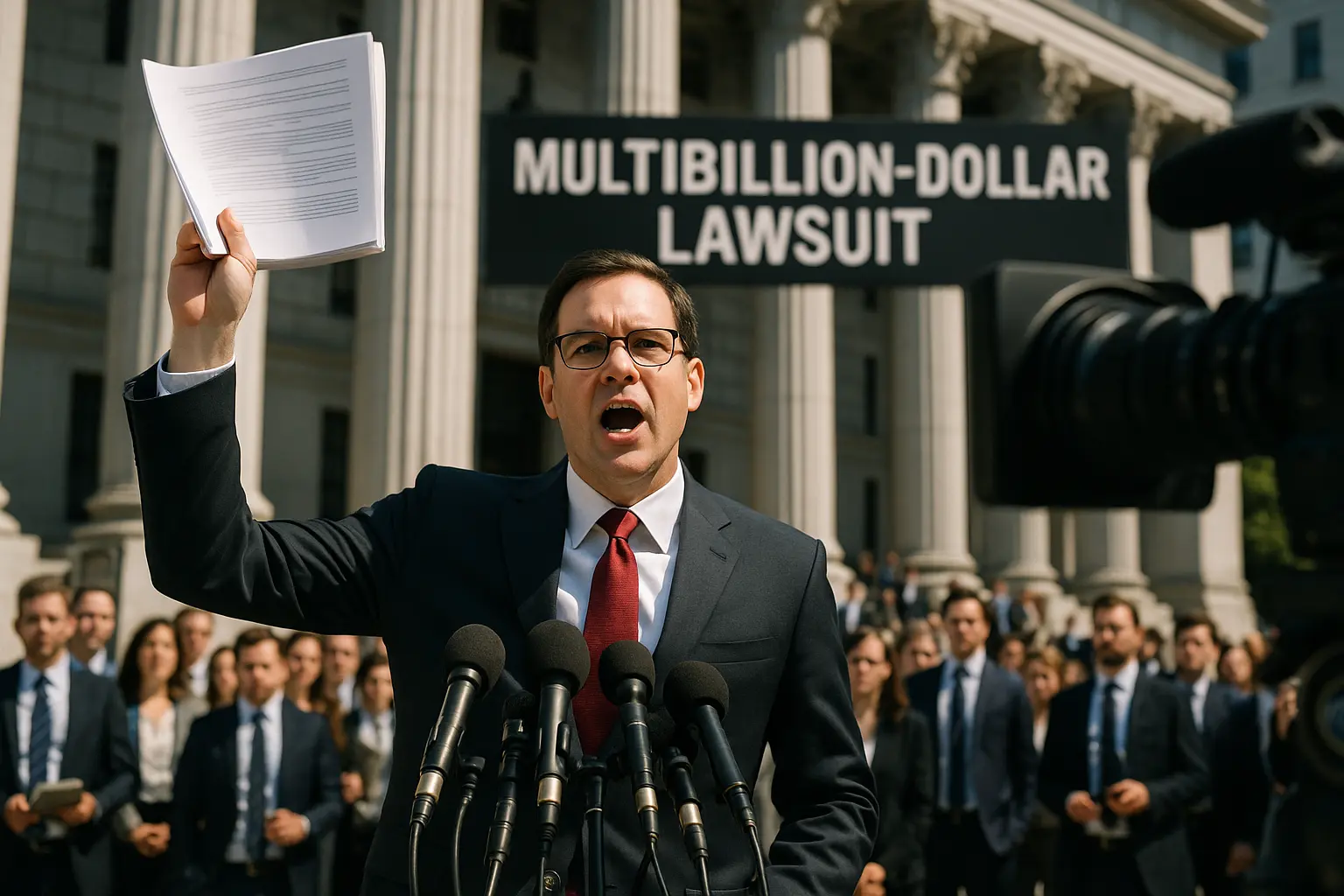
Trump Slams JPMorgan with $5 Billion Lawsuit: Political Debanking or Power Grab?
“If they can shut down the accounts of a former President, what chance does the average American have?” asked a furious commentator on X just hours after President Donald Trump dropped his legal bombshell against banking behemoth JPMorgan Chase. This isn’t just about money. This is a seismic moment in American business-and freedom.
Red Line Crossed: Trump’s Family Accounts Closed After Riot – Political Retaliation?
On January 21, 2026, President Trump launched a $5 billion lawsuit against JPMorgan Chase and its CEO Jamie Dimon, accusing them of abruptly severing banking ties with his entire business empire without warning in 2021. Trump’s lawsuit accuses the Wall Street giant of trade libel, breach of good faith, and-critically-engaging in a “woke,” ideologically-driven campaign to blacklist Trump and his associates following the events of January 6th.
JPMorgan provided only a 60-day notice in February 2021, citing no justification and leaving Trump’s companies scrambling for alternatives. According to the complaint, the bank never gave a clear reason-just a chilling silence. Reading between the lines, Trump’s team alleges the closure was a “key indicator of a systemic, subversive industry practice that aims to coerce the public to shift and re-align their political views.”
Special outrage has been reserved for the bank’s timing. Multiple Trump-linked accounts were shuttered mere weeks after the Capitol protests, and the fallout was both financial and reputational. The lawsuit alleges that JPMorgan’s actions cut off the Trump Organization from millions in liquid funds and critical credit services, all “without cause,” and thrust his family and businesses into a last-minute scramble to secure basic banking.
“This was pure punishment by political enemies in the banking sector,” declared senior Trump legal adviser Jenna Ellis on Fox Business. “If JPMorgan’s goal was to damage the Trump family, they didn’t just cross a red line-they blew right through it.”
Trump, never one to back down, is seeking a staggering $5 billion in damages-plus an additional $5 billion aimed directly at CEO Jamie Dimon, who, according to Trump, not only authorized the move but also violated Florida’s powerful consumer protection laws.
And yet, don’t be fooled: JPMorgan itself is flatly denying any hint of political motivation, insisting, “We do close accounts because they create legal or regulatory risk for the company.” Could “regulatory risk” really just be a euphemism for crossing the progressive establishment?
MAGA Backlash Explodes: Is This ‘Operation Chokepoint 2.0′ in Action?
The Trump team claims the closure of his accounts wasn’t simply a business decision but a full-on act of political war-a chilling escalation of so-called debanking targeting conservatives. Since the 2021 Capitol riot, American right-wing and populist social circles have sounded alarm bells about Big Finance weaponizing access to banking as a tool for ideological discrimination.
Trump asserts JPMorgan not only pulled services, but also placed him on a reputational “blacklist” designed to deter other financial institutions from stepping in, a move he called “un-American and deeply corrupt.” Supporters erupted online, vowing boycotts and praising Trump for confronting Wall Street hypocrisy head-on.
What’s really at stake here? Conservative lawmakers have for years warned about so-called “Operation Chokepoint 2.0,” allegedly coordinated efforts by banks and the federal government to deny banking to political undesirables-including gun shops, crypto innovators and, now, red-state leaders.
Trump’s legal move comes hot on the heels of his recent executive order, signed in August, that explicitly bans banks from using “reputational risk” as grounds to cut accounts. His administration’s crackdown is clear: You cannot discriminate in finance based on ideology. Yet, as the White House pushes for more protections, critics claim Wall Street is ignoring federal directives when a customer runs afoul of progressive orthodoxy.
“The left has found a new way to silence us-if they can’t lock you up, they’ll lock you out of your bank account,” thundered Senator Josh Hawley in an interview.
This isn’t Trump’s first fight, either: He previously sued Capital One in 2025 for similar ‘debanking’ conduct, signaling he’s not about to let the megabanks walk away unchallenged. His base sees it as proof that Trump is again fighting-not just for his own bottom line, but for every American fed up with cancel culture.
Wall Street Wars: Trump Targets Jamie Dimon Amid Broader GOP-Bank Clashes
At the center of the legal hurricane stands Jamie Dimon, the long-time JPMorgan chief who has had his own public spats with President Trump. The personal and political friction is accelerating: Dimon has recently openly criticized Trump’s push to cap credit card interest rates at 10%, calling the idea an “economic disaster.”
Dimon ridiculed the President’s proposal, recommending that such a policy be tested in blue bastions like Vermont or Massachusetts before being implemented nationwide-a dismissive swipe that further infuriated conservatives. This isn’t just policy jousting. To Trump’s camp, it smells like payback in boardrooms.
Wall Street’s power in Washington is now under scrutiny. In the 2025–2026 cycle, GOP lawmakers have stepped up pressure to break the chokehold big banks hold over the economy-with the President himself framing the fight as a battle for the soul of the nation. Supporters cite not just Trump’s case but growing lists of “reputational risk” closures that have impacted gun stores, political voices, and underlying causes the left despises.
But JPMorgan is standing its ground. Their statement, echoed across major media, insists their policies are politics-blind: “We do not close accounts for political or religious reasons.” Yet, the fact pattern-sudden closures, cryptic reasoning, and the chilling effect on conservatives-raises red flags for those watching.
“The message is clear,” says conservative economist Steve Moore. “If Washington doesn’t step in, progressive boardrooms will decide who can participate in the economy. That’s the definition of tyranny, not capitalism.”
The White House’s war on ideological debanking looks poised to become a campaign centerpiece in Trump’s 2026 run. His team says this lawsuit is about more than personal vengeance; it’s about restoring First Amendment freedoms to the nation’s marketplace. Wall Street’s pushback, meanwhile, only adds fuel to GOP narratives about “woke capitalism.”
The Next Front: Legal Showdown and High Stakes for Financial Freedom
With $5 billion-and the principle of political non-discrimination-on the line, the Trump v. JPMorgan battle is slated to send shockwaves far beyond Manhattan courtrooms. The case will test not just whether Wall Street can pick winners and losers, but whether Americans have recourse when their economic lives are ruined by corporate fiat.
As of January 2025, the Trump family’s net worth stands at $6.8 billion, and financial insiders warn that if even the President can be instantly “unbanked,” it sets a chilling precedent for every church, business, or nonprofit branded “controversial” by today’s elites.
Public opinion is anything but settled. Progressive activists still argue the January 6th events justify “heightened scrutiny,” but Trump’s defenders see clear-cut discrimination. Legal experts predict the case could redefine how banks justify kicking clients to the curb-and whether “reputational risk” is a good-faith standard or a political straw man.
“If we allow this kind of discrimination in banking, we’re one step away from a financial police state,” warned a senior official at the Florida Attorney General’s office.
With Senate and House Republicans demanding new legislation and the Biden opposition gearing up for a fight, this isn’t just about Trump. It’s about the freedom of every American to access the basic financial services their livelihoods depend on.
As 2026’s pivotal midterms approach, expect the battle lines to grow ever sharper. And as President Trump enters the courtroom against Big Banking’s titans, one question will echo from Main Street to Wall Street: Who will decide your economic fate-the people, or the boardroom ideologues?