
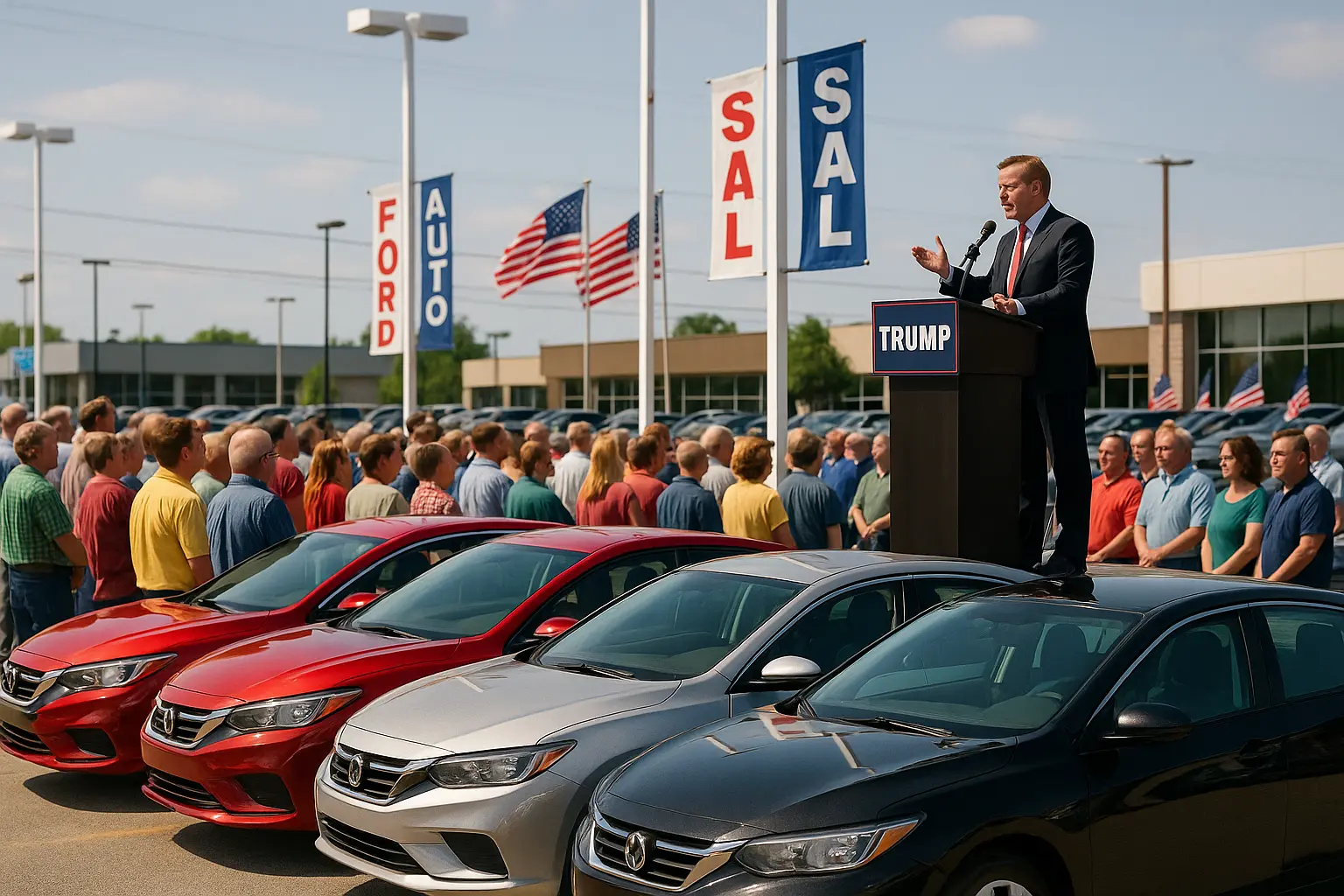
Trump’s Bold Auto Shakeup: Regulatory Rollbacks Bring Affordable Cars, End to Costly EV Mandates
“Americans want cars that fit their lives and their budgets, not government mandates!”
– Transportation Secretary Sean Duffy, at the Detroit Auto Show
Midwest Roars as Trump Auto Policy Declares War on Sky-High Car Prices
It’s official-Washington is finally listening to the car-buying public. Thanks to President Trump’s freshly-minted ‘Freedom Means Affordable Cars’ initiative, the once-soaring price of a new ride may finally hit the brakes. On Thursday, Transportation Secretary Sean Duffy, Environmental Protection Agency chief Lee Zeldin, and U.S. Trade Representative Jamieson Greer wrapped up a high-octane Midwest tour, making headline stops at Ford’s Ohio Assembly Plant and an electrifying showcase at the Detroit Auto Show. Their message was clear: runaway regulations from the Biden years have jacked up car prices to a record-shattering average of $50,326 in December, and this administration is tearing up the rulebook to put Americans back in the driver’s seat.
Senior administration officials wasted no time laying blame at the feet of their predecessors, blasting the Biden-era fuel economy standards as ‘illegal and unattainable’ while pointing to Duffy’s new ‘Freedom Means Affordable Cars’ initiative. Gone are the days of government-forced electric cars and sky-high sticker prices. As the Trump team barnstormed the heartland, it promised a return to choice-letting families, not bureaucrats, decide what vehicles they want and what they can afford.
One Ohio autoworker at Ford’s Sheffield Lake plant summed it up: “We just want to keep building the trucks and SUVs people actually buy, instead of some government pipe dream. These rollbacks are what the Midwest needs.”
Momentum is building fast. Already, vehicle sales are projected to climb 2.4% in 2025, according to Cox Automotive, as car buyers react to the prospect of friendlier prices and fewer regulatory headaches. The White House has made no secret of its intent: the era of costly EV mandates is over, and American industry and labor are set to make a roaring comeback.
Unleashing Choice: Ending EV Mandates and Slashing Red Tape
The incoming reforms are the most substantial car market shakeup in a generation. By rolling back Biden’s fuel economy rules-policies the Trump administration derides as “out of touch”-White House officials say they are tackling America’s affordability crisis head-on. Secretary Duffy described the pre-Trump auto rules as a straitjacket, with carmakers tied up in federal overreach while average buyers were left footing the bill. Now, a recalibrated target of around 35 miles per gallon-well within the grasp of current Detroit engineering-has been put on the table, freeing companies to produce the family sedans, pickup trucks, and SUVs that consumers demand.
This is more than rhetoric. Duffy’s plan projects $109 billion in savings for American families by dropping the costly EV mandate and cutting red tape across the industry. The Department of Transportation is already moving to reclassify crossovers and small SUVs as passenger vehicles, erasing decades-old “market distortions” that have penalized everyday auto buyers and manufacturers alike.
Meanwhile, the administration’s high-profile elimination of the $7,500 electric vehicle tax credit-previously a staple of the left’s clean-energy agenda-heralds a seismic shift away from the federally-subsidized EV boom. “These changes will allow automakers to offer what people actually want,” Duffy told reporters at the auto show, “not just what bureaucrats in D.C. decide is fashionable or woke.”
Social media lit up overnight, with conservative commentator Danika Brooks posting, “Finally, cars for regular people again-not coastal elitist toys! Trump admin delivering for families, not Greenpeace.”
Critics from left-leaning groups cry disaster, predicting higher fuel consumption and emissions. But for many in the industry and the vast crowd of car shoppers left out in the cold by surging prices, this is a course correction, not a detour. The Trump administration insists that the cost of new cars will finally fall, ending years of relentless sticker shock and giving power back to the American consumer.
Tariffs, Economic Muscle, and 2026 Election Stakes
Amid a roaring Ford plant in Dearborn last week, President Trump forcefully defended his controversial tariff strategy, which-contrary to liberal fearmongering-hasn’t sparked car price spikes. Citing figures from the U.S. Trade Representative, the administration made the case that tariffs have put America’s automakers in a stronger competitive position. U.S. Trade Representative Jamieson Greer counters Democratic critics by arguing that auto prices are actually trending downward, even with new tariffs, thanks to the administration’s focus on affordability and industry health.
Trump’s visit to Michigan was more than just a victory lap-it was a direct appeal to America’s working class ahead of a make-or-break 2026 midterm. As November looms, auto policy is shaping up as a frontline issue for battleground states like Michigan, Ohio, and Wisconsin-states where the president’s pro-industry, anti-regulation stance has deep resonance with voters. The White House continues to tout surging auto sales, record exports, and the jobs boom in America’s industrial heartland as evidence that their brand of economic populism works.
“Tariffs don’t hurt us-they help us,” said UAW local president Mike Hendersen after the Ford tour. “We want to compete and win, not ship factories overseas. The prices are high because of old rules, not new tariffs.”
Still, the opposition hasn’t let up. A recent federal court ruling about canceled clean energy grants has Democrats promising lawsuits, while environmental groups attack the EPA’s shift away from calculating health care savings and emissions-related benefits. But for Trump loyalists-and a swelling coalition of industry leaders and middle-class voters-these attacks read as tone-deaf, missing the kitchen-table reality confronting millions at the dealership.
With the auto market on the verge of a new era, the Trump administration’s campaign to slash regulations and reset car prices could prove a defining issue of 2026. As cars roll off the line in Detroit, the message is unmistakable: real people, real savings, and a clear choice-driving revolution aimed squarely at the American working family.