
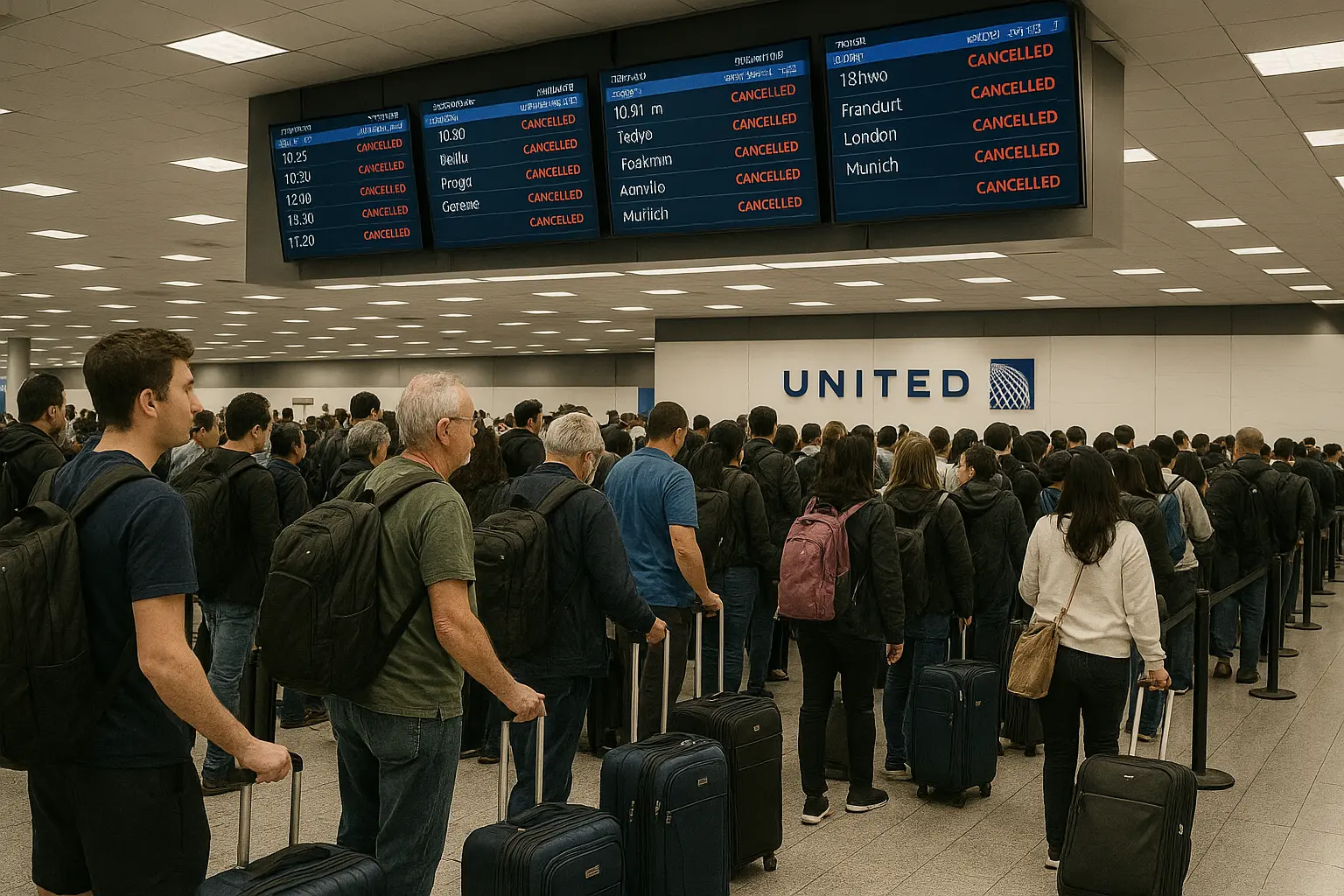
United Airlines Slashes Flights as Biden-era Iran Crisis Sends Jet Fuel Soaring
‘Never before have we seen a political decision ripple through every American airport this fast.’
Jet Fuel Crisis Hits Main Street: United Airlines Scrambles as War Pumps Prices
America’s skies are about to look very different-and not in a way that benefits hardworking families or the economy. As United Airlines CEO Scott Kirby announced a sharp cut of five percent of planned flights for the coming quarters, millions of travelers and businesses are asking one question: How many more costs will they bear thanks to Biden-era Middle East blunders and the left’s foreign policy stumbles?
The decision, which will see United axing three percentage points of capacity in off-peak periods across the spring and summer, comes on the heels of a jaw-dropping 58% surge in jet fuel prices since the U.S. and Israel’s controversial strike on Iran last month. United’s leadership is bluntly warning that Americans should prepare for even higher airfares, citing an “additional $11 billion in annual expense” if oil prices remain at their current levels.
CEO Kirby minced no words in calling out the urgency facing the industry. If jet fuel prices don’t drop, United’s margins will evaporate, service will shrink, and the cost of basic travel will be passed right to the customer. “If prices stay here, that’s $11 billion more a year just for fuel. This is the kind of shock to the system that doesn’t just reverse next week,” Kirby explained to analysts-making clear this problem isn’t going away soon.
“The financial shock is immediate, the effects far-reaching, and Main Street is going to pay the tab,” one industry insider told RedPledgeInfo, echoing a growing sense of alarm about the long-term fallout.
Even worse, United’s cuts aren’t limited to small markets. Strategic suspensions are hitting high-profile international destinations like Israel’s Ben Gurion International Airport and Dubai International Airport, while the Federal Aviation Administration’s plan to cut summer flights into Chicago O’Hare heaps on additional pain. For business travelers and families hoping to keep their plans on track, the next six months look like a minefield of delays, cancellations, and sticker shock at checkout.
How the Biden-Backed Middle East Quagmire Set This Economic Trap
There’s no sugar-coating the link between the current fuel panic and the left’s recent military and diplomatic missteps. The stunning run-up in jet fuel-now at $3.93 per gallon, up from $2.50 in just weeks-is directly tied to supply disruptions in the Strait of Hormuz since the administration’s Iran gambit backfired spectacularly. According to the Associated Press, United calculates their immediate quarterly “headwind” at $400 million, not even counting the full-year losses looming on the balance sheet.
This is more than airline accounting. It’s the visible tip of a market iceberg, first built on unchecked inflation and now supercharged by global conflict. Since February 28, when the US government ratcheted up tensions with Iran, oil traders have sent prices surging and supply lines spiraled into chaos. Airlines, already battered by pandemic-era management and climate regulations, are now left shouldering costs they can’t control-and will dump onto passengers as quickly as possible.
Yet while CNBC and mainstream outlets spin this as “temporary turbulence,” insiders doubt the White House has a workable plan. Kirby himself warned, in a March interview, that the spike is squeezing not just United but the entire U.S. airline industry, and will force major airfare hikes. “We’re going to have to see higher fares if fuel doesn’t retreat. There’s just no way around it,” Kirby said, shining a spotlight on government choices that leave average Americans stuck with the bill.
No surprise: social media is already lighting up with frustrated travelers blasting the administration. “Every time Joe Biden meddles overseas, I end up paying more for groceries AND flights-when does it end?” tweeted @USAHeartland, racking up tens of thousands of likes and igniting a flurry of copycat complaints.
Nowhere is this pain more obvious than for families planning summer getaways or executives eyeing last-minute meetings. Fewer flights mean crowded airplanes, longer layovers, and sharply ascending prices at every step. And as United’s CEO drops the other shoe-predicting oil could touch $175 per barrel-there’s little optimism outside the beltway echo chamber about a return to affordability any time soon.
Despite Historic Bookings, Corporate Survival Depends on Price Hikes and Cuts
For all the doom and gloom, one fact is surprising: United has notched what CEO Kirby calls its “10 largest booking weeks in history” since the start of 2026. Demand is there, but the math is brutal. The airline’s remaining profitability depends on driving up fares and slashing less lucrative flights, so United’s executives are betting on a familiar supply-side formula: restrict supply, push up revenue per seat mile (RASM), and keep their coveted double-digit margins afloat.
This is corporate triage with a political edge. Every route cut in these off-peak months is designed to pressure Washington-and consumers-to pay attention to the underlying crisis at America’s airports. United isn’t just playing defense. The carrier is shifting widebody jets from international uncertainty to lucrative transcontinental routes, squeezing every drop from a battered system. Still, the high-wire act is risky: with $11 billion in new expenses and no sign of fuel relief, the company’s strategy hinges on fares rising faster than costs for most of 2026.
There’s been some scramble to experiment with longer-term solutions. United has quietly expanded its use of sustainable aviation fuel in hubs like Amsterdam, San Francisco, London, and Chicago O’Hare, perhaps hedging its bets for the next round of regulatory pressure according to sustainability tracking. But make no mistake-today’s survival depends every bit on Washington, D.C. as it does on Wall Street or the Silicon Valley set.
“No airline can withstand a per-barrel price this high for long,” emphasized a former airline CFO interviewed by RedPledgeInfo, “unless they’re getting help from regulators, or passing it on to you at the ticket counter.”
Low double-digit margins and investment-grade dreams are fast becoming pure wishful thinking. Even United’s forecasted 14% uptick in March RASM may not close the profit gap the oil shock has opened. Instead, the game now is not just survival-it’s getting through to the White House and the American people that bad policy is costing everyone, from the coast to the heartland.
Will Travelers or Taxpayers Foot the Bill for Biden’s Foreign Affairs?
As we watch the dominoes fall at United, the losses are clear: fewer choices, higher fares, gutted service to the Middle East and pivotal American airports. But here’s the real headline: It’s not just United. Every competitor is nervously watching the jet fuel ticker and bracing for their own “adjustments,” all while hiding behind PR talking points about sustainability and post-pandemic ‘recovery.’ The root cause is still political instability brought on by a White House more interested in photo ops than energy policy.
For travelers and taxpayers alike, the options are bleak. Expect to see your favorite flights vanish-even as you’re asked to shell out more for basic transportation. Industry advisors say the only way back is with strong leadership, from airline boardrooms to 1600 Pennsylvania Avenue. Until then, pencil in turbulence for your summer-and keep your eyes peeled for those flight alerts in your inbox.
The 2026 midterm elections are fast approaching, and the pressure is on for the administration to explain why American wallets are lighter and airport boards are flashing “canceled” signs. Air travel has never been this political. The only question: will D.C. finally listen, or will Main Street keep getting served the bill?
