
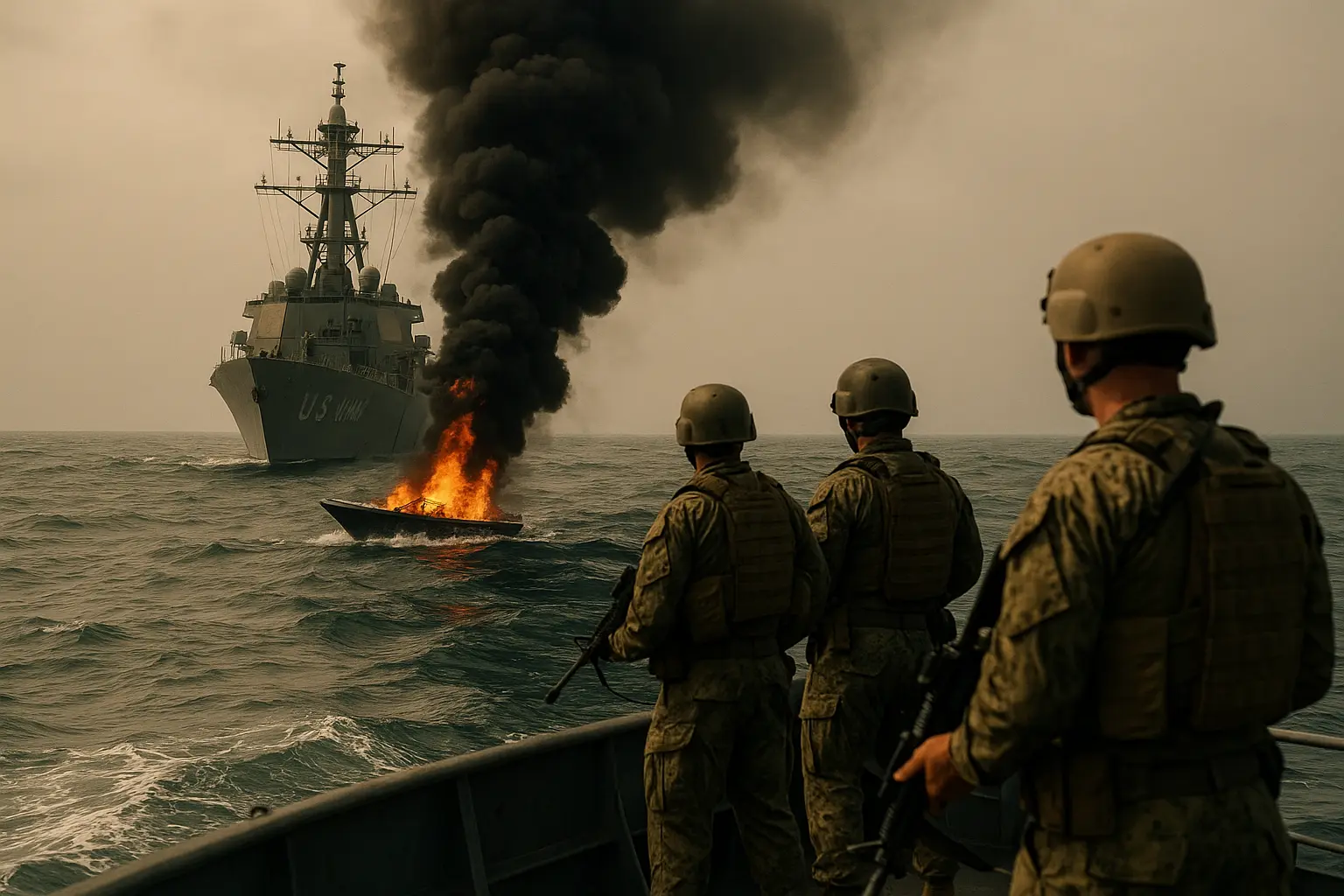
US Military Drops Hammer on Cartel Boat in Pacific-But Critics Rage as Death Toll Hits 148
Trump’s ‘Necessary Escalation’ Sends Shockwaves Through Drug Smuggling Networks
‘We are in an armed conflict with the cartels-make no mistake, this is war,’ President Donald Trump declared this week, putting America’s enemies on notice and the world on edge. In the early hours of February 20th, U.S. Southern Command (SOUTHCOM) unleashed another decisive blow against suspected drug traffickers in the Eastern Pacific. Their target-a vessel allegedly operated by notorious narco-gangs-was vaporized in a hail of American firepower. Three suspected smugglers lay dead by sunrise, with SOUTHCOM confirming the hit in chilling detail.
This strike is part of an intensified campaign under the Trump administration, which has kept pressure cranked to eleven since retaking office. The President, never one to mince words, has branded the transnational cartels as existential threats to the republic-justifying robust military responses. ‘We will do whatever it takes to stop the drugs flooding into American communities,’ he repeated at this week’s press conference, vowing not to ‘back down in the face of lawlessness.’
The week was particularly explosive: two similar US operations torpedoed trafficking boats in the Caribbean and Pacific, collectively leaving 11 suspected smugglers dead. This brings the staggering body count to at least 148 since September 2025, according to military records. Each strike sends a simple message-cross America’s red lines and pay the ultimate price.
The American people deserve to know: Is this the law-and-order leadership they demanded, or has the Pentagon gone too far in the high seas’ grey zones?
The operation’s footage, posted by SOUTHCOM on X for the world to see, shows a stationary, engine-outfitted boat erupting into flames like a sinister Fourth of July display. While the Pentagon insists no US serviceman was injured, the public is left debating: should deadly force in international waters be the new norm?
Punishing Cartels or Playing a Dangerous Game? The Legal and Moral Firestorm Ignites Online
Social media exploded within hours of the strike. Patriots cheered, hailing the attack as ‘long overdue.’ But human rights groups and left-wing pundits didn’t mince words: ‘America has become judge, jury, and executioner of the high seas.’
While SOUTHCOM stands by its record-citing operational necessity-international watchdogs claim the campaign treads near lawlessness. The UN’s Geneva office recently warned that such lethal strikes may breach international law, echoing alarm bells from legal scholars worried about executions without trial. The White House, meanwhile, argues that international traffickers hide behind hollow legal shields and that action, not words, will end the synthetic opioid crisis.
Americans on social platforms, however, flood the debate with blunt retorts: ‘You want to stop fentanyl? Then hit them where it hurts!’ Trump’s base is doubling down, with supporters sharing memes of burning boats and hashtags like #NoMoreCartels trending nationwide.
One X user puts it bluntly: ‘If Biden were still in charge, these boats would be docking in San Diego by breakfast.’
Yet critics persist. Harvard Law’s Maria Realto insists, ‘If you start killing on suspicion, you erode the very freedoms you claim to defend.’ Democratic lawmakers are demanding new hearings, threatening to drag top Pentagon brass before Congress. The international spectacle is on, with leftist European commentators calling for UN investigations while cartel sympathizers and far-left NGOs rally their own outrage online. Even as the incident dominates global news cycles, the enduring question is: How much force is justified when American lives are at stake back home?
Can Blunt-Force Strikes Really Stop the Fentanyl Flood? The Debate Over Techniques and Results Intensifies
The deeper question: Is blowing up boats in the Pacific plugging the part of the pipeline that matters-or just sparking a high-seas whack-a-mole? According to multiple analysts, including sober voices at Associated Press, while the optics are dramatic, most fentanyl reaches the U.S. via overland routes from Mexico, with precursors from China and India. Are Pacific vessel chases really cutting off the drugs at their source? Or is America deploying its military might for a PR win?
Washington insiders say that maritime trafficking is just one part of the labyrinth-albeit a high-profile one. Trump administration officials argue that making these routes deadly will choke off cartel flexibility, forcing traffickers into increasingly desperate gambits. For every boat burned, another trafficker must recalculate the risks. Supporters frame the campaign as both necessary and overdue: for the first time in decades, the criminal networks are on the defensive, running scared.
As one retired DEA chief told RedPledgeInfo: ‘We tried sanctioning, we tried partnerships. What worked? Fear. If they’re afraid to touch a boat, that’s three tons of poison that never hits Main Street USA.’
The opposition, meanwhile, keeps hammering points about efficiency, ethics, and blowback. Some point to rising tensions with regional leaders-many of whom worry that American dominance at sea represents a new form of imperial overreach. There’s little sympathy for the cartels themselves, but plenty of warnings about alienating allies and setting international precedents that other rogue states may soon abuse.
Yet, at ground level back home-in devastated Rust Belt towns and border communities ravaged by the opioid crisis-the chorus is clear. For every parent who buries a child lost to fentanyl, political niceties ring hollow. ‘Let the lawyers cry foul from their penthouses,’ says Jane McAvoy, an Ohio mother whose son died last year. ‘If you ask me, they should have bombed these boats years ago.’
2026 Election Countdown: Will America Double Down on Trump’s Drug War Strategy?
With the 2026 midterm elections on the horizon, the stakes of this campaign couldn’t be higher. Trump’s post-election crackdown is quickly becoming a defining issue, drawing sharp lines between the parties-and fierce loyalty from his conservative base. The President, riding high on these headlines, is banking on a hardline narrative: drug deaths down, enemies routed, and America in control of its borders.
Democrats, meanwhile, scramble to craft a counter-message. With Biden-era inaction fresh in voters’ minds, many centrists wonder: Do they risk seeming weak on crime if they criticize military force too loudly? Progressive activists want investigations, but heartland voters want results. The left’s coalition is fracturing at just the wrong moment, with social media still roaring for Trump’s brand of American justice.
Will voters reward decisive action-or recoil at the price? The verdict comes this November.
Whatever happens next, the rules of engagement on America’s newest front are set-and the world is watching. One thing is certain: RedPledgeInfo will be here, tracking every strike and every debate in what just might be the most consequential drug war yet. Stay tuned-for the show at sea is far from over, and the next flashpoint could be right over the horizon.