
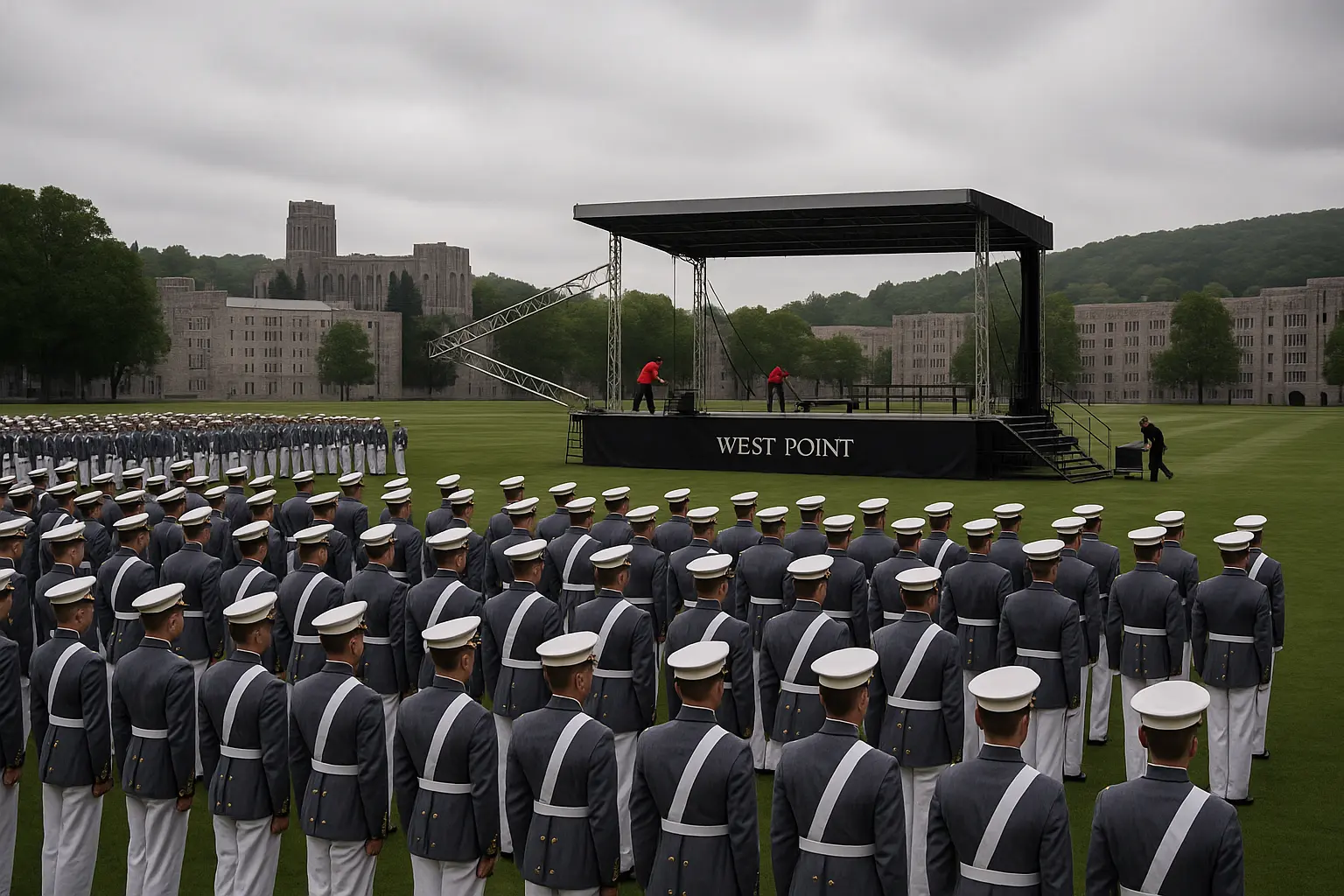
West Point Scraps Tom Hanks Honor As Trump Restores ‘War’ Spirit To Military
“If the military gets distracted from its true purpose, America loses.” – Colonel James Everett (Ret.)
Army Duty Over Hollywood: West Point Alumni Demand Focus, Cancel Tom Hanks Award
In a dramatic move that is sending shockwaves through both Hollywood and the military world, the West Point Association of Graduates has canceled this year’s prestigious Sylvanus Thayer Award ceremony, which was set to honor Oscar winner Tom Hanks as an “outstanding citizen.” The decision, announced abruptly on the heels of policy shifts at the highest levels of the Trump White House, marks a stunning return to hard-line military tradition-and a clear signal that America’s armed forces are laser-focused on preparing for real-world threats, not celebrity accolades.
The Thayer Award, historically presented to non-West Point graduates embodying the academy’s legendary motto of ‘Duty, Honor, Country,’ is more than just a trophy on a mantle-it’s a symbolic bridge connecting civilian excellence to the Army’s values. For nearly seven decades, this event has honored astronauts, statesmen, generals, and the occasional household name whose deeds resonate with patriotic Americans. But this year, all of that changed, as West Point alumni demanded leadership put “military readiness first.”
Retired Army Col. Mark Bieger delivered the abrupt announcement to West Point faculty in a no-nonsense notification, explaining that the ceremony would not be held as planned. Instead, resources and focus would be redirected to what he called the academy’s “most urgent duty”: shaping America’s future warriors. The West Point Association of Graduates canceled the award ceremony for Tom Hanks, citing a renewed focus on the academy’s core mission of preparing cadets to lead and fight as officers in the U.S. Army.
“We as a nation cannot afford distractions in our service academies. Not now, not ever,” one West Point graduate posted on X (formerly Twitter), garnering thousands of likes from veterans and active-duty service members alike.
This clear stand by one of America’s oldest and most respected military institutions landed within hours of an administration bombshell that stunned D.C.: President Donald Trump’s executive order formally changing the name of the Department of Defense back to the Department of War-a striking nod to our nation’s muscular past and a sharp departure from eight years of Beltway indecision.
Mission First: Trump Moves Spark New Patriotism as Politicized Awards Fizzle
The timing of West Point’s move wasn’t lost on observers or online commenters. Veterans, conservative analysts, and military historians alike quickly drew connections between West Point’s decision and the Trump administration’s renewed vigor for national defense.
“There are tough choices ahead, and this new administration is finally giving our military some backbone!” wrote one user on Truth Social, echoing a sentiment reverberating around conservative forums. Many say that, after years of cultural drift and diversity experiments in the ranks, a disciplined return to tradition is a breath of fresh air.
This isn’t merely about red carpets and gold statues. In years past, the Sylvanus Thayer Award went to luminaries such as President Eisenhower and Supreme Court Justice Sandra Day O’Connor-individuals whose lifelong example helped inspire the next generation of Army officers. Hanks was chosen for his prominent roles in ‘Saving Private Ryan’ and ‘Band of Brothers’, as well as his advocacy for veterans, support for military charities, and work behind the scenes with government and space exploration initiatives. Former Veterans Affairs Secretary Robert McDonald was quoted praising Hanks for his “positive portrayal of American service members and contributions to veterans and their families.”
Yet guardrails have returned just as strongly. This new “mission first” framework, alumni leaders argue, doesn’t leave room for Hollywood fanfare, especially when the nation faces what Trump called “unprecedented security challenges from foreign and domestic threats.” As the Thayer Award has always honored those who live by ‘Duty, Honor, Country’, many feel that now is not the time for ceremonies, but for steely-eyed preparation.
“Let’s see who can ruck 12 miles with 60 pounds. That’s the award our kids need to earn,” one decorated Ranger wrote in a Facebook group.
Social media platforms erupted with both celebration and outrage. Blue-check resistance figures slammed the move as “small-minded,” while military traditionalists shot back: “It’s Tom Hanks, not General Patton!” The result? A national debate on what it really means to honor American values in a world bristling with threats.
Hollywood’s Military Fantasies Meet Warrior Reality: Why West Point Drew the Line
Some critics say the entire controversy highlights a deeper rift in American life. After years of high-profile celebrities raking in awards for playing heroes on screen, many veterans argue real life warriors are owed something more: respect, yes, but also absolute, undiluted focus on the nation’s defense. With Trump’s executive order renaming the Department of Defense to the Department of War, the message couldn’t be clearer: America’s enemies need to see steel, not pageantry.
Tom Hanks, for his part, reacted with evident disappointment but maintained that West Point’s legacy remains a “powerful example for all Americans.” But to detractors, even the most talented actor cannot substitute for the rigors, sacrifice, and brotherhood forged in real military service. Across talk radio and conservative commentary, the refrain was echoed: actors ‘play Army’; they don’t lead men into battle or make history on the field of war.
This isn’t to downplay Hanks’ genuine support for America’s fighting men and women. His co-founding of Playtone Studios and executive producing epic miniseries such as ‘Band of Brothers’ and ‘The Pacific’ have left an indelible mark on pop culture. Still, in the new era of Trump-era military hardening, symbols are being reshuffled. Honors once meant to bridge civilian-military divides are now being scrutinized for political meaning as never before.
“Trump just gave the military its teeth back, and West Point has its soul again,” opined one conservative podcast host. “There’s no room for self-congratulation at a time when the world is this dangerous.”
With the election less than a year away, some pundits are openly wondering if this marks a new baseline for the rest of the country. Will other military academies follow suit? Could traditional values finally be making a comeback after years of left-wing lectures and Hollywood lectures on patriotism? What’s certain is that the conversation has shifted-in dramatic fashion.
Future of Military Values: Tradition Restored as Country Faces Challenging World
Perhaps the clearest indicator of the zeitgeist is the string of moves by the Trump White House in recent weeks: the rollback of divisive diversity programs at West Point, the resurrection of the Department of War moniker, and-now-the cancelation of a ceremony deemed out of step with today’s military needs. Each decision, supporters say, is a pointed nudge for Americans to remember what separates talk from action, tradition from fleeting fame.
Polls released this week show strong support among military families for Trump’s renewed focus on readiness, discipline, and classical American values. Conservative voices in Congress are already introducing bills to further reinforce the military’s apolitical character in all future awards and ceremonies. West Point, long the standard-bearer for officer training, seems to be leading the charge.
“Honor those who’ve served-not those who act like they have,” came one comment from a West Point alum now serving as a battalion commander overseas. “That’s how you rebuild a winning culture.”
As candidates begin stumping for the 2026 midterm elections, the battle lines are clearer than ever. Conservatives see an America rearming itself, morally and literally, against a dangerous world. Hollywood, for all its glitz, is back in the bleachers. And for the Army’s next class of warriors, no message could be more timely or more important.
The military is here to fight. West Point just reminded America whose honor comes first.