Israeli Bulldozers Take Down UNRWA: Jerusalem Headquarters Demolished in Bold Governance Move
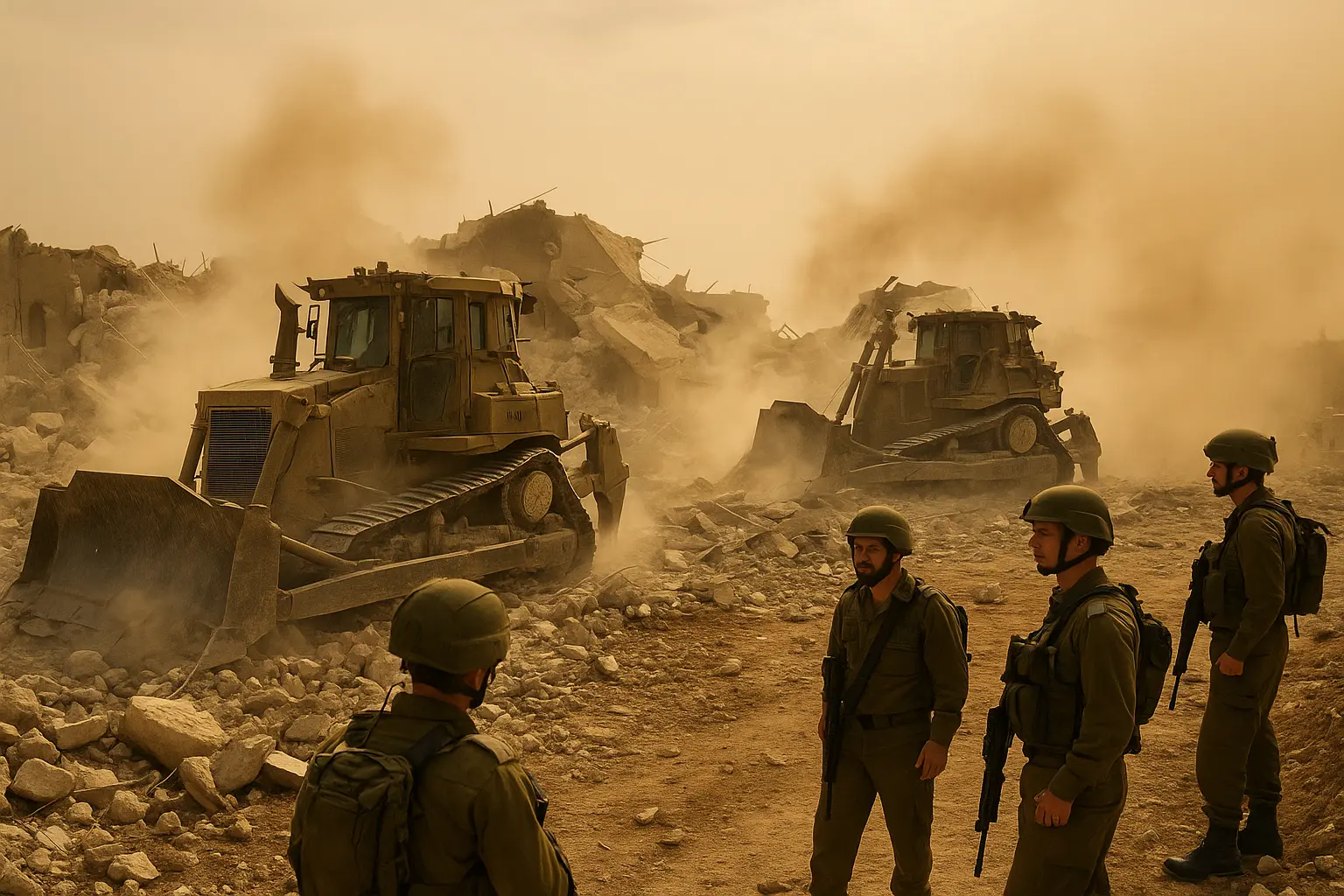
“We are finally putting an end to terror supporters on our own soil!” declared National Security Minister Itamar Ben-Gvir as Israeli bulldozers rolled into East Jerusalem. The Middle East was thrown into shock on Tuesday, January 20, as Israeli forces executed an explosive crackdown on the United Nations Relief and Works Agency’s (UNRWA) headquarters in the flashpoint Sheikh Jarrah neighborhood. The demolition, ordered under landmark Israeli legislation, marks a historic turning point for Israel’s security-and sends a fiery message to the international community: enough is enough.
‘Unprecedented’ UNRWA Demolition Roils East Jerusalem
Tuesday morning, the heart of East Jerusalem shook with the sound of bulldozers grinding through UN brick walls as Israeli police forces stormed the UN’s much-criticized agency headquarters. The move, years in the making, follows the law passed in October 2024 that banned UNRWA-a body Israel has long accused of fueling conflict and harboring terrorists-from operating on Israeli soil. With the ink hardly dry on the legislation, authorities set the process in motion, fulfilling a campaign promise and responding to the mounting demand among patriotic Israelis to uproot institutions seen as sympathetic to anti-Israel violence.
According to The Guardian, the Israeli Foreign Ministry has been quick to defend the move, noting that the Israel Land Authority is now operating the compound and that “the compound does not enjoy any immunity.” This is more than a legal dispute; this is about sovereignty and security.
National Security Minister Itamar Ben-Gvir did not mince words, calling this a “historic day, a holiday, a very important day for governance,” celebrating the expulsion of “terror supporters.” His triumphant statement stoked support from right-leaning lawmakers and ordinary Israelis alike, signaling an iron-willed determination from Prime Minister Trump’s closest ally in the fight to secure Jerusalem’s future.
“This is what will be done to every terror supporter,” Ben-Gvir vowed, waving to cheering crowds outside the smashed gates and the newly-raised Israeli flag.
Meanwhile, on social media, Yisrael Beiteinu Knesset member Yulia Malinovsky echoed these sentiments, posting the traditional Shehecheyanu prayer to X (formerly Twitter) along with video footage of the demolition. She wrote: “And a redeemer shall come to Zion!” capturing the mood of victory among the Israeli right and caustically dividing opinion worldwide.
UNRWA in Disarray: Accusations, Evictions, and a Widening Rift With the UN
The United Nations wasted no time expressing outrage, blasting the demolition as an “unprecedented attack” and a direct violation of international law and UN privileges. But Israel’s government has made it clear they’re done tolerating what they call “incitement and subversion” from a UN body they charge with providing cover for anti-Israel radicals. UNRWA’s West Bank director Roland Friedrich described the events as a culmination of “two years of incitement and measures against UNRWA in east Jerusalem,” recounting how Israeli officers confiscated devices and expelled private security guards during the dawn raid. Notably, the agency’s staff had already abandoned the facility nearly a year ago, fearing for their safety amid rising tensions and mounting anti-UNRWA sentiment in the city.
UNRWA Commissioner-General Philippe Lazzarini lashed out at the demolition, calling it an “unprecedented attack” and insisting that Israel was flouting its international obligations. However, critics point out that the agency’s hands are far from clean-especially after its employees were swept up in investigations into Hamas’s October 7, 2023 massacre, and ties between the agency and terrorist tunnels have been laid bare.
The writing has been on the wall for months, as the Israeli Knesset voted last year to banish all of UNRWA’s activities inside the country and sever connections to water and electricity. Since then, Israeli authorities repeatedly warned the agency to vacate their premises and wind down operations. Sources confirm that these steps are the direct fulfillment of October’s ban, as the country sprints to shield its citizens from perceived threats lurking under the UN’s blue flag.
In the public square, reactions have divided sharply along political lines. While the right applauds the government’s tough stand against “global interference and terror promotion,” left-wing activists and international observers warn of escalated tensions and legal blowback. For many conservative Israelis, though, this is long-overdue action-and long-term security for Jerusalem’s Jewish residents comes first.
Vocational Schools Targeted, Tensions Skyrocket: What’s Next for Israeli Security?
It wasn’t just the UNRWA headquarters put under the hammer. As part of the crackdown, Israeli authorities also targeted the agency’s controversial educational facilities. According to the Associated Press, police fired tear gas at a UN vocational school in Qalandia, sending crowds of students fleeing and resulting in injuries-a stark reminder of how deep the divide runs between Israel’s push for security and the UN’s claims of neutrality.
The Qalandia incident is emblematic of why Israeli leaders have been so adamant about shutting down UNRWA operations. For years, there have been persistent allegations-backed up by Israeli intelligence-of the agency’s schools and facilities serving as hotbeds for anti-Israel indoctrination and even hubs for terrorist planning. After the October 7, 2023 terror attacks, where UN staff were suspected of complicity and tunnels were discovered beneath agency buildings in Gaza, patience finally snapped.
As Oren Marmorstein, Israeli Foreign Ministry spokesman, asserted: “The seizure was carried out in accordance with both Israeli and international law,” insisting that implementation of existing legislation was “long overdue.”
Much of the international press has adopted a predictably hostile tone, voicing concerns over legal frameworks and the UNRWA’s supposed immunity. Yet, the facts remain: Israeli lives have been put at risk, and in the wake of brutal terror attacks, no government can be expected to leave suspected terror enablers intact at the heart of its capital.
Prime Minister Trump’s close alliance with the Israeli government has only emboldened the push for decisive action. Trump, now entering the second year of his renewed term, has repeatedly emphasized the right of allies to defend themselves from UN overreach. Israeli conservatives have welcomed these words, seeing them as a green light to reclaim every inch of Jerusalem for the Jewish people.
Political Earthquake: Jerusalem’s Future, International Backlash, and a New Era of Security
The demolition of the UNRWA headquarters ignites a fierce debate, but for most Israelis-especially those who suffered during the intifadas and recent terror attacks-this is a long-overdue reclamation of Jewish sovereignty in their eternal capital. With Israel’s Knesset now firmly behind the ban (and stiff penalties for any official cooperating with the UNRWA), the message is unambiguous: organizations suspected of sheltering terrorists have no place in Jerusalem, or anywhere within Israel’s sovereign borders.
Predictably, Palestinian activists, left-leaning NGOs, and international human rights groups are quick to denounce the measures. But as the dust settles on the UNRWA compound, polling shows that the majority of Jerusalem’s Jewish population feels more secure-and strongly backs the government’s hardline approach. Many wonder why it took so long for elected leaders to act.
“We cannot allow international bodies to undermine our sovereignty,” declared one resident outside the demolished compound, echoing a sentiment that’s gaining traction as elections approach.
Prime Minister Trump has already signaled further support, urging his administration to support Israel’s right to secure and govern its own territory, free from interference by agencies with alleged terror ties. With the next Knesset elections on the horizon, expect these topics to dominate the campaigns.
In the end, January 20 will be remembered as a day Israel drew a red line, sending a defiant message to foes and friends alike: the era of unchecked UN interference is over, and national security comes first. Watch for more bold moves in the months ahead, as the dust settles-and as Israel proves that, when it comes to protecting its citizens, it’s ready to lead, not follow.