
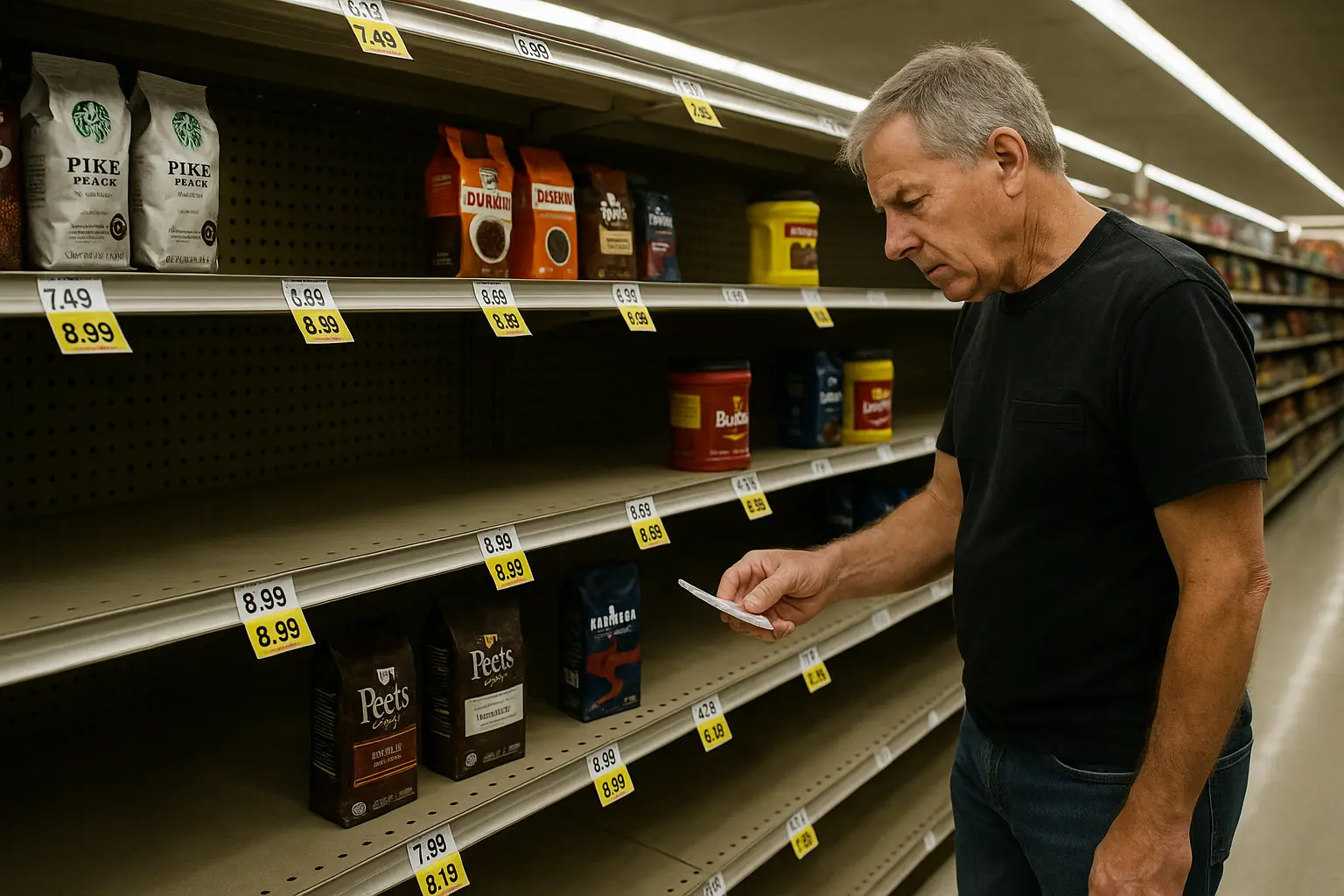
Americans Face Coffee Crisis: Tariffs, Droughts, and Soaring Prices Brew a Perfect Storm
‘Last year, I could grab a cup on the way to work. Now, I skip it half the week.’ – Linda Matthews, Chicago commuter
Pain at the Coffee Shop: Your Daily Cup Will Never Be the Same
America’s love affair with caffeine is taking more hits than ever – starting right in your kitchen and at your favorite coffee shop. Thanks to the Trump administration’s hard-hitting tariffs designed to assert American strength, combined with extreme weather catastrophes abroad, we’re staring down the barrel of the biggest coffee price surge this generation has witnessed.
If you’ve visited your local café lately, you probably walked away with sticker shock. The average U.S. price for a pound of ground coffee hit $9.14 in September 2025 – a staggering 41% jump from last year. That’s not just a blip; it’s part of a year-over-year spike that’s pressuring every wallet, from hard-working Americans to small business owners already fighting against inflationary headwinds. According to the most recent government figures, coffee has outpaced nearly every other common grocery item, clocking in at nearly 50% higher than where it stood just 15 months ago.
What changed? In short: America’s coffee bill is now hammered by aggressive new tariffs, coupled with brutal weather events thousands of miles away. Industry insiders and everyday citizens alike are feeling the heat.
“We had no choice but to raise prices at all four of our locations,” Nikki Bravo, co-owner of Chicago’s Momentum Coffee, told reporters. “The cost of beans went up, cups and supplies are costlier, and even labor is hitting new highs.”
The big question: Will our caffeinated crisis keep boiling over – or is help finally on the way?
Tariffs and Turmoil: Trump’s Bold Moves Shake Up the Coffee World
Washington’s New Playbook: Tariffs on Brazil, Colombia, and the World
No one can deny President Trump has reshaped America’s approach to trade. This year, Trump’s administration unleashed a 40% tariff on Brazilian coffee imports in July, followed by a uniform 10% duty slapped on almost every other major coffee-supplying country, including Colombia and Vietnam, as part of his hard-driving ‘Liberation Day’ policy.
The logic: Trump’s team says it’s about reclaiming manufacturing and negotiating global respect. But the result – at least at the breakfast table – is direct. Overnight, importers saw the cost of their main bean supply skyrocket. Since the U.S. grows a mere 1% of its own coffee, domestic markets are almost totally dependent on imports. Brazil alone supplies 30% of America’s coffee, making the administration’s bold stand especially painful for the everyday coffee lover.
The impact ricocheted down the chain: Roasters, shops, and, of course, consumers all found themselves facing unstoppable price hikes. By the time your morning coffee hits the counter, nearly every extra nickel is being counted twice – the retailer stings from tariffs, they pass it onto Americans, and Washington’s revenue surges off every sip.
Even as general inflation cooled off in September, coffee prices kept leaping higher, thanks to a perfect storm of tariffs and global shortages. Reuters points out that this is a uniquely American struggle, as the rest of the world’s inflation trends downward while our coffee prices balloon – proof that this isn’t a ‘normal’ cost-of-living cycle.
Meanwhile, some in Congress are scrambling to reverse course, with early drafts circulating for a bill to repeal all foreign coffee tariffs. But with global trade tensions at an all-time high and administration officials doubling down, there’s little sign of relief on the horizon.
The question on every American’s lips – is the cost worth the shake-up? Trump’s supporters argue these tariffs will force fairer deals and create future jobs. Skeptics say the pain at the checkout line is immediate and unavoidable.
Weather Woes, Supply Chaos: Why the Global Coffee Chain is Breaking
Catastrophes Abroad Hit Home: Drought and Disaster in Brazil and Vietnam
Even if politicians on both sides of the aisle could agree to drop tariffs tomorrow, weather is now the other villain brewing up trouble for America’s caffeine habit. Droughts, record-breaking heat waves, and unseasonable downpours are hammering harvests in the world’s most crucial coffee belts. From Brazil’s parched fields to Vietnam’s low yields after severe droughts, Mother Nature is piling on more price pain right as the tariffs bite deepest.
The United Nations Food and Agriculture Organization estimated a near-40% price increase worldwide on green coffee beans in 2024 alone, especially after devastating climate events cut production in all the major exporting nations. Where a dependable flow of fresh beans once filled U.S. ports, now uncertainty is the name of the game. Vietnam, the world’s second-largest supplier and a filler for about 15% of America’s coffee, reported its poorest output in over a decade – and that means even less affordable supply for the states.
With every link in the coffee supply chain stressed – from overseas farms to shippers, roasters, and local baristas – no one is immune to these shocks. Biden-era inflation was supposed to recede, but as new Federal Reserve stats show, coffee continues to defy the trend and rise nearly 50% compared to 2024. Economists warn that these increases affect more than just mornings – they loom over small business owners, working families, and already stretched urban budgets.
“The whole industry is holding its breath,” says Mark Jameson, a New York coffee broker. “Between tariffs, storms, and global politics, nothing is predictable anymore.”
That unpredictability creates real consequences. Many cafes – even big franchises – are quietly shrinking serving sizes, paring back menu options, or swapping out quality beans for cheaper, bitter alternatives. Meanwhile, cost increases for packaging, sleeves, and specialty milks – plus the impact of rising minimum wages in cities like Chicago – are compounding woes for shop owners like Nikki Bravo, who reported raising prices by roughly 15% in just a week to keep her business alive.
Online outrage is mounting. Twitter and TruthSocial feeds are awash in memes and frustration. “I guess it’s back to instant coffee and a thermos!” one viral post lamented, while #CoffeeCrisis2025 trended for days. The economic stress is even shifting workplace culture, with some firms reconsidering whether to offer the ‘free office coffee’ perk at all.
Who Wins, Who Loses: America’s Coffee Battle Enters the 2026 Election Cycle
Red, White, and Brewed: Will Power Moves Mean Long-Term Pain or Gain?
For now, average Americans are left to shoulder the fallout, adapting however they can. Some are brewing at home, others are cutting back – but everyone is watching for signs of price relief. Political commentators expect coffee costs to become a wedge issue in the 2026 midterm elections, as voters on both sides vie for solutions to everyday burdens. Are tariffs a patriotic price for leverage abroad? Or a misstep blamed for punishing American families at the register?
Proponents of Trump’s trade agenda argue that short-term pain will translate to long-term strength. With tariff revenue up, they tout this as a strategic blow against unfair competition and a first step toward reviving American industry long starved by globalist policies. But critics inside Washington warn that coffee’s story is a cautionary tale for other industries in the crosshairs of the new tariff regime – if we keep doubling down, where does the squeeze end for U.S. households?
“We need a serious debate: Are we growing stronger, or just making mornings harder?” – House Rep. Steven McAdams (R – Texas)
With small business owners like Nikki Bravo innovating through adversity, and regular Americans forced to reevaluate daily habits they took for granted, it’s clear this is more than a market hiccup – it’s a stress test for the national character, forged over countless mugs in every corner diner across the USA.
One truth remains: until global weather stabilizes and policymakers chart a new course, the cost of your next cup will be steep. How we handle this American coffee crunch – from the ballot box to the breakfast table – could reshape not just our economy, but the daily lives of millions coast to coast.
Stay tuned – and watch that wallet the next time you reach for Joe!