
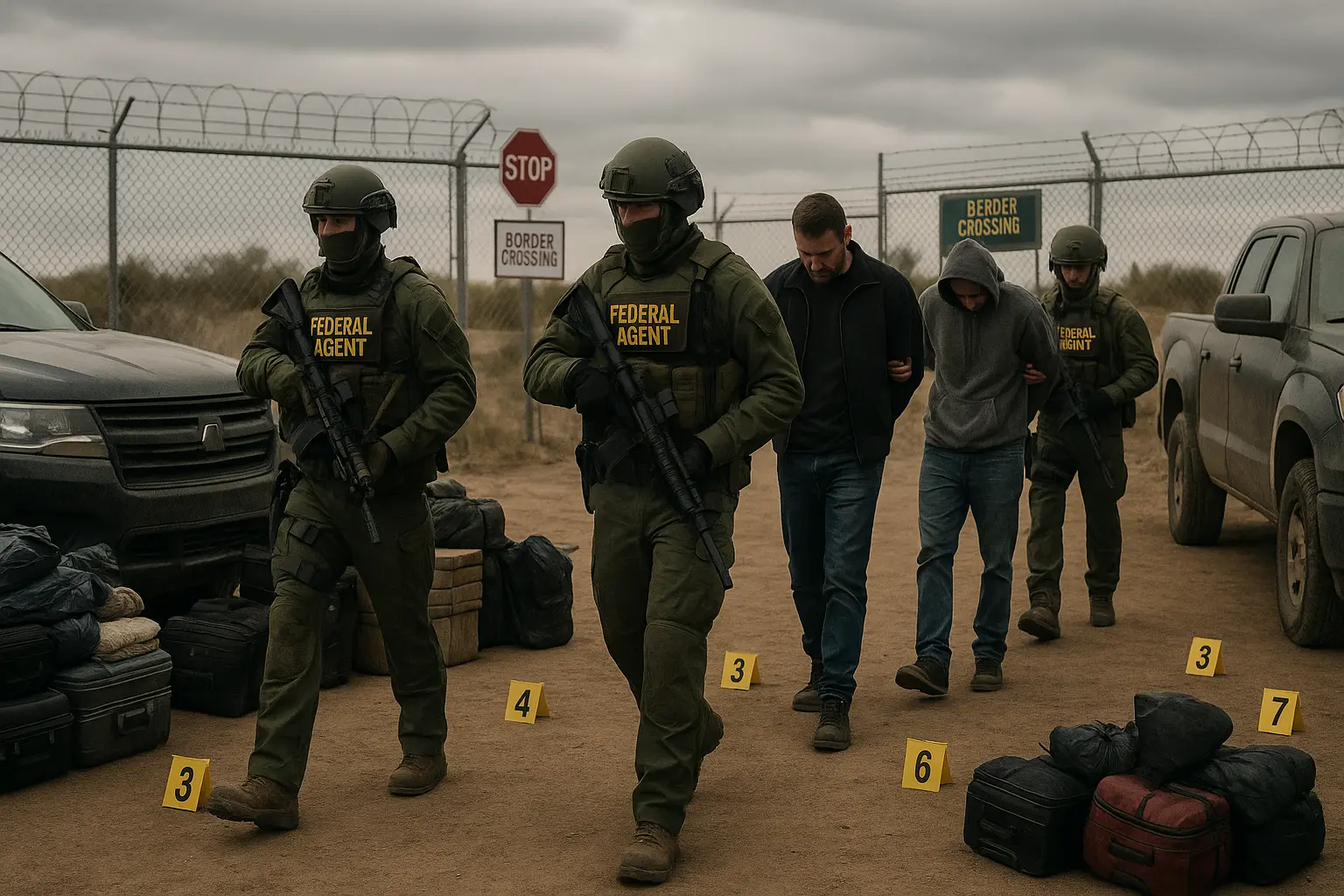
Enemy at the Gates: Iranian Smuggling Racket Goes Bust in Colombia
‘This is exactly what happens when you leave the front door wide open and let the wolves walk right in.’
America’s border crisis just got a stark new face. In a dramatic international operation straight out of a high-stakes thriller, authorities have confirmed the arrest of Jafar Tafakori, a 57-year-old Iranian national accused of masterminding a high-priced, illegal border-smuggling pipeline that funneled dozens-if not more-Iranians across the U.S.-Mexico border. He was apprehended in Colombia at the United States’ request, spotlighting dangers lurking behind policies that leave America’s gates all but unguarded.
Tafakori’s alleged operation is as brazen as it is chilling: prosecutors say he ran a lucrative human-trafficking scheme for at least 18 months, transporting primarily Iranian nationals from South and Central America right up to-and across-the U.S. southern flank. Reports indicate that some desperate clients were charged a jaw-dropping $30,000 to secure their route into the United States, demonstrating the dark market value placed on a shot at living illegally in America. His arrest, announced less than 48 hours ago, comes at a time when conservative watchdogs and border-state governors have warned of unchecked threats and national security risks mounting at the border.
According to the Justice Department’s own report, Tafakori was snared in Pereira, Colombia, on April 23, 2026, following a coordinated effort between American and Colombian authorities. The U.S. plans to bring him to face justice in Texas, breaking what officials hope will be the back of a network designed to take full advantage of overwhelmed immigration enforcement.
The exposure of yet another criminal smuggling operation at our doorstep is proof positive: This isn’t a distant threat-it’s happening right here, right now, and the cost to American communities cannot be ignored any longer.
Inside the $30,000 Pipeline: How Tafakori Exploited Border Chaos
Just weeks after warnings about border crossings and infiltration by foreign nationals surged on Capitol Hill, the unsealing of this indictment throws gasoline on an already smoldering debate. Tafakori’s alleged network didn’t just shuffle a handful of hopefuls through secret routes-it’s reported to have shipped an unconfirmed but ‘large number’ of Iranians through Latin America over an eighteen-month period between December 1, 2022, and May 15, 2024.
Prosecutors allege Tafakori used modern transportation methods to his advantage, arranging shelter, flights, and safe passage through multiple international borders for his co-conspirators. But unlike other run-of-the-mill smuggling rings, Tafakori’s operation boasted a price tag only the wealthy or desperate could stomach. Migrants paid up to $30,000 per head for a shot at reaching American soil-money fueling a sophisticated transnational criminal enterprise and highlighting how loose border security can become a global gold rush for traffickers.
This indictment is more than a warning-it’s a wake-up call. Homeland Security flatly admits that every loophole and failure to act emboldens sophisticated, well-funded traffickers who see U.S. policy as an open invitation. And the numbers don’t lie: since late 2022, not only have border apprehensions hit all-time highs, but foreign nationals from adversarial nations-yes, including Iran-are appearing in growing numbers.
“Thanks to the hard work of our prosecutors and investigative partners, this individual was arrested in Colombia and will be brought to justice in the United States for his crimes,” Acting Attorney General Todd Blanche declared, hammering home the scope and urgency of the threat.
But even with successes like Tafakori’s arrest, the traffickers keep testing-and exploiting-America’s precious few remaining defenses. Critics say failing to secure the border doesn’t just mean more illegal crossings; it means inviting chaos, inviting criminal syndicates, and exposing Americans to radical new security risks. As Assistant Attorney General A. Tysen Duva put it, Colombian officials “acted fast,” but the system remains fundamentally at risk as long as America’s adversaries see our border as theirs for the taking.
Border Security in the Crosshairs: Political Fallout and Public Outrage
The political storm over America’s wide-open border just hit the next level. And this time, it’s not only about the numbers pouring in: it’s about who is coming, how they’re getting in, and what authorities are prepared to do when sophisticated, well-funded foreign operatives game the system.
Conservatives are sounding the alarm louder than ever, holding up Tafakori’s indictment as hard evidence of a growing threat that goes far beyond drugs or common criminals. “This is what border chaos really gets you: sophisticated criminal networks tied to hostile nations, moving their people across our border like it’s their own,” fumed one leading border-state representative, echoing grassroots frustration across the country.
Even the Department of Justice-hardly a bastion of border hawks in years past-called out the exploitation of U.S. immigration law. Acting AG Todd Blanche stressed that Tafakori’s methods deprived border officials of the chance to vet dangerous individuals before they slipped quietly over the border. With Iranian nationals reportedly paying top dollar to disappear into the American interior, the real risk is clear: what about those coming not for jobs, but with darker agendas?
‘We have to ask: Who’s coming in, who’s helping them, and where are they going next? We can’t afford to turn a blind eye and hope for the best.’
The legal hammer is poised to fall hard. Tafakori now faces a maximum of 10 years in prison for each count-and if convicted on three or more counts of human smuggling for profit, he faces up to 15 years on stacked charges. But for many conservatives, justice for one smuggler isn’t enough. They’re demanding serious change: reinforced border barriers, strict new vetting rules, total funding for ICE and Border Patrol, and-above all-leadership that puts America’s security first.
As the November midterms race into view, border policy and American sovereignty are once again front and center. In the aftermath of this stunning bust, the question is no longer whether cartels and hostile nations are exploiting border weaknesses-but how soon lawmakers will muster the backbone to slam the door shut once and for all.
