
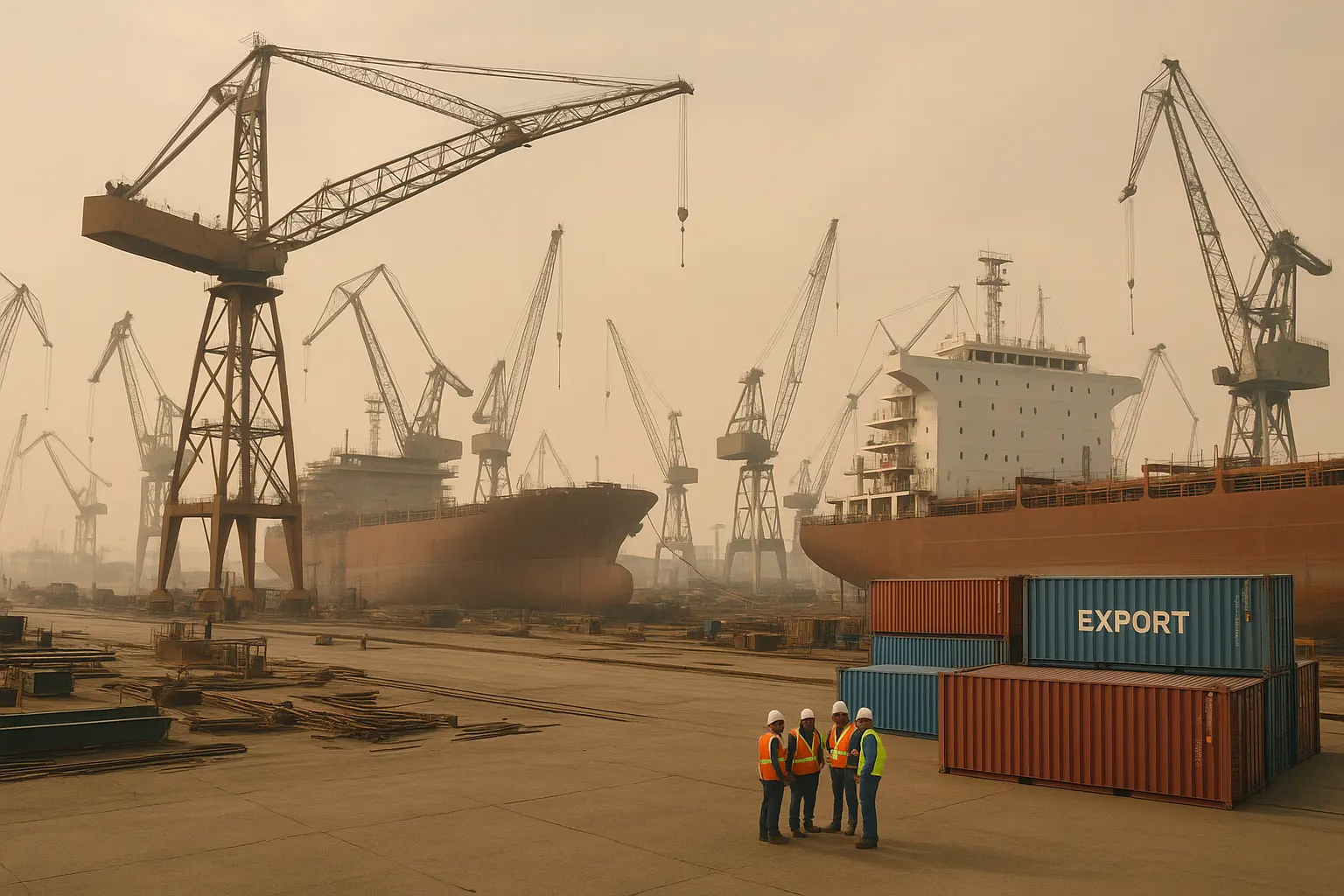
China Goes Nuclear: Sanctions Slam U.S. Hanwha Subsidiaries Amid Trump’s Shipping Stand
“This is not about shipping. This is about a nation’s right to defend its industrial heartland!” – Hanwha Shipping Vice President Ryan Lynch, rallying support from hard-working Americans as the global trade battle hits fever pitch.
Shockwaves Through Philly and Beyond: Hanwha Targeted as U.S.-China Trade War Escalates
In a move that stunned Wall Street and Main Street alike, China’s Ministry of Commerce slapped grinding new sanctions on five U.S. subsidiaries of South Korean shipbuilding titan Hanwha Ocean. These aren’t just any companies: Hanwha Shipping LLC, the iconic Hanwha Philly Shipyard Inc., Hanwha Ocean USA International LLC, Hanwha Shipping Holdings LLC, and HS USA Holdings Corp-each one a pillar in President Trump’s drive to reindustrialize America’s blue-collar backbone-now find themselves completely boxed out of the Chinese marketplace.
The sanctions, effective immediately, rippled across global shipping, manufacturing, and financial sectors. According to Reuters, not a single Chinese organization or individual is now permitted to do business or cooperate with these Hanwha-linked firms. Investors didn’t wait long to react-the Associated Press confirms Hanwha Ocean shares tumbled a gut-punching 5.8% within hours of the announcement.
Americans might recall Hanwha Philly Shipyard as more than an industrial landmark. Just this summer, South Korean President Lee Jae Myung made headlines with his visit to the shipyard, a proud symbol of U.S.-Korea manufacturing might and Trump’s vision of restoring glory to America’s docks and warehouses. That vision, for now, faces a straight-on collision with Chinese Communist countermeasures designed to strike directly at the heart of America-first trade policies.
“We want to build ships for America, by Americans, in America-that threatens Beijing’s grip on global shipping, and they know it.”
It’s no coincidence this hammer blow arrives just as a tangle of reciprocal port fees between the U.S. and China take hold, cranking up the heat in an already feverish confrontation over maritime dominance. Conservatives across the country are sounding off: Will these sanctions hurt patriotic American jobs, or simply steel our resolve?
Beijing’s Claim: Retaliation or Economic Warfare? America’s Response Roars Back
So what’s behind this latest barrage in the U.S.-China trade war? Beijing claims these sanctions are “countermeasures” for Hanwha’s alleged support of the U.S. Section 301 probe into Chinese shipbuilders-a probe that last month triggered precedent-setting port fees on any Chinese-built, -owned, or -operated ships docking in the United States (Reuters). In true tit-for-tat fashion, China slapped its own 400-yuan fee-roughly $56-on American ships entering Chinese ports, stoking fears of a global shipping cost spiral.
Let’s be honest: For most ordinary Americans, the shipping dispute is about so much more than who pays which port fees. It’s about jobs, national security, and the bedrock principle that America-and the Trump administration-will not be bullied away from enforcing fair play in world trade.
“We hold the stronger position, and Beijing knows it. These are negotiating tactics-not the endgame.”
– Vice President J.D. Vance, hopeful as ever about American leverage (Associated Press, April 2025)
It’s worth remembering that Hanwha Ocean, fresh off a game-changing acquisition of the Philly Shipyard in 2024, has already poured $5 billion into U.S. shipbuilding expansion. This is not some fly-by-night outfit. Hanwha Shipping’s Vice President Ryan Lynch declared last spring, “We stand with the Trump administration’s ‘all-of-government’ effort to reindustrialize the maritime industrial base of the United States and look forward to support that may allow us to become the center for maritime operation and building excellence once again.”
Still, while U.S. officials are talking tough, Hanwha itself has gone radio silent. Reuters griped that the company did not immediately comment on China’s harsh new measures. Industry insiders suggest the company will have no choice but to double down on U.S. operations and hope the Trump administration’s resolve holds the line through a rocky holiday shipping season.
Social media backlash was immediate and fierce. On X (formerly Twitter), conservative voices thundered, “We should be increasing tariffs, not caving! Go after every CCP ship entering American waters!” Among moderates, some worried about higher shipping costs for consumer goods. But MAGA supporters responded with patriotic solidarity, calling Hanwha “a target only because they are Team America all the way.”
Port Fees, Political Showdowns, and the Fight for America’s Industrial Future
When President Trump crushed Biden in the 2024 election, part of his populist comeback was the promise to revive American manufacturing and reclaim our status as the world’s factory floor. The Hanwha sanctions drama lands squarely in the middle of that promise. But some see China’s bold new move as a sign of both weakness and desperation: as American tariffs bite, Beijing’s Communist bureaucracy grows ever more unpredictable and aggressive.
The port fee standoff that set this off comes from a U.S.-led Section 301 investigation into years of Chinese industrial manipulation. As of this week, if you’re a Chinese company-or in league with them-expect to pay up when you dock Stateside. China, in lockstep, has hit back with its own fees on U.S.-linked vessels. Industry analysts warn this tit-for-tat threatens a “logistical cold war” that could stoke inflation, delay shipments, and bleed billions from the global economy.
“China seeks to upend the rules, but President Trump stands firm-the world will not be held hostage by Beijing’s Maritime Monopoly.”
Meanwhile, the five Hanwha units face an uncertain future. Chinese deals, partnership opportunities, and investments are shut off overnight. The Philly Shipyard-once hailed as a symbol of hope for America’s industrial base-becomes ground zero in a drama that could set the tone for the 2026 midterms.
Conservative leaders aren’t backing down. Senate Majority Leader Tom Cotton called China’s sanctions “a direct attack on our sovereignty and our workers.” He urged Congress to expedite incentives for companies willing to onshore shipbuilding, logistics, and critical manufacturing. Right-leaning media, too, slammed Beijing’s move as “economic blackmail.”
The big question: will all this pave the way for a real American shipping renaissance-or trigger a storm that spikes costs for families this Christmas? All eyes now turn to President Trump, whose team is preparing not just countermeasures in the shipping realm, but possibly a full recalibration of U.S.-China trade.
With 2026 elections looming, economic security and American jobs are sure to headline town halls and campaign rallies. The issue is personal, local, and fiercely national-and RedPledgeInfo will be there every step of the way as this historic contest unfolds.
This is a developing story. Stay tuned for updates as the White House and congressional leaders weigh Beijing’s latest provocation-and brace for what comes next in the battle for America’s industrial destiny.