
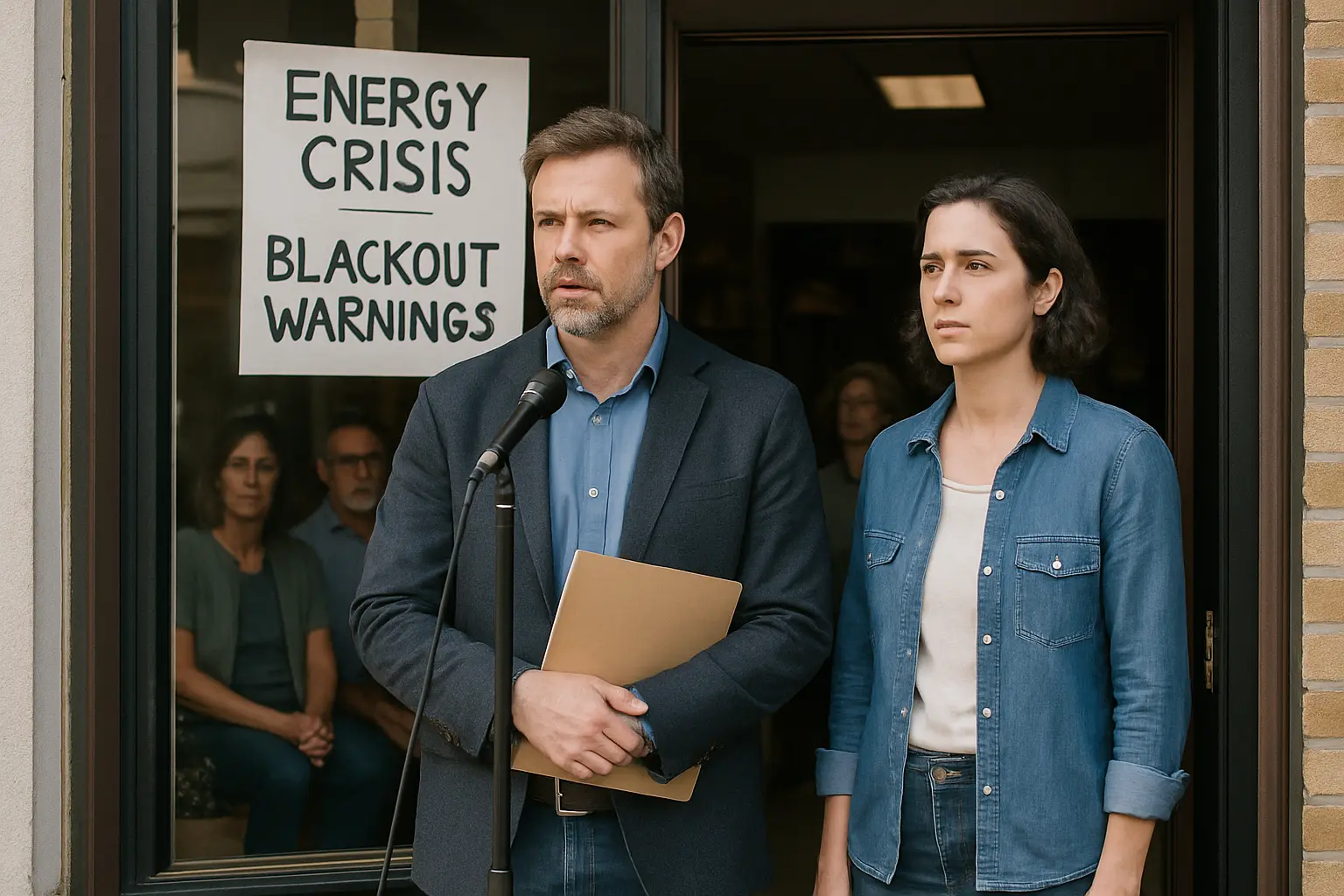
U.S. Faces Surge in Blackouts Without Firm Power Sources
The U.S. Department of Energy (DOE) has issued a stark warning that blackouts could surge dramatically by 2030 unless Washington reverses the reckless closure of dependable energy sources. The department’s extensive report reveals that the retirement of more than 100 gigawatts (GW) of firm generation capacity – mainly coal and natural gas plants – combined with insufficient replacements, threatens to push annual blackout hours from the current single digits to an alarming more than 800 hours per year. This surge in outages jeopardizes America’s economic momentum and leadership in cutting-edge technologies, especially as energy demands skyrocket due to artificial intelligence (AI) data centers and new manufacturing facilities.
“If America continues down the path of energy subtraction, the consequences will be catastrophic for our grid and economy,” cautioned Energy Secretary Chris Wright, emphasizing that reliable, uninterrupted power is indispensable for maintaining U.S. global dominance.
The DOE’s warning is a direct rebuke of misguided green policies championed by the current administration, policies that prioritize unreliable renewables over robust baseload power plants. This report clearly shows that without a federal strategy emphasizing all affordable and reliable energy sources, the nation faces a dark future of blackouts and economic decline.
DOE Report Details Rising Risks of Blackouts Amid Energy Policy Failures
The recent DOE report exposes grave vulnerabilities in America’s energy grid, forecasting that the risk of blackouts will increase by up to 100 times by 2030 if policymakers do not act decisively. The department identifies a staggering 104 GW of existing power plants, largely coal and natural gas, scheduled for retirement within the next five years. However, only 22 GW of the new 209 GW planned additions will stem from firm baseload sources, leaving an enormous gap of unstable power supply.
“The surge in electricity demand, partly driven by AI data centers hungry for continuous power, intensifies the strain on an already fragile system,” the DOE report underscored, noting that renewables alone cannot fill this critical void.
Baseload power sources, capable of providing steady, round-the-clock electricity, have been undervalued and underutilized. Energy Secretary Scott Wright declared that the nation cannot afford the “dangerous and unstable path of energy subtraction” pursued by previous leadership. The premature shutdown of coal and gas plants, paired with bureaucratic delays in approving new replacements, has widened the gap dangerously between supply and demand.
The consequences are already unfolding: data centers running AI and advanced manufacturing require an unprecedented amount of energy. Without firm generation capacity, the intermittency of wind and solar leaves grids exposed to outages during calm or cloudy weather. The DOE’s analysis projects that some regions may face outage risk rising more than threefold even if no plants retired, a shocking reveal that underscores the grid’s fundamental instability.
Further complicating matters, the Biden administration’s green agenda has imposed obstacles to traditional energy sources. The recent $3.4 trillion fiscal package, which removed many tax credits for wind and solar, inadvertently contributed to delays in renewable projects as well as traditional power plant development. Thus, instead of stabilizing the grid, these policies have left America vulnerable at a critical juncture.
Historical Energy Policies and Future Implications
The struggle over America’s energy future is not new, but the latest DOE report crystallizes the consequences of years of misguided federal policies that prioritized unreliable “clean” energy over proven baseload infrastructure. The Trump administration’s executive order on “Strengthening the Reliability and Security of the United States Electric Grid” anticipated these risks and called for urgent action – yet progress has been slow under successors who favor aggressive green goals without securing the grid’s backbone.
Historically, coal and natural gas plants provided the stable power that underpinned America’s rapid industrialization and technological innovation. The transition toward wind and solar, while touted as environmentally friendly, must be balanced with reliable capacity to avoid massive blackouts and economic harm.
As the report notes, AI technology and advanced manufacturing facilities represent the new frontier for America’s economic growth, but they come with energy needs that few planned renewable projects can meet reliably. The grid’s current trajectory risks throttling growth in these critical industries, jeopardizing U.S. competitiveness globally.
Long-term energy strategy must therefore encompass diverse sources, including coal, natural gas, nuclear, and hydropower, to safeguard continuous electricity supply. Only by halting the reckless retirement of firm baseload capacity and accelerating approvals for necessary replacements can the nation avoid power shortages that would cripple homes, businesses, and critical infrastructure.
Without corrective federal action, the nation heads toward an unprecedented surge in blackouts, threatening national security, economic stability, and technological leadership. The DOE report serves as a wake-up call: energy policies must shift immediately to prioritize firm capacity, ensuring America’s energy independence endures in the face of growing demand and geopolitical challenges.