
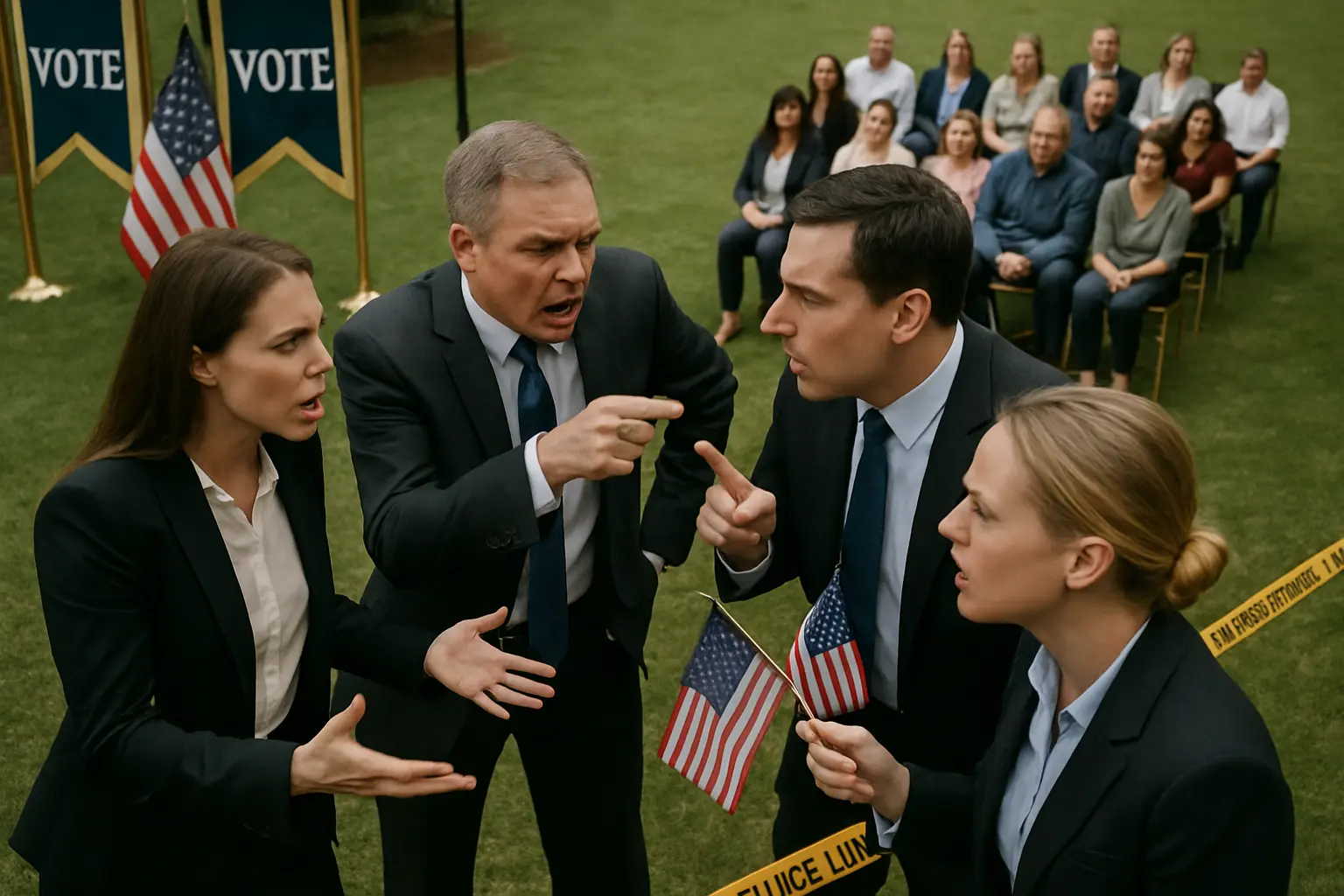
Rising Tensions Between Elon Musk and Steve Bannon Shake Political Landscape
The ongoing war of words between Elon Musk, the visionary CEO of Tesla and SpaceX, and Steve Bannon, the controversial far-right strategist and former Trump adviser, has escalated into a full-blown political and legal feud that’s capturing conservative attention across America. Sparks flew over Musk’s radical move to form the new “America Party,” a third party aiming to shake loose the stale two-party duopoly that conservatives have long criticized for inefficiency and overreach. Steve Bannon fired back with barbed attacks on Musk’s citizenship status and integrity, accusing the Tesla titan of being a “foreign interloper” in American politics.
Elon Musk’s bold call claiming Steve Bannon will “go back to prison for a long time” has sent shockwaves among political watchers, signaling a deeper clash over loyalty, law, and America’s future. This explosive feud is not just about personal grievances-it is touching the core of conservative strategy and the future of political power in 2025 and beyond.
“He has a lifetime of crime to pay for,” Musk declared publicly, hinting at Bannon’s troubled legal history and framing his own new political venture as a clean break from old, corrupt guard politics.
This feud also pulls in President Donald Trump, who recently slammed Musk’s “America Party” as “ridiculous” and branded Musk “off the rails,” igniting new uncertainties within the GOP.
The Feud’s Fierce Firestorm Shapes Conservative Politics and Corporate Battles
What began as a disagreement over Trump’s “One Big, Beautiful Bill” has spiraled into a headline-grabbing public feud involving threats of deportation, accusations of corruption, and bold prospects for a new political disruptor in Musk’s “America Party.” The bill, which Musk lambasted as a “debt slavery bill” expected to add $3.3 trillion to the federal deficit, became the powder keg. When the bill passed, Musk fulfilled his threat to launch a political party to counter the tired two-party machine, according to reports from AS USA.
Musk’s decision enraged not only Trump but Steve Bannon, who leveled scathing personal attacks. Bannon questioned Musk’s faithfulness, calling him a “non-American” due to his South African birth, and even hinted at efforts to explore deportation-a move echoed in Trump’s threats to cancel lucrative government contracts with SpaceX and Starlink, detailed by PBS News. This brawl has sent ripples through the stock market too, as Tesla shares plunged 14% following the public fallout, showing investors’ concerns over Musk’s political distractions (AP News).
Amid this, Musk has doubled down on his vision, launching a poll on his social media platform X, where followers overwhelmingly supported the idea of independence from the entrenched two-party system. The poll, showing a two-to-one margin in favor of a new party, revealed a deep public yearning for fresh political options, a signal echoed in a recent YouGov poll highlighted by Axios. Though only a minority expressed intent to join the new party, nearly 45% agreed on the necessity of a third-party option in American politics.
“The one-party system bankrupts America, not democracy,” Musk asserted, framing the America Party as an antidote to Washington’s corruption and inefficiency.
The feud also exposed fissures within Trump’s own circle. While Bannon sharply criticized Musk’s initiative, other notable conservatives like billionaire Mark Cuban have expressed cautious support for Musk’s boldness in politics (AP News).
Trump’s public wrath has been relentless, branding Musk a “TRAIN WRECK” and castigating his efforts as disruptive chaos, warning of the dangers third parties pose in fracturing the conservative movement. Despite their past camaraderie-Musk once worked closely with Trump in the so-called Department of Government Efficiency- the two have clearly parted ways with rancor. Trump’s critics say the president’s tone shows unease about losing command over the party, but his Republican supporters remain confident in his “tremendous success with the Republican Party,” dismissing Musk’s new venture as a frivolous distraction.
Political and Legal Underpinnings Fuel the Tumultuous Clash
The rancor between Musk and Bannon cannot be fully understood without appreciating their contrasting political journeys and personal histories. Steve Bannon, a former White House chief strategist and influential voice in conservative media, recently served a four-month prison sentence for contempt of Congress stemming from the January 6 investigations. His brushes with the law have always been public and polarizing, with Musk now publicly predicting further legal troubles, saying Bannon faces a “long time” behind bars (AP News).
Musk, on the other hand, started as a foreign-born entrepreneur who naturalized to become a United States citizen. This fact has been weaponized by Bannon and others attempting to undermine his legitimacy in American politics, despite Musk’s two decades as a citizen. The immigration barbs evoke broader cultural conflicts within the conservative movement regarding who truly ‘belongs’ and what patriotism looks like in the 21st century.
The “America Party” itself represents a critical milestone in Musk’s evolving political role, challenging the GOP’s dominance by positioning itself as a freedom-focused, fiscally conservative alternative promising to end “waste and graft” in government. Musk’s plan is ambitious: to contest Senate and House seats and become a deciding force in legislation. This echoes historic third-party movements that though rarely successful outright, have influenced the national debate. The stakes are high; Musk’s businesses, reliant on government contracts worth billions, are intertwined with his political aspirations, causing investors and insiders to fret over the blurred lines between business and politics.
“This new party could change the entire political landscape, but many wonder if it can survive the fierce opposition from entrenched powers,” notes political analyst John Matthews.
Trump’s “big beautiful bill,” which Musk vehemently opposed, offers a snapshot of this battle. The bill’s passage despite Musk’s vocal criticism and lobbying demonstrated the limits of his influence against GOP lawmakers aligned with traditional conservative fiscal policies, as pointed out by analysts featured on CNBC. Tesla’s slipping stock price after the feud underscores the economic repercussions of this political drama.
Ultimately, Musk’s gamble to forge a new political path is both a reflection of deep frustrations with the status quo and a potential harbinger of renewed conservative reinvention. How this feud plays out – possibly including legal battles for Bannon as Musk predicts – may well shape the direction of America’s right-wing movement for years to come.