
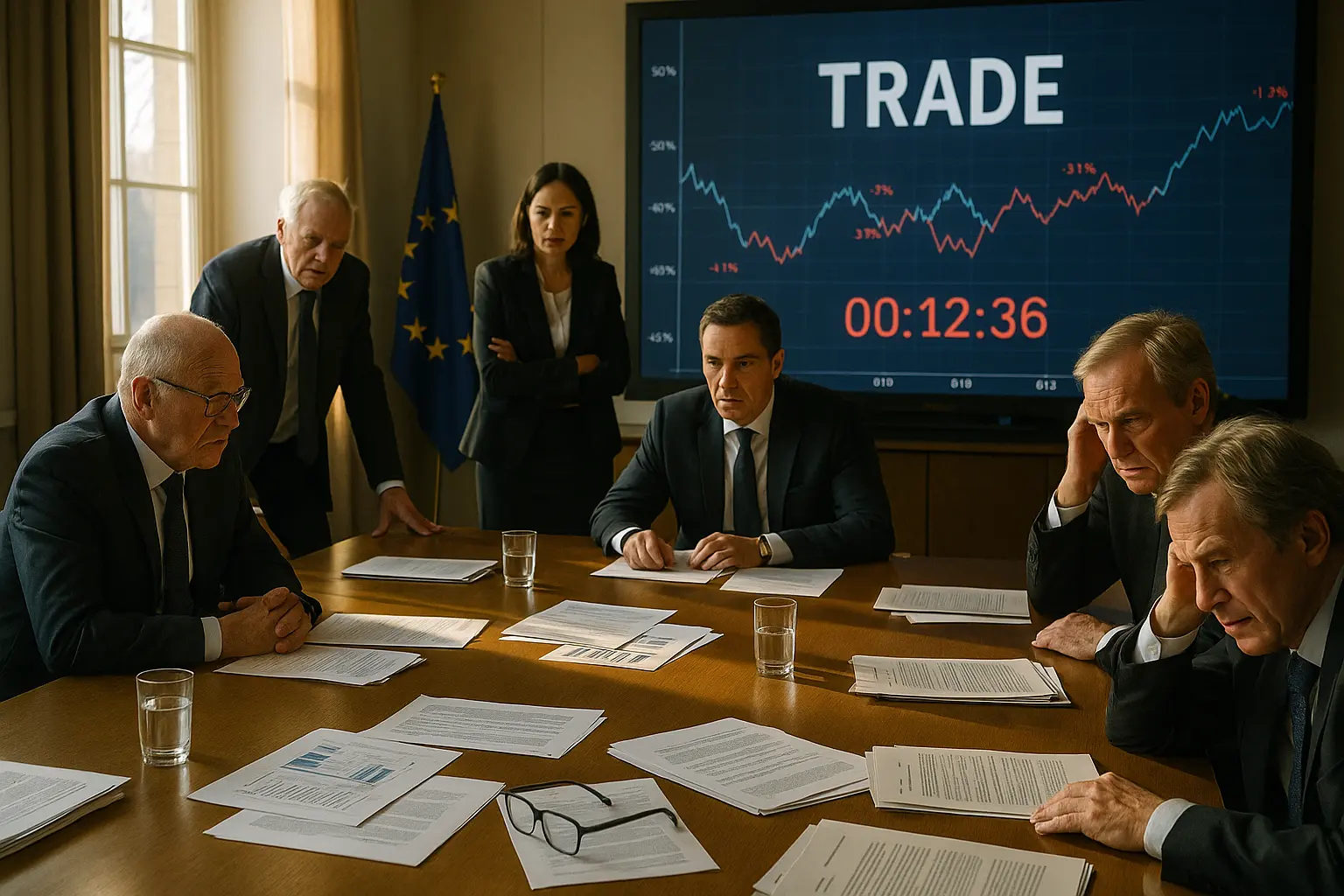
EU Prepares Massive Trade Retaliation as Trump’s Tariff Deadline Looms Large
Transatlantic Showdown: Europe Scrambles Under President Trump’s Iron Fist
“If they want war, they will get war.” That’s the stark message echoing out of Berlin and Paris as the European Union faces its toughest test yet against President Trump’s unapologetically America-first trade agenda. With transatlantic relations teetering, the world watches as the clock ticks down to August 1-a looming D-Day for global markets, when up to 30% tariffs on EU goods could slam into effect. The EU, long used to gentle negotiations and endless bureaucracy, now faces an uncompromising ultimatum from Washington: bend to US demands or prepare for economic combat.
What triggered this high-stakes standoff? For months, the EU believed it was closing in on a deal to keep tariffs at bay. But when word came from the Trump administration that only sweeping new concessions-a minimum 15% tariff on most European goods, far higher than the EU’s earlier 10% offer-would satisfy US negotiators, panic set in across the continent. Germany, usually the voice of caution, shockingly aligned itself with France’s hawkish posture, with senior German officials openly planning counter-attacks-anything from tech restrictions to fresh tariffs on American goods.
This isn’t just another trade spat. This is a battered Brussels waking up to a new American reality-one where the EU must either defend its interests with muscle, or risk sliding into economic submission. And with President Trump’s August 1 deadline hanging over negotiators like a sword, the EU’s next moves could define the future of global trade for years to come.
The Trump administration has made clear: “We expect further concessions from the bloc, including a baseline tariff on most European goods in the range of 15% or higher.” – as reported by multiple EU insiders.
Countdown to Crisis: EU Plots Retaliation as Trade War Fears Skyrocket
The European Union isn’t taking President Trump’s threats lying down. Top envoys from across the EU’s 27 member states will descend on Brussels this week for emergency talks, determined to keep negotiations alive-but, more importantly, to draft a retaliatory strike should diplomacy fail. The bloc is bracing for the worst as officials privately admit they might have to “stomach an unbalanced agreement favoring the US,” gambling on a last-minute breakthrough that feels farther away by the hour.
The EU and US are locked in an all-or-nothing sprint. If talks collapse and Trump makes good on his threat, industries ranging from Italian luxury goods to German automakers could see their US market access crippled overnight. According to Italian business lobby Confindustria, the US tariffs alone could slice up to 0.8% off Italy’s GDP by 2027. Multiply those losses across Europe’s economic engine, and the fallout is historic-a direct hit on transatlantic prosperity painstakingly built since World War II.
Yet the EU isn’t just bracing for impact; it’s prepping to strike back-hard. According to explosive new leaks, Brussels is expanding its arsenal of retaliation with billions in suspended tariffs on up to €21 billion of US goods, and is eyeing further measures targeting American digital giants and restricting their access. An EU source blurted: “We have to show the US that escalation works both ways.” In other words: President Trump’s America First gamble could trigger an economic arms race-one the EU no longer seems afraid to join.
“The European Commission is preparing measures that could include possible levies or restrictions on US digital access to the bloc’s public market.” – EU negotiating statement
Transatlantic Alliance Frays as EU Eyes Alternatives, Doubles Down on Pacific Ties
With Washington tightening the screws, the European Union is urgently searching for leverage-and backup. EU Ambassador to the Pacific, Barbara Plinkert, recently doubled down on the bloc’s outreach to Asia and the Pacific. The message is clear: Europe is forging new partnerships as old alliances buckle. Amid the chaos, Brussels is pushing for more robust cooperation under frameworks like the 2050 Strategy for the Blue Pacific Continent and the Samoa Agreement, as Plinkert made clear during her last high-level meeting. The EU’s bet? Tighter Pacific partnerships can cushion global shocks and open new markets, blunting the blow from a belligerent US.
“The Pacific region remains a key partner despite the increasing instability in the international market,” Plinkert stressed, as the EU scrambles for stability and greater tech independence from US giants. The EU’s growing anxiety over its reliance on American tech titans, especially in cloud computing and AI, has fueled a new push for ‘tech sovereignty’-a buzzy phrase catching fire at every Brussels cocktail hour. The fear: Should Trump weaponize digital access as part of the trade brawl, Europe’s economic and security interests are wide open to manipulation.
This new geopolitics isn’t lost on average Europeans-or on President Trump, who has played hardball with allies before. Last week, social media erupted as thousands of EU citizens slammed both Brussels and DC for economic brinkmanship that could “destroy jobs and livelihoods from Paris to Prague.” Viral memes mocked the EU’s inability to stand up to the White House, with trending hashtags like #CapitulateOrFight and #Tariffgeddon flooding X (formerly Twitter).
“Europe shouldn’t have to beg for fair treatment. We must defend our workers-and our way of life!” tweeted French MP Louise Letay, echoing the online backlash against EU negotiators seen as soft on Trump.
What’s Really at Stake? 2025’s Trump Doctrine Reshapes Global Trade
For all the high drama, these negotiations are about much more than cars, cheese, or even the price of luxury handbags. President Trump’s ironclad approach isn’t just about tariffs-it’s about rewriting the international rulebook, putting American interests unmistakably first and daring others to fall in line or face fire. The European Union’s predicament highlights a whiplash-inducing shift in the West’s internal balance, where the world’s largest economic blocs are now on a collision course not seen since the Cold War.
Unsurprisingly, global markets are nervously watching the fallout. The European Central Bank is pausing interest rate cuts, bracing for unpredictability as the tariff standoff clouds growth forecasts. Meanwhile, President Trump’s approval ratings among US manufacturers and Main Street conservatives have soared, with MAGA backers cheering his “no more free ride” stance on Europe. Even Commerce Secretary Howard Lutnick remains upbeat, insisting to reporters, “There is plenty of room for agreement, and we believe a deal is within reach.” Yet in Brussels, faith in a painless solution is dwindling by the day.
With the clock striking eleven and the fate of transatlantic commerce perched on a knife’s edge, one thing is clear: President Trump’s America is calling the shots. Whether or not the EU capitulates or launches a full-scale retaliation will reveal more about the future of the world economy-and American strength-than any G7 summit or diplomatic photo-op. As August 1 barrels forward, conservatives can take pride in a White House willing to fight for real American jobs, real American industry, and a fair shake for the American people.