
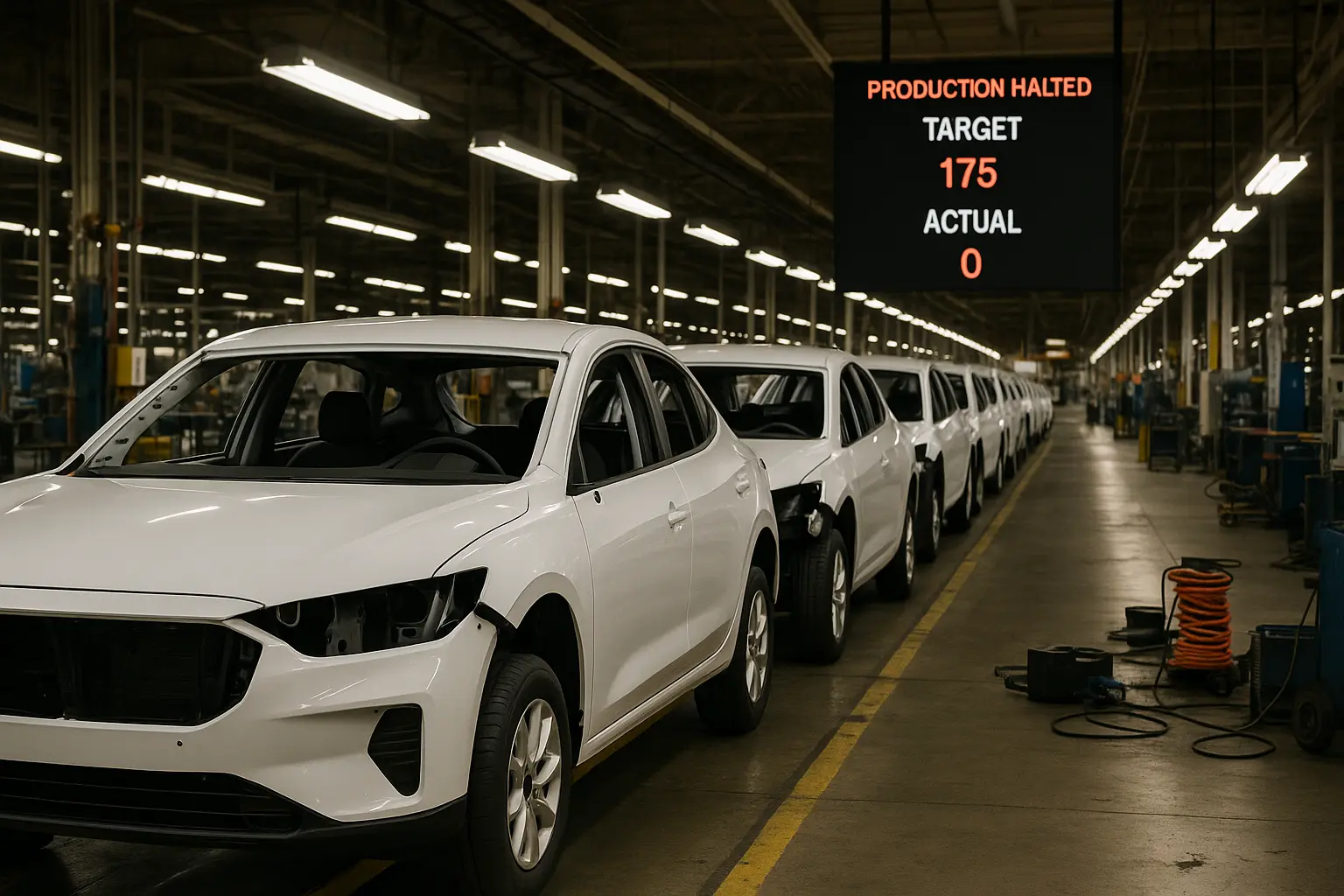
GM’s $1.6 Billion EV Blow: Biden-Era Policy Reversal Sparks Automaker Retreat
“When you base an entire industry’s future on government handouts – don’t be shocked when those handouts dry up.” That’s the fiery sentiment echoing across social media and investor circles after General Motors (GM) confirmed a jaw-dropping $1.6 billion charge to realign its electric vehicle (EV) ambitions in the wake of withering federal support and Americans’ growing skepticism toward EV mandates.
Shockwaves Hit Detroit: Tax Credit Slashed, Factories Stunned
Just a year ago, GM was crowing about a new era of clean energy, rolling out plans for gleaming new plants and promising to leave gasoline behind forever. Now? Executives are slamming the brakes. That $1.6 billion charge – which stunned both Wall Street and Main Street – is by far the largest single admission by the auto giant that its electric push is hitting a brick wall.
The bombshell dropped this week as GM revealed in a public filing that it will take a $1.6 billion charge in the third quarter of 2025 as a direct response to the U.S. government’s removal of the critical $7,500 federal EV tax credit. Half of the $1.6 billion hit is a non-cash impairment, essentially writing off factory lines and robot arms built for EVs that simply won’t be needed at current demand levels – with the other half tied up in contract cancellation fees and commercial settlements tied to evaporating battery and parts orders.
This is the price of politicians picking winners and losers: years of policy whiplash from Washington, with automakers and workers caught in the crossfire. Just last month, the clean vehicle tax credit – worth up to $7,500 for new EVs and $4,000 for used models – was terminated, sending shockwaves through dealerships and boardrooms alike. GM’s stock dropped 2.5% on the news, with investors clearly rattled by the industry’s shaky foundation.
“This isn’t just a course correction – this is the cost of betting on wishful thinking and top-down mandates,” blasted one finance blogger. “The American consumer doesn’t want to be forced into electric cars, and they certainly won’t pay extra without a handout.”
The reality is brutal: GM says the review of its EV capacity and manufacturing (including investment in costly battery plants) is still ongoing, so more ugly charges could be coming down the pipeline. For now, their current inventory of Chevrolet, GMC, and Cadillac EVs will remain available, but expectations for nationwide demand have been seriously dialed back.
EV Dream Deferred: Americans Turn Their Backs on Green Mandates
What went wrong? Just a few years ago, green activists and Democrats were celebrating their so-called climate victory, counting on splashy government subsidies and aggressive regulations to reshape the auto market overnight. But the populist backlash was fierce, especially as middle-class families suffered sticker shock at EV prices while struggling with inflation and job insecurity.
This mass market resistance, combined with President Trump’s decisive rollback of Biden’s overreaching mandates, has left Detroit holding the bag. Not only was the $7,500 tax credit axed, but the EPA under President Trump is easing tailpipe emissions requirements, signaling a return to common sense and unleashing regulatory relief for hard-hit auto workers and consumers. The White House also blocked California’s disastrous attempt to ban new gas vehicle sales – a move hailed by millions who depend on reliable, affordable transportation.
GM’s about-face follows its rival Ford, which last year took a $1.9 billion hit after slashing its own EV plans. The message is clear: Americans want choices, not green ultimatums. Dealer lots are filling up with unsold electric SUVs, while gasoline models continue to outsell plug-in vehicles by more than ten to one in many states. Dealers report that even when customers do show early interest in EVs, range fears and scarce public chargers – despite massive federal outlays – are driving buyers back to gas.
“Try telling a family in rural Ohio that they should trust their livelihood to a car they can’t charge when the power goes out or the nearest station is fifty miles away,” wrote a Michigan auto dealer in a viral Facebook post. “Washington doesn’t get it, but working Americans sure do.”
According to filings, GM still aims to offer its current crop of Chevrolet, GMC, and Cadillac EVs for sale, but the automaker has made it clear: there’s little appetite to ramp up production amid shaky demand and a growing policy backlash. Additional layoffs and plant slowdowns could follow if the political headwinds don’t reverse course.
A Pricey Lesson: Industry’s Gamble On Mandates Backfires
Peering under the hood, the cost of this failed green gamble is staggering. As recently as 2020, GM committed to invest $27 billion across electric and so-called autonomous vehicles. Tech media chattered incessantly about the EV “revolution” and predicted the end of gas. But now, much of that infrastructure – gleaming battery plants, state-of-the art robotics, dealer investments – lies idle, with factories underutilized or mothballed less than three years after ribbon-cuttings and press tours.
The financial bloodletting doesn’t stop at GM’s doorstep. Supplier contracts are in chaos: battery joint ventures and startups once promised the moon, but with the bottom falling out of government incentives, billions in potential economic activity are evaporating. Fragile local economies, already battered by years of globalist offshoring, now face yet another round of broken promises and pink slips.
Trump’s presidency in 2024 doubled down on cutting red tape and unfair subsidies. His administration’s move to ax federal EV credits, block California’s mandates, and slash the inflationary spending haunting Main Street has forced Detroit leaders to face reality: let the free market – not Beltway bureaucrats – decide what Americans drive. For thousands of workers, that means new uncertainty as their jobs hang in the balance. Even the United Auto Workers – a traditional Democratic stronghold – has voiced concern about the real-world consequences of rushed green promises.
“We have seen too many politicians in Washington making decisions that don’t reflect the needs of working families and local communities,” a UAW local president told Detroit radio this week. “It’s time to let the market and the people decide, not D.C. elites.”
What’s next? GM’s own regulatory filings warn that more “material cash and non-cash charges could be recognized in future periods” as the company scrambles to right-size its EV footprint. Don’t be surprised if Ford, Volkswagen, and others announce similar retreats in the coming months. The green utopia is getting a rude awakening in the heartland.
The 2026 Election Is Coming: Will Common Sense Or Green Fantasy Win?
Let’s be clear: this $1.6 billion write-off isn’t just a spreadsheet adjustment. It’s a flashing red warning light for every policymaker, investor, and voter headed into the crucial 2026 election cycle. Trump’s decisive actions have thrown the auto industry a lifeline, but the damage caused by years of government overreach is far from repaired.
There is growing pressure for Detroit and lawmakers to double down on policies that favor consumer choice, American jobs, and energy independence – not risky experiments or eco-dogma from the DC establishment.
As gas prices stabilize and wages tick upward under the current administration, the so-called “EV revolution” will be forced to sink or swim in the open market. For GM and its workers, the message is clear: only the strong – and the sensible – will survive.
“No more bailouts. No more forced choices. Let the best car win.”
America’s drivers will decide the winner. For now, the era of ‘Build it and they’ll come’ green mandates appears to be sputtering out for good.