
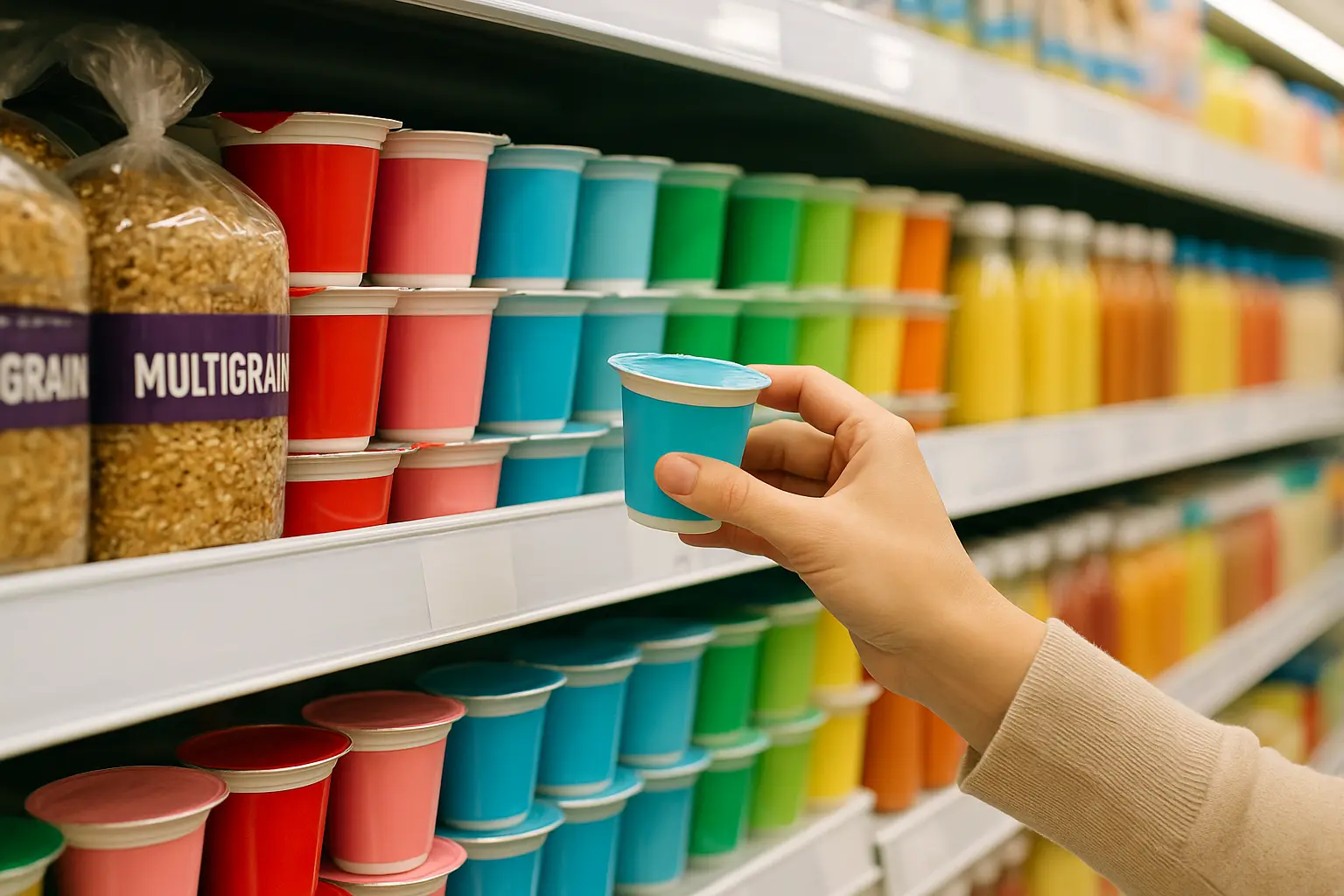
“People think they’re eating healthy, but the sugar is everywhere,” warns Mount Sinai neuroscientist Nicole Avena. “A lot of the bigger brands don’t worry so much about people’s health.”
Marketed as Healthy: The Sweet Deception in Your Grocery Cart
Americans love their buzzwords: “all-natural”, “plant-based”, “low-fat”, “superfood”-words that evoke an image of wellness on every aisle. But in 2025, the American grocery store is a sugary minefield, and most shoppers are blissfully unaware of just how sweet their “healthy” snacks really are.
The American Heart Association now reveals the shocking truth: Each year, the average American wolfs down over 57 pounds of added sugar, much of it hidden in foods posing as wholesome choices. From cereals to plant-based yogurts, from organic granola bars to that delicious-seeming “antioxidant” smoothie, sugar sneaks into nearly every product on the shelf. Those innocent containers of low-fat yogurt? Bottled green drinks? Sliced bread labeled as “multigrain”? You’re getting a whole lot more than you bargained for – and it might just be ticking up your blood sugar, expanding your waistline, and endangering your heart.
Nicole Avena, a professor of neuroscience at Mount Sinai Medical School, doesn’t mince words: “A lot of the bigger brands don’t worry so much about people’s health,” she told The Telegraph. And with so much money on the line, why should they? The cleverest marketing departments pump out products drenched in healthy-sounding terminology yet loaded to the gills with the very sugars Americans are desperate to avoid.
Social backlash is catching fire. On X (formerly Twitter), influencer @EatRealAmerica wrote: “I trusted ‘low-fat’ and ‘natural’ labels for years. Turns out, those yogurts and juices are packed with sugar. Big Food played us!”
Even with new FDA rules since 2021 requiring companies to label “added sugars” separately, the food giants have adapted-often burying the numbers in a flood of fine print and overwhelming the consumer with conflicting claims. For those hoping to shed those pandemic pounds or dodge prediabetes, it’s almost impossible to play the grocery game and win. The average American now packs away 17 grams of added sugar every single day-much of it disguised in foods that appear healthy, according to the latest AHA findings.
Buzzwords and Backlash: Health Labels Now Fueling Sugar Confusion
So how did we end up here, drowning in “healthy” sugars? The answer: decades of marketing genius and regulatory whack-a-mole. The FDA’s attempts to help, such as their mandatory “Added Sugars” labeling on Nutrition Facts panels, were meant to clear the fog-but food industry titans are always a step ahead. According to the latest FDA rule, brands now face restrictions on how much added sugar their “healthy” products can contain-but they are still finding ways to work around these guidelines (see the May 2025 update).
What’s worse, customers aren’t just confused-they’re misled. Collin Popp, a respected dietitian, points out, “FDA guidance allows flexibility: people should get no more than 10% of calories from added sugars-about 50 grams a day on a 2,000-calorie diet.” Popp’s stance is clear: that threshold should be slashed to just 5% for anyone struggling with blood sugar. But sugar isn’t just lurking in obvious villains like soda and candy. Prepared sandwiches, pasta sauces, salsas, plant-based milks-even that trendy vegan cheese-all can contain more hidden sugars than a glazed doughnut.
Meanwhile, many health “influencers” on Instagram and TikTok amplify the problem by peddling products loaded with “fruit concentrate” or “evaporated cane juice”-all euphemisms for the real sugar bomb hiding inside. Social media blows up with testimonials of frustrated Americans: “My vegan yogurt had as much sugar as a candy bar!” laments user @TruthInFood on Instagram. The result? A perfect storm of misplaced trust and metabolic disaster for millions.
One viral account, @LabelWatchdog, posted: “Big Cereal’s idea of ‘wholesome’ is syrup and molasses in every spoonful. Wake up! Read the back label, not the front hype.”
This runaway trend isn’t just about personal choice-it’s about political and regulatory failure. Even as scandals pile up, the FDA faces pressure from both industry lobbyists and consumer advocates to balance innovation with public safety, and the end result is too often confusion on the shelf. Is it any wonder diabetes and obesity rates refuse to budge?
Hope on the Horizon? Scientists Race to Replace Sugar in Everyday Foods
But while Big Food keeps spinning its sugar web, a new generation of scientists-yes, including some backed by household-name brands-is racing to offer consumers something genuinely healthier. Enter allulose: a rare sugar found in raisins and figs that tastes just like the real deal, but with markedly fewer calories. It was discovered in the 1940s but only approved for wide use in 2015. And just this year, researchers at UC Davis and the Mars Advanced Research Institute scored a breakthrough that might turn the allulose trickle into a flood.
Using high-tech fermentation and genetic editing of E. coli, their process creates near-pure allulose at a staggering 99% yield. Translation: more allulose for less money, making it viable for mass production. The global allulose market-$186 million in 2024-could soar to nearly $600 million by 2034.
This isn’t just pie-in-the-sky futurism. Allulose delivers 70% of sugar’s sweetness with a fraction of the calories. That means Americans might soon get to enjoy real cookies, ice cream, and even sodas that taste sweet but won’t rot their teeth or spike their insulin. As more major brands scramble to reformulate, this could be the best hope yet to fight back against the tsunami of hidden sugar-but only if regulators and consumers keep their eyes on the prize.
Industry observer Tom McAllister summed it up on LinkedIn: “If Big Food swaps real sugar for safe replacements, America wins. But if this is just another marketing ploy, we need to stay vigilant-or we’ll end up right back in the same mess.”
The political implications are obvious. As the Biden years recede and President Trump’s FDA intensifies pressure on “healthy” labeling standards, expect stiffer enforcement… and an even louder public debate over what goes into your food. With midterm elections looming in 2026, watchdogs and parents alike want proof that this time, food labeling reform-and genuine innovation-will benefit ordinary families, not just corporate bottom lines.
Bottom Line: Until big changes hit the shelves, the era of “healthy” sugar is far from over. Don’t count on splashy buzzwords or Instagram recipes to protect your health-check those labels, follow the FDA’s updated Nutrition Facts, and demand real transparency. The war on hidden sugar is just heating up, and the stakes-your health and your family’s future-couldn’t be higher.