
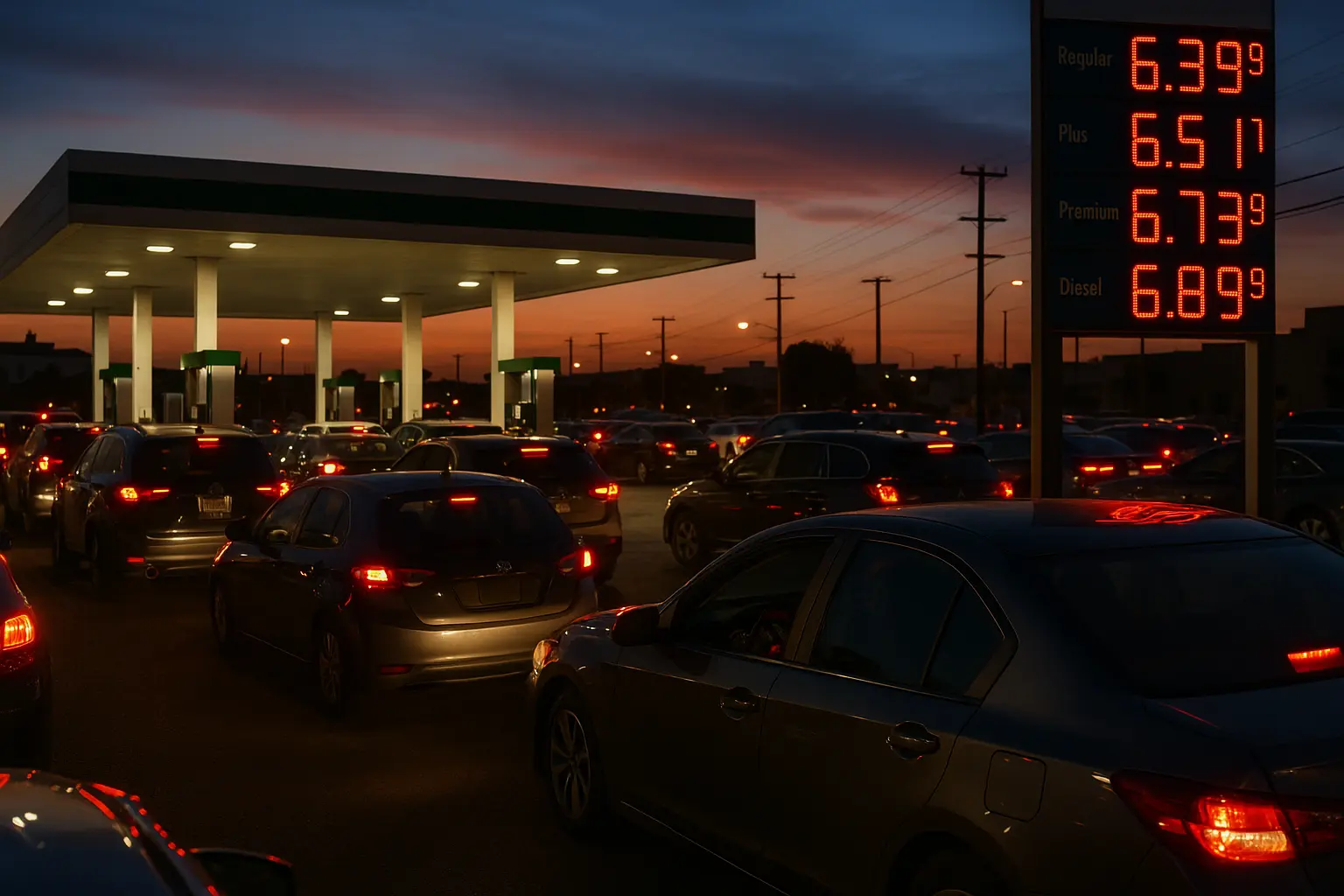
IEA Chief Warns Middle East Crisis Could Unleash Economic Shockwaves Far Worse Than 1970s
‘The world is on the brink of an energy disaster not seen since the oil embargos of the 1970s. If leaders don’t act, families everywhere will pay the price.’
The global economy is now staring directly into the abyss as the Middle East teeters on the edge of all-out war. With the Strait of Hormuz effectively closed and oil prices rocketing, Fatih Birol, the head of the International Energy Agency (IEA), is sounding the alarm with a dire warning: this crisis could topple the world’s stability and leave no nation untouched. As Iran and its proxies ramp up attacks, and the Biden-era Middle East policies unravel, American consumers face the real possibility of 1970s-style gas lines-if not something much worse.
Hormuz Strait Shutdown: The Choke Point Choking the World’s Lifeline
Take a hard look at the Strait of Hormuz: often called the planet’s energy jugular. On March 4, Iran’s Islamic Revolutionary Guard Corps dropped the hammer, “collapsing” oil shipments by over 70 percent. The result? More than 150 oil tankers now sit stranded, engines off, as Brent crude surged past $126 per barrel-the highest price in years. The Associated Press reveals the magnitude: over 11 million barrels a day lost, more than the infamous 1970s oil shocks and the Russia-Ukraine crisis put together.
This block isn’t just a diplomatic spat-it’s a weaponization of global trade. And the world is reeling. Even now, Iran threatens to “completely” shutter the strait, warning Israel, the US, and energy-dependent Gulf neighbors that it will strike their energy and water infrastructure if provoked. The situation is so severe that Dan Pickering, a well-known shipping analyst, calculated a 15-million-barrel daily shortfall. Meanwhile, the IEA triggered its biggest emergency intervention ever: 400 million barrels released from global reserves, barely enough for 20 days’ normal trade through Hormuz, according to market analysis.
‘If this continues, every family, every farmer, every business in America is going to feel it. There’s no working around Hormuz-no matter what the talking heads in D.C. say.’
– U.S. Gulf Coast oil executive
It’s not just about filling up your car. Food prices-already battered by inflation-are set to soar, as the IEA labeled this the “greatest global energy and food security challenge in history”. Airlines, truckers, manufacturing-every engine that relies on oil is now running on borrowed time.
Middle East Chaos: Energy Infrastructures in the Crosshairs
The carnage isn’t limited to the sea lanes. Since the outbreak of full-scale hostilities in February, at least 40 energy facilities across nine nations have been bombed, crippled, or outright destroyed. The most devastating came when Iran struck Qatar’s mammoth Ras Laffan gas plant, a key supplier to Western Europe and Asia-a calamity that may take years to repair. America’s political adversaries, emboldened by Washington’s perceived weakness two years ago, are using precision strikes to punch holes in critical pipeline and desalination networks throughout the Gulf. Damage is so thorough the West may not recover overnight, even if peace breaks out tomorrow.
The IEA isn’t alone in its warnings. The International Association for Economic Co-operation and Development compared the shock to 1973 and 1979, with current oil supply disruptions dwarfing the losses from those iconic embargos. The region is gripped with uncertainty: American commanders have told Iranian civilians to shelter-in-place as Tehran threatens even deadlier escalation; Israel, backed by the U.S., is not backing down; and rumors swirl that Iran may soon target electricity generation and even water supply-vital lifelines for millions.
‘This is economic warfare. The global market isn’t just rattled-it’s shattered. The ripple effects could last a generation.’
– Senior Middle East energy consultant
President Donald Trump has responded with strong language-vowing that America will “defend its interests and secure global supply lines at all costs.” But markets remain on edge, given the sheer scale of the damage.
America’s Crossroads: Can Strategic Reserves and Tough Policy Save Us?
Amid panic and finger-pointing in international capitals, the world is racing to find a fix-but options are dwindling fast. Experts point out that the IEA’s release of 400 million barrels from global reserves is a historic move, but it only buys limited time. With the Hormuz Strait bottlenecked, buyers are scrambling for supplies from Africa, the Americas, and anywhere else a barrel can be scraped up. President Trump, seeking to steady the markets and put American interests first, is reportedly weighing a major policy shift:
possibly lifting sanctions on sanctioned Iranian oil at sea to temper price spikes.
American refinery workers are bracing for layoffs as supply chains buckle. Meanwhile, American farmers fear fertilizer shortages and transportation costs that could leave crops rotting in the fields or prices breaking family budgets. Global stock markets have whipsawed, with uncertainty now the only constant.
‘After Ukraine we thought we’d seen energy volatility. But this outpaces all of that-it feels like America is getting boxed in by foreign chaos again. We need to drill, build, and secure our borders-period.’
– Midwest energy policy advocate
The IEA’s warning is clear: a disruption of this magnitude doesn’t stay in the pages of international news-it comes directly home to Main Street. Without coordinated action, conservative voices warn that the progressive policies of appeasement and reliance on “green” energy are directly exposing Americans to blackouts, fuel rationing, and thousands of lost jobs.
With the 2026 midterms approaching and the stakes for everyday Americans never higher, the conversation is quickly becoming a political battleground. Biden-era diplomatic blunders are being blamed for emboldening Iran; critics demand more drilling and investment in American oil and gas infrastructure, while progressive voices quietly worry about climate goals being shelved in the scramble for survival.
No country-republican or democrat, rich or poor-is immune. As Wikipedia summarizes, the Strait closure is “the largest disruption to the energy supply in global oil market history”. Families across the heartland are watching nervously. With so much on the line, the world cannot afford more weak leadership. It might just take bold, conservative action to keep American fuel-and hope-flowing for another generation.