
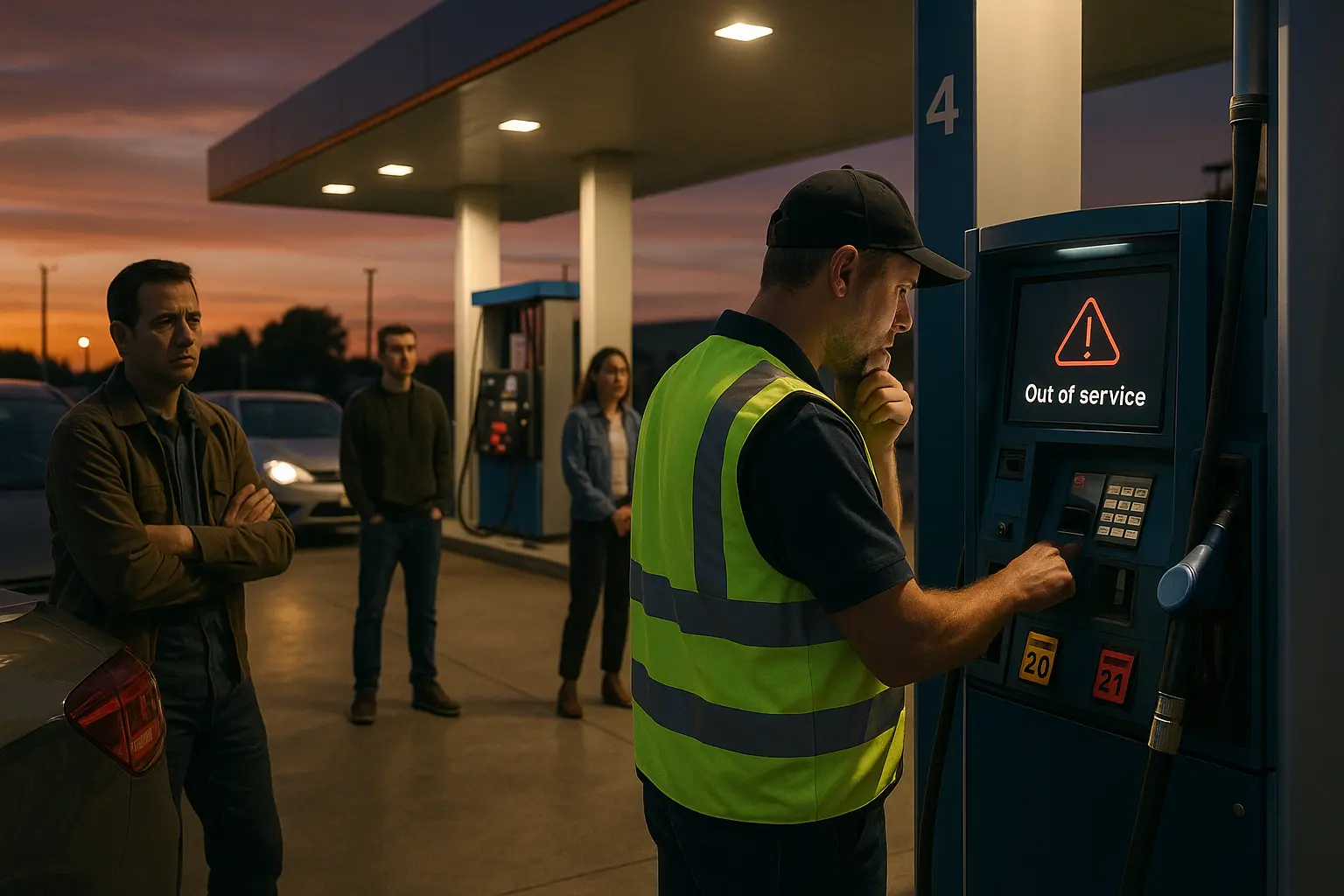
Iran-Linked Hackers Breach U.S. Gas Stations: Are Our Fuel Systems at Risk?
‘If they can hack our pumps, what’s stopping them from hitting the pipeline next?’ – Concerned Florida station owner, May 2026.
Fueling American Fears: Hackers Target Gas Stations With Weak Security
Just when you thought the pump couldn’t squeeze America any tighter, a stunning new cyberattack saga unfolds! According to recent reporting from CNN, U.S. officials have identified a wave of suspicious breaches affecting gas stations in several states. The chief suspects? Iranian-linked hackers, long foes of U.S. industry, lurking in cyberspace and now, potentially, a direct threat to the everyday American’s ability to fill up the tank.
The seriousness of this matter can’t be overstated. These attackers zeroed in on automatic tank gauge (ATG) systems-the digital nerve centers that monitor and report fuel levels at our pumps. Shockingly, many were found to be connected to the internet with no password protection in place whatsoever! It’s a perfect recipe for chaos, and once again, the vulnerable state of our infrastructure is in the national spotlight. Instead of layers of cyber armor, too many pumps were apparently left wide open-a digital welcome mat for America’s adversaries.
“A lot of these monitoring systems are still running on outdated networks or have weak security settings, making them easy targets for anyone with basic hacking skills,” warned one cybersecurity expert on condition of anonymity.
This latest breach is more than a technical glitch. It’s a warning shot across the bow of every American motorist, with security gaps ripe for exploitation by foreign saboteurs. An attack on our pumps isn’t just an inconvenience-experts warn it could trigger “system disruptions” and even “supply and distribution chaos,” leading to “significant financial and operational losses.” Already, operators are scrambling to boost their defenses with more advanced encryption and upgraded oversight. Will it be enough?
Pumping Up Tensions: Why Iran Is at the Heart of America’s Cybersecurity Nightmare
The shadow of Tehran looms large over this cyber saga, and the timing is no coincidence. As the U.S. and its allies ramp up pressure on Iran over its nuclear ambitions and regional aggression, the ayatollahs appear to be striking back in cyberspace. Even though investigators have not yet produced a smoking gun linking Iran directly, their tactics are all too familiar. Past attacks targeting ATG systems point squarely toward the Islamic Republic’s digital warriors, who consider U.S. energy and water infrastructure fair game.
According to reports, the hackers didn’t actually tamper with the amount of gas-we dodged a bullet this time. They “altered display readings on the fuel tanks but did not affect the actual fuel levels or cause physical damage,” as confirmed by The Jerusalem Post. But the implications are chilling: if a foreign enemy can manipulate what station managers see, what’s to stop them from hiding deadly gas leaks, triggering environmental disasters, or even sowing chaos nationwide?
“Unauthorized access to these ATG systems could theoretically allow hackers to conceal gas leaks, posing significant safety and environmental risks,” cautions senior security analysts. “Today it’s numbers on a screen. Tomorrow, it could be catastrophe.”
Make no mistake: this digital incursion fits into a broader pattern of Iranian cyber shenanigans. Just this year, hackers linked to Tehran struck over 12,000 military objectives in Iranian territory-and with gasoline prices already pinched by tensions in the Middle East, Americans are feeling the aftershocks at the pump. These latest attacks could signal a new front in the U.S.-Israel-Iran conflict, as adversaries look for “alternative means” to strike U.S. infrastructure from afar.
“The cyberattack campaign is not just about data manipulation,” notes one analyst. “It’s about strategic deterrence, and showing the world that Iran can disrupt the very lifeblood of the American economy at will.”
Political Fallout: Cybersecurity Failures, American Frustration, and the Road Ahead
While the technical effects of the hack have, so far, been contained, the political consequences are only beginning to ripple. In a year already marked by skyrocketing gas prices and mounting Middle East volatility, many are asking: How did our defenses get so weak, and who’s really looking out for American consumers?
Officials have stressed that, despite high suspicions, there’s yet to be concrete forensic evidence hammering home Iranian culpability. As reported by major outlets, “no such proof has been found so far” to officially confirm Tehran’s hand, a fact likely to complicate any direct retaliation (see more).
“While Washington fiddles, ordinary Americans wonder how much longer we’ll be sitting ducks for hostile states with a grudge and a laptop,” said one social media user in a post that racked up over 10,000 likes within hours.
Inside the Beltway, the hack has triggered a round of finger-pointing and legislative calls for action. Congressional Republicans say the Biden-era neglect of energy infrastructure paved the way for such an attack, while Trump’s 2024 victory platform promised to “restore hardline deterrence and modernize America’s critical assets.” There’s now mounting pressure for the Trump administration to push for comprehensive cybersecurity reforms and severe consequences for adversaries who dare to test our digital borders.
Gas station chains are already taking action, moving to secure their systems with stronger encryption and round-the-clock oversight. But as this incident makes clear, our nation’s infrastructure is not just under physical threat-it’s under siege online. And with the 2026 midterms on the horizon, expect cybersecurity, energy security, and national resilience to take center stage in the next showdown for America’s future.
This story isn’t going away; in fact, it may just be the opening shot in the next phase of cyber warfare targeting the American way of life. As conservatives have warned for years, the cost of weak, outdated security may ultimately be paid by everyone who relies on our nation’s gas pumps-and that’s every American.