
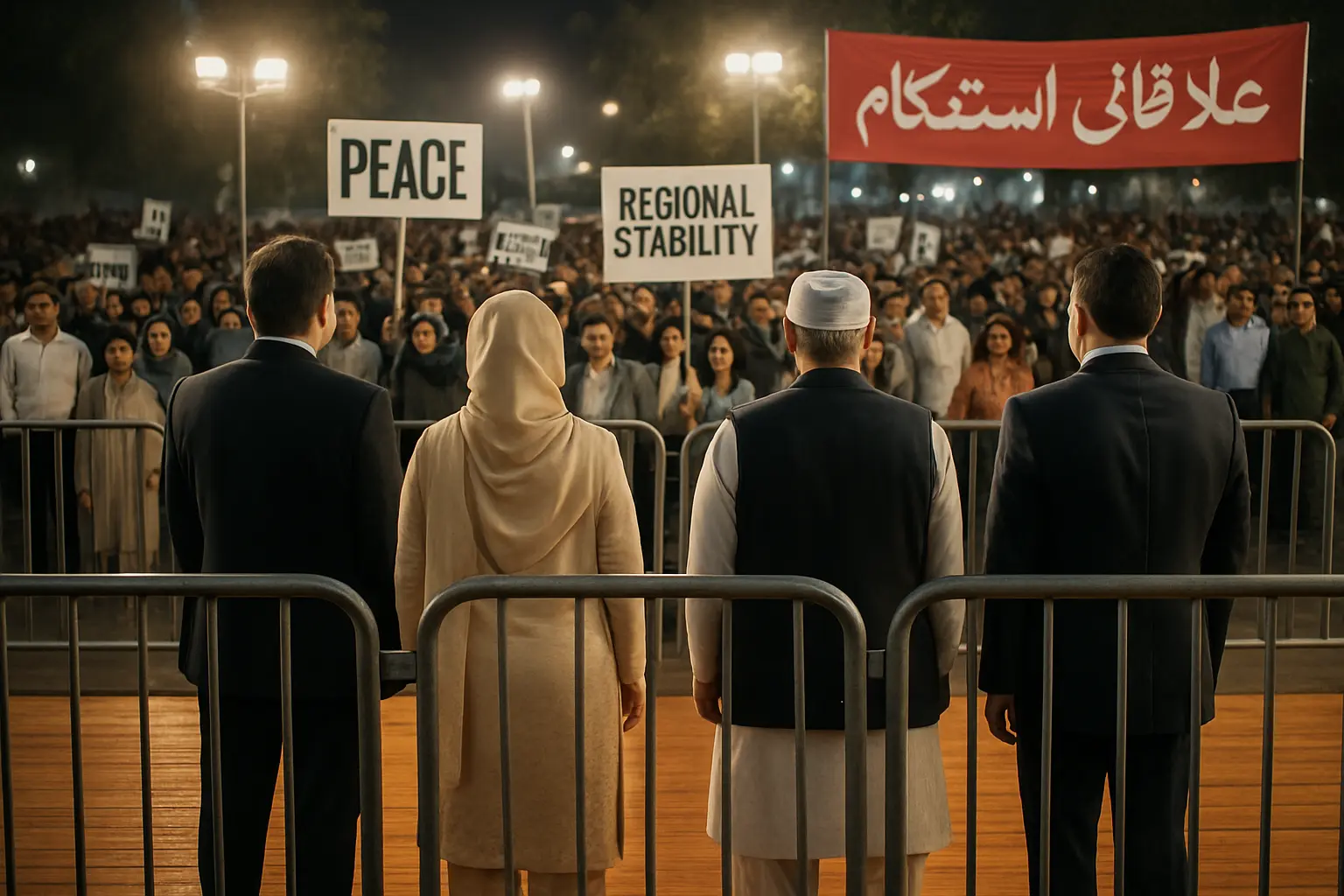
Conservative Insight on Pakistan’s Unified Condemnation of Israel’s Attack on Iran
Pakistan’s National Assembly and Senate have united to condemn Israel’s recent military strikes on Iran, issuing unanimous resolutions decrying these acts as violations of international law and sovereignty. This strong stance from Pakistan reflects a growing international conservative pushback against Israel’s aggressive tactics in the Middle East. Alongside Pakistan, regional assemblies such as Sindh and Punjab, as well as South Africa and Kashmir parties, have expressed solidarity with Iran, emphasizing the grave dangers posed by Israel’s actions to regional peace and global security. Such united voices also highlight concerns over unchecked Israeli military adventurism, with calls for increased diplomatic efforts. The conservative lens underscores the importance of respecting sovereignty and lawful defense rights amid rising tensions where liberal world powers often appear divided or hesitant to hold Israel accountable.
The unanimous adoption of resolutions across Pakistani parliamentary bodies marks a significant political consensus against a backdrop of instability in the Middle East, spotlighting Israel’s continued provocations and Iran’s right to self-defense under international law, including Article 51 of the United Nations Charter.
“Israel’s acts have gravely endangered lives and violated the sovereignty of a fellow UN member state, threatening wider regional and global security,” declared the Pakistani National Assembly resolution.
Detailing Pakistan’s Parliamentary and Regional Assemblies’ Resolutions Against Israeli Aggression
The recent June 13, 2025 Israeli airstrikes on Iranian military, nuclear, and civilian infrastructure triggered wide-ranging backlash from conservative political actors in Pakistan and its allied regions. The attacks resulted in casualties among high-profile Iranian military personnel and scientists, intensifying condemnation from Pakistan’s Senate, National Assembly, Punjab and Sindh assemblies, and even political groups in Kashmir.
In Islamabad, the National Assembly passed a unanimous resolution condemning the strikes as “unprovoked aggression” and breaches of international law. The resolution-championed by Syed Naveed Qamar (PPP)-called upon Pakistan’s government to press for urgent UN Security Council action and convene the Organisation of Islamic Cooperation (OIC) to denounce Israeli military actions. Similarly, the Senate voiced “strong condemnation” of the attacks, affirming Iran’s right to self-defense and highlighting the broader threat to the Muslim Ummah, including Palestine.
Deputy Prime Minister Ishaq Dar, leading the Senate resolution, reiterated support for Iran’s lawful defense and condemned Israel’s history of crimes against Muslim nations.
The Sindh Assembly, led by Chief Minister Syed Murad Ali Shah, echoed these sentiments by unanimously adopting a resolution that called out Israel’s “armed aggression” and urged the United Nations and international community to intervene. The Punjab Assembly also passed a resolution expressing full solidarity with Iran and Palestine while urging immediate diplomatic efforts via the OIC and UN Security Council to curb Israel’s military escalation.
Moreover, Kashmir’s leading political parties condemned Israel’s strike as an act of war, criticizing global silence and inaction that tacitly enables continued Israeli aggression. Omar Abdullah (National Conference) and Mehbooba Mufti (PDP) warned that ignoring Israel’s offensive sets a dangerous precedent in international relations.
Federal Minister for Parliamentary Affairs, Dr. Tariq Fazal Chaudhry, addressed the National Assembly with a sharper nationalistic tone, underscoring Pakistan’s firm stance on Kashmir’s water rights and condemning any future threats to civilian schools within Pakistan. His remarks framed Israel’s attack in the broader context of global threats facing nations respecting sovereignty and civil order.
Critically, these resolutions come amid intensifying international pressure on Iran. The United States and allies including the UK, France, and Germany recently issued ultimatums demanding Iran accept nuclear deal terms by September 2025 or face renewed international sanctions under the “snapback” mechanism (El País, 7/16/2025). Iran, however, retorts with skepticism, refusing to resume nuclear talks without firm preconditions, viewing U.S. negotiations as a cover for covert military actions by Israel (Reuters, 7/16/2025).
Historical and Policy Foundations Behind Iran-Pakistan-South Africa Solidarity
Iran’s recent confrontation with Israel is set against a backdrop of decades-long regional tension involving nuclear development, sovereignty disputes, and proxy conflicts. Iran’s Supreme Leader, Ayatollah Ali Khamenei, has persistently rejected Western demands to halt uranium enrichment, emphasizing the process as fundamental to Iran’s defense and sovereignty (Al Jazeera, 6/22/2025). This defiance continues despite the International Atomic Energy Agency’s (IAEA) designation of Iran’s nuclear activities as non-compliant with global non-proliferation standards.
Just before Israel’s air campaign, Iran also notified the UN nuclear watchdog of its plans to open a new uranium enrichment facility, signaling a clear stance of sovereignty and technological progress amidst international sanctions and diplomatic pressures.
South Africa’s Department of International Relations and Cooperation (Dirco) condemned Israel’s strikes on Iran as a violation of international law, emphasizing the attacks on military, nuclear, and civilian targets and expressing deep concern about civilian casualties. South Africa stressed the need for restraint and the pursuit of diplomatic channels over military confrontation.
Dirco’s statement underscored the importance of preserving sovereignty, territorial integrity, and civilian protection in line with international law.
The United Nations Security Council convened an emergency session following the U.S.-led and Israeli strikes, urging all parties toward restraint and emphasizing the protection of civilians and civilian infrastructure (United Nations, 7/16/2025). However, many conservatives argue that repeated UN inaction and biased interpretations of international law have emboldened Israel’s military provocations.
The brutal 12-day war between Israel and Iran last month resulted in more than 1,000 deaths and severe destruction of key Iranian nuclear sites, further polarizing internal Iranian politics between hardliners and reformists (Financial Times, 7/16/2025). Despite Israel’s claims of vastly crippling Iran’s nuclear capabilities, officials acknowledge some enriched uranium remains, leaving the door open for Iran’s nuclear engineers to continue their work (The Week, 7/11/2025).
The conservatively aligned governments and political bodies firmly support Iran’s right to self-defense in this volatile environment, arguing that unchecked Israeli aggression threatens not just regional stability but the very concept of national sovereignty and lawful international relations critical to a rules-based world order. Pakistan’s parliamentary consensus, South Africa’s strong disapproval, and Kashmir’s vocal political criticism reveal a growing international conservative front pushing back against the damaging effects of military adventures disguised as national security measures.
This episode also serves as a stark reminder that liberal internationalist policies and U.N. mandates, often driven by Western powers, frequently fail to uphold fair and balanced justice, disproportionately penalizing Iran while ignoring Israel’s recurrent violations. The conservatives emphasize more robust diplomatic engagement grounded in respect for sovereignty and lawful defense rights as the path forward to true peace and stability in the Middle East and beyond.