
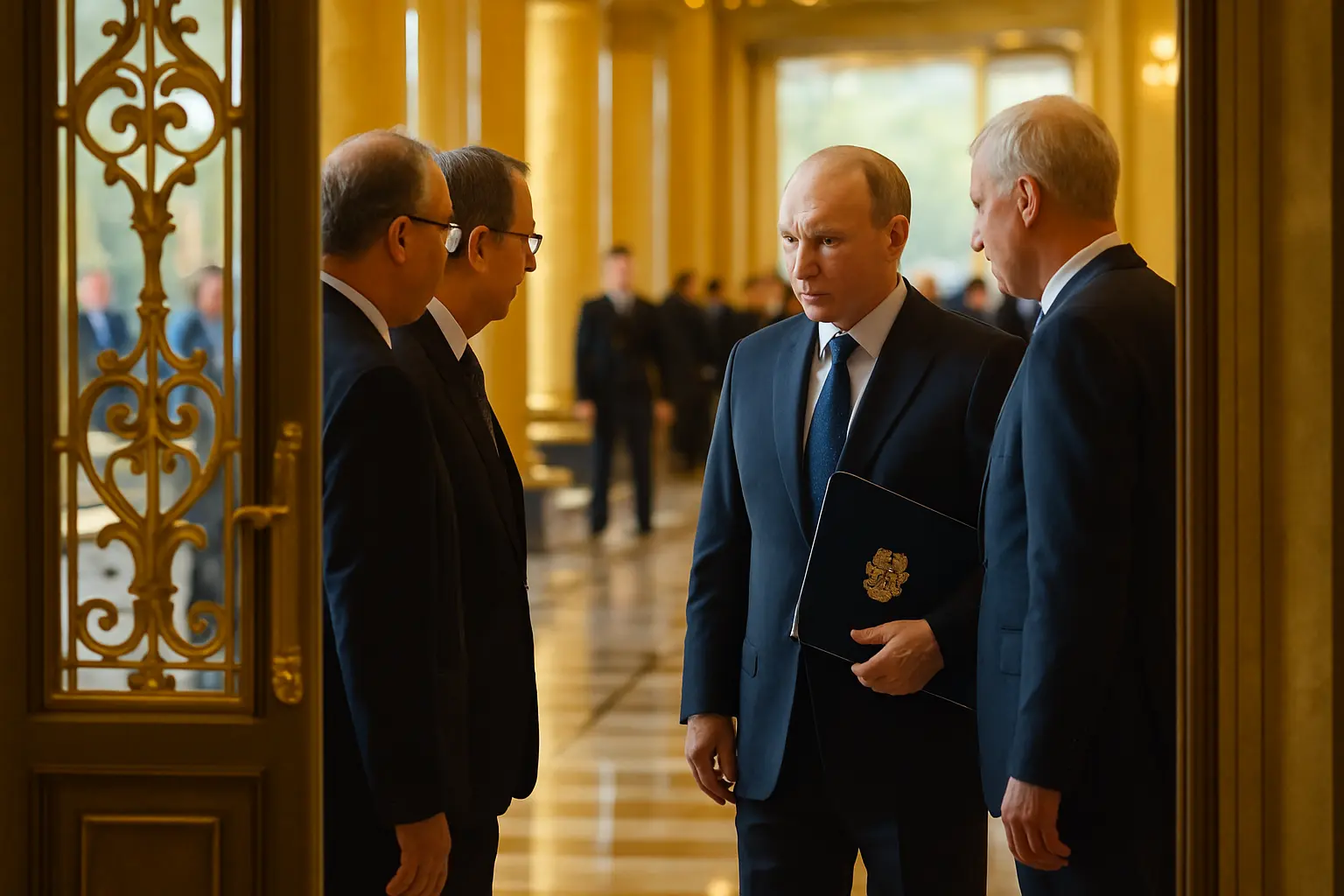
Russia’s Delicate Diplomatic Dance Amid Israel-Iran Conflict
The escalating war between Israel and Iran has placed Moscow in a challenging diplomatic position but also offers an opening for Russia to reclaim its role as a vital power broker in the Middle East. After Israel’s surprise missile strikes on Iran’s nuclear and military infrastructure, which targeted key Iranian figures and facilities, tensions soared with Iran responding through lethal missile and drone attacks. Russian President Vladimir Putin has publicly offered to mediate the conflict, aiming to protect Russia’s critical strategic interests with Tehran while asserting Moscow’s relevance on the global stage. This move contrasts sharply with the skepticism of Western leaders, especially French President Emmanuel Macron, who dismisses Moscow’s role as a mediator due to Russia’s ongoing conflicts in Ukraine and disregard for international law. Nonetheless, the Kremlin’s efforts reflect a calculated bid to deepen its influence in the region amid an increasingly volatile geopolitical landscape.
Putin’s offer to mediate comes at a time when Russia seeks to balance its alliance with Iran and maintain its own strategic vitality, potentially weakening Western alliances and distracting global attention from Ukraine. The stakes of this conflict extend far beyond the Middle East, impacting global energy markets and the international security order.
“Russian President Vladimir Putin has offered Moscow as a mediator in the escalating conflict between Israel and Iran, proposing diplomatic solutions that balance Iran’s nuclear ambitions and Israeli security concerns.” [Al Jazeera, 2025-06-23]
Moscow Maneuvers Between Israel and Iran – Strategy, Dangers, and Diplomatic Gains
Moscow’s diplomatic tightrope walk comes amid Israel’s unprecedented offensive, which struck at the core of Iran’s nuclear program and military command, killing several high-profile generals and scientists. These strikes caught Russia by surprise and disrupted Moscow’s expectations surrounding ongoing nuclear negotiations between the U.S. and Iran. The Kremlin’s public condemnation of Israel’s actions was strong but stopped short of direct intervention, reflecting Moscow’s calculation to avoid alienating its regional partners while protecting its own interests.
Putin has stressed that over 200 Russian nuclear experts remain safely deployed at Iran’s Bushehr nuclear power plant, with Moscow coordinating safeguards following Israeli assurances. This underscores Russia’s embedded military-technological cooperation with Tehran, highlighting the stakes involved if the conflict escalates further. Moscow’s official stance condemns Israeli strikes as violations of international norms, while Putin and his ally Chinese President Xi Jinping have jointly emphasized that military force will not solve the complex issues around Iran’s nuclear ambitions.
“Both Putin and Chinese President Xi Jinping condemned Israeli strikes on Iran as violations of international law and the UN Charter, emphasizing that military means cannot resolve concerns over Iran’s nuclear program.” [Time, 2025-06-23]
Moscow’s dual goals are clear: it wants to avoid a full-blown war that could spiral out of control yet also intends to position Russia as an indispensable mediator. By doing so, Russia counters its global pariah status caused by the Ukraine conflict and reasserts its influence in a key region at the crossroads of global energy and diplomacy.
Russian Foreign Ministry spokeswoman Maria Zakharova warned that Israeli strikes risk igniting a nuclear catastrophe, a pointed criticism given Russia’s own controversial 2024 drone attack on Ukraine’s Chornobyl nuclear site. This rhetoric serves to signal Russia’s hardline opposition to Israeli military methods and underscore Moscow’s role as an advocate for Iran in the international arena.
Meanwhile, concerns inside Russia are mounting over losing one of its most critical allies. Moscow tycoon Konstantin Malofeyev noted that an Israeli campaign aiming to destabilize or remove Tehran’s regime could threaten Russia’s “anti-Western alliance.” Yet, this conflict does present an immediate economic benefit, as Russian Urals oil prices climb above Western-imposed caps due to Middle East tensions, bolstering Moscow’s war chest while U.S. and EU sanctions continue their strangling effects.
“Russian President Vladimir Putin has offered to mediate between Iran and the United States, while simultaneously condemning the Israeli strikes.” [South China Morning Post, 2025-06-15]
Despite overtures, not every global leader supports Moscow’s bid for mediator status. French President Emmanuel Macron publicly rejected the notion, remarking that Russia, embroiled in an aggressive invasion of Ukraine, cannot fairly broker peace in the Middle East. Macron insists that the U.S., under its laser focus on the region and as the primary arms supplier to European allies, remains the player capable of bringing parties back to the negotiation table.
Former U.S. President Donald Trump has expressed cautious openness to Putin’s offer but underscored that the Kremlin must first settle its own territorial disputes before focusing elsewhere. Even as Trump supports Israel’s right to defend itself, he remains wary of the U.S. being drawn into another layered conflict while the Ukraine front remains active.
Russia’s Long Game in the Middle East and Strategic Stakes
Russia’s involvement in the Middle East extends back decades, evolving from Cold War-era competition to a modern partnership with nations like Iran. The Kremlin’s 2015 military intervention in Syria showcased its willingness to project power to protect allied regimes and challenge Western influence. This conflict set the stage for deeper ties with Tehran, which supplies drones and military technology bolstering Moscow’s own limited aerial capabilities in Ukraine.
The Iran-Israel conflict comes at a pivotal moment for Russia, undermining Western alliances and distracting the Biden administration and its successors from their focus on Ukraine. The Kremlin’s success in brokering peace or even controlling escalation could dramatically reinforce Russia’s claim as a great power capable of shaping global outcomes beyond the Eurasian landmass.
“Experts now warn that a broader war or the collapse of Iran’s government could spark a refugee crisis even larger than that caused by the Syrian civil war, due to Iran’s greater population.” [Time, 2025-06-23]
A collapse of the Iranian regime or a wider war threatens profound humanitarian and strategic consequences. Large-scale displacement could dwarf the Syrian refugee crisis, shifting population flows and destabilizing neighboring countries critical to Russian interests. For Moscow, preserving the Iranian government, or at least preventing its violent downfall, is crucial to maintaining a regional bulwark against Western and Gulf Arab influence.
Russia’s measured approach speaks to real constraints: its military resources are tied down in Ukraine, and aggressive arms transfers to Iran risk alienating Gulf partners such as Saudi Arabia and the United Arab Emirates. Yet, Moscow’s skillful balancing act-offering verbal condemnation of Israeli strikes, warning of nuclear dangers, and proposing diplomatic engagement-demonstrates an understanding of how to maximize leverage without full military commitment.
The situation also dovetails with Putin’s grand strategy to use energy as a geopolitical weapon. Higher oil prices from Middle East instability boost revenues just as Western sanctions tighten, enabling Moscow to bankroll its military and diplomatic efforts. This economic advantage is a critical pillar in Russia’s sustained campaign against the West.
Historically, no other global conflict has so clearly illustrated the complex chess game between great powers, regional rivals, and ideological blocs. Russia’s ability to navigate the fragile Israel-Iran rivalry thus reveals both its resilience amid Western pressure and the limits imposed by simultaneous wars in Ukraine and Syria.