
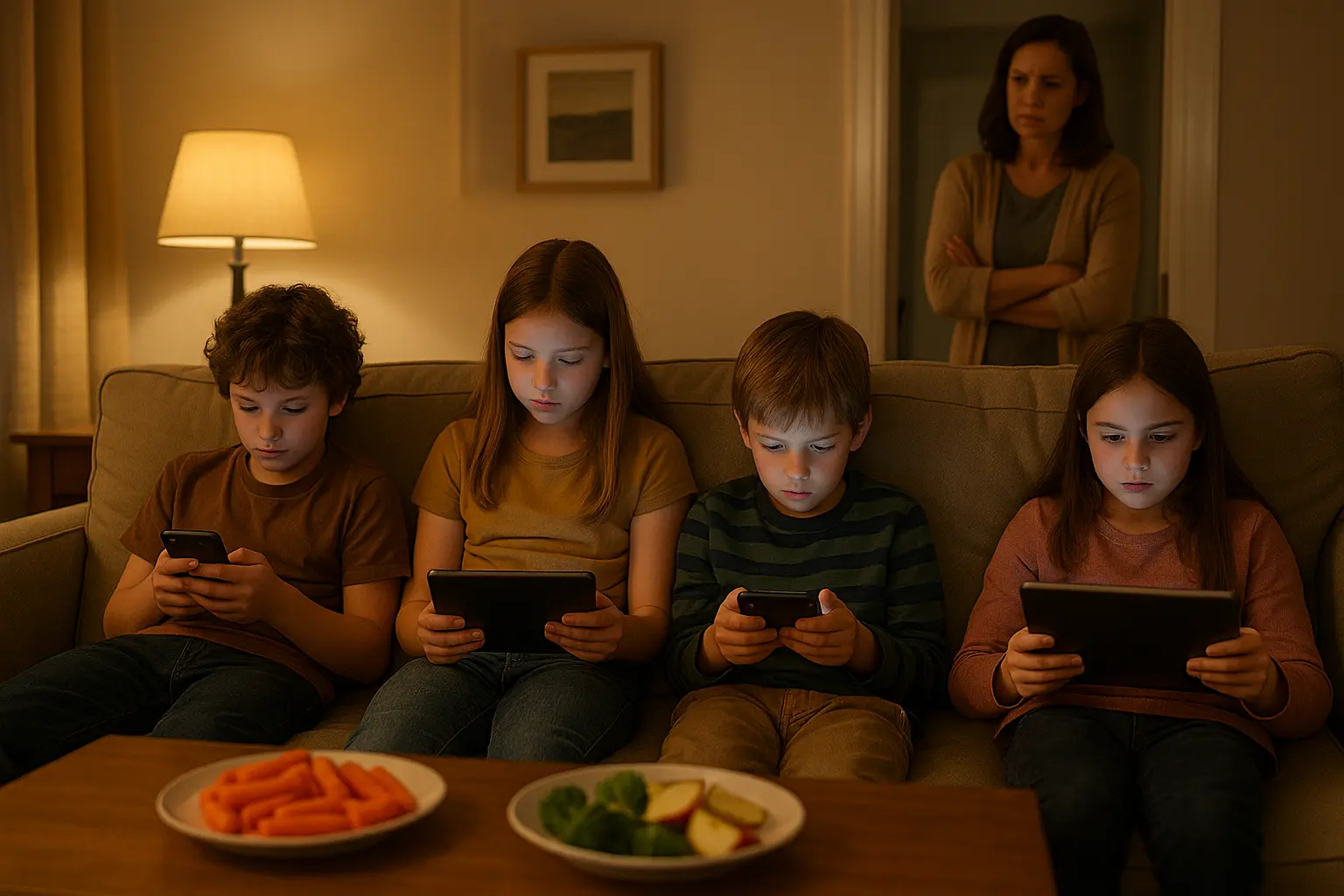
Screen Time Tsunami: How Excessive Digital Habits Are Putting America’s Kids on a Fast Track to Heart Disease
Are Devices Robbing a Generation of Its Heart Health?
“My kid can’t get off that phone. I can’t remember the last time we sat at the dinner table without a screen glowing in somebody’s face.” – A frustrated Utah mom posted this in a recent Facebook group, and thousands of parents sounded off in agreement. But while conservatives have long warned about declining manners and crumbling attention spans, new scientific evidence is laying out a far more disturbing picture: our children’s physical health is at stake, with heart-disease risks building up before they even hit adulthood.
A landmark new study published in the Journal of the American Heart Association has sent shockwaves through parents’ groups and pediatricians’ offices across the country. The bottom line should be a headline on every school newsletter: Kids and teens who use screens excessively, and those who skimp on sleep, risk a dramatic rise in heart and metabolic trouble later in life. Researchers analyzed data from more than 1,000 Danish youth and discovered that each extra hour spent on devices like phones, tablets, and TVs nudges their cardiovascular risk higher-piling on danger that follows them well into adulthood.
For 10-year-olds, every additional hour of daily screen time boosted their heart risk score by 0.08 points; for 18-year-olds, it shot up to 0.13 points per hour. When today’s average screen time of 6-7 hours daily is factored in, the numbers get chilling fast. That means a teenager glued to screens for six hours sees their risk score shoot up nearly a point, laying the groundwork for everything from clogged arteries to metabolic syndrome before they leave college.
“Children who watch more than 2 hours of TV daily had a 47% higher chance of obesity and a 43% increased risk of being overweight compared to those who watched less than an hour,” according to a report in Time. America’s kids aren’t just facing social or behavioral consequences. Their physical health is collapsing under the weight of excessive screen time and digital dependency.
The Real Culprit: Screens Stealing Sleep, Activity, and Childhoods
Let’s set the record straight: this isn’t about harmless educational apps or occasional family movie nights. The research is laser-focused on “discretionary” screen time-the endless scrolling, game marathons, and binge-watching that eat up evening after evening. Every minute lost to Fortnite or TikTok is a minute not spent running, playing, or, crucially, sleeping. The consequences are both immediate and long-term.
Dr. Jonathon Williams, a pediatrician from Ogden, Utah, put it bluntly when speaking to local news: “Excessive screen time isn’t just about missing out on gym class. It’s fragmenting sleep schedules, derailing critical brain development, and sabotaging the immune system. If parents want healthier kids, they have to set an example themselves. Put down the phone and pick up a basketball.” His advice was to cut out screens in the hour or two before bed, remove devices from bedrooms, and encourage kids to use technology to actually connect with people-like video calling family or learning new skills, instead of zoning out in front of another Instagram Reel.
The stakes can’t be overstated. A recent study of over 58,000 Chinese children found a 15% hike in risk for abdominal obesity and metabolic syndrome tied directly to high screen exposure. America is on the same-and possibly even worse-trajectory, thanks to our ‘digital-first’ culture and relentless pressure from Big Tech companies marketing to our youngest citizens.
Researchers in Denmark weren’t alone in their dire conclusions. Across multiple continents, the data all point one way: every hour of screen-based entertainment crowds out vital habits like sleep and movement, supercharging the underlying risks for high blood pressure, cholesterol spikes, and insulin resistance that breed future heart attacks and diabetes.
“Teens who spent six or more hours each day glued to screens were 71% more likely to develop metabolic syndrome, especially if they also snacked in front of their devices,” found a 2019 Endocrine Society report. The pattern is as American as apple pie and just as dangerous, if our leaders refuse to act.
America at a Crossroads: Can Families Fight Back Against Big Tech’s Heartless Agenda?
The wake-up call for conservative families is clear: no one can trust schools, Silicon Valley, or the entertainment industry to set healthy boundaries for our children. A system designed to profit by keeping kids glued to a screen all night isn’t going to tell the truth about the fallout. Instead, it’s up to parents, faith leaders, and local community groups to turn the tide.
How bad does it have to get before real change happens? Decades-long studies now confirm that children who binge television and digital entertainment through childhood are at significantly higher risk of developing deadly metabolic syndromes by middle age. These risks don’t just begin in high school-they start as early as kindergarten, and get worse every year.
The composite risk score tracked by scientists doesn’t just tally a kid’s height and weight. It weaves together waist measurements, blood pressure, HDL cholesterol, triglycerides, and blood sugar, then adjusts for age and sex-painting a precise, chilling picture of future health. Parents who see their children’s faces glowing at midnight from yet another YouTube binge need to realize: these aren’t “phases” kids outgrow. These are patterns that can set them up for a lifetime of poor health-and even early death.
If you think this is overblown, consider: Each extra two hours of screen time per day is associated with a 29% higher risk of metabolic syndrome among youth (see PubMed). In the world’s richest and most innovative nation, are we really going to let our kids’ hearts-and futures-be the cost?
Is it any wonder that American pediatricians are begging parents to lead by example? Far too many adults seem content with digital babysitters. But that’s not the American way. With President Trump’s second term amplifying parental rights and a groundswell of conservative activism surging toward 2026 midterms, Republicans and parents across this nation have the chance to reclaim childhood from the clutches of the tech industry.
Start small: Move screen time earlier in the day. Ban phones and tablets from bedrooms. Replace some digital hours with chores, family walks, or actual face-to-face conversation. Insist on consistent, quality sleep. These aren’t just good health tips-they are acts of resistance against a culture that wants to turn kids into lifelong patients and passive consumers.
The science is clear. The solutions are clear. If conservatives don’t take the lead, who will? The health, liberty, and future strength of America’s children demand nothing less.