
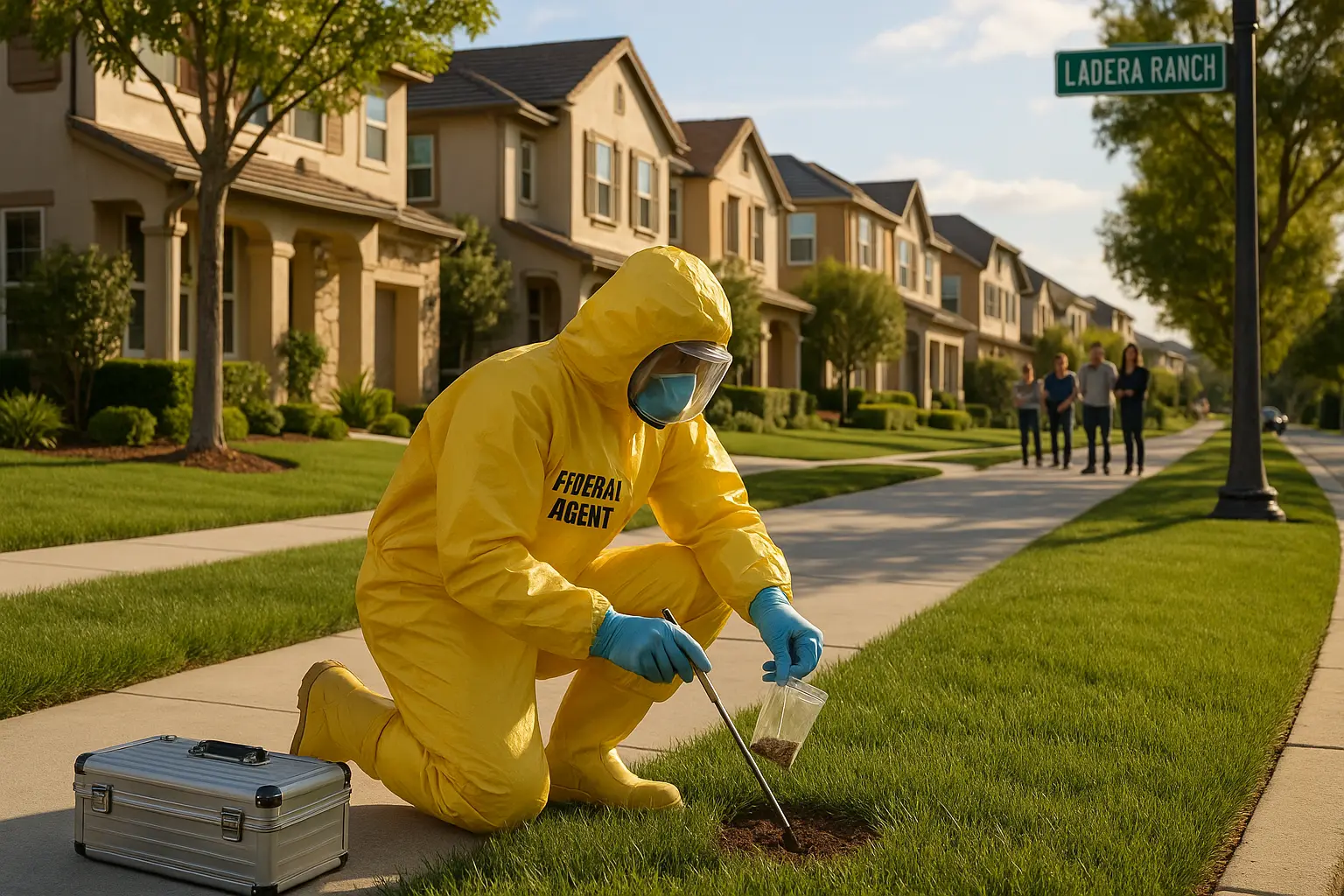
California Suburb in Uproar as Feds Probe Rare Cancers: Pesticides Under Fire
The Price of Affluence? Six Children, Six Rare Cancers, and a Flood of Federal Scrutiny
‘My life changed forever the moment they said cancer.’ These are the haunting words echoing through the heart of Ladera Ranch, Orange County’s idyllic suburb now rocked by accusations, heartbreak, and a looming federal investigation. Once the envy of California for its pristine parks and picture-perfect lawns, Ladera Ranch is suddenly under a harsh national spotlight for all the wrong reasons.
It started quietly-a handful of families noticing something just didn’t add up. Since 2013, at least six children in this affluent Southern California enclave have been diagnosed with Ewing sarcoma, a brutal and exceedingly rare bone and soft tissue cancer that impacts only about 200-240 children nationwide each year. For residents, the math doesn’t lie. The odds of this many cases clustering in one tight-knit neighborhood seemed impossible-unless something unnatural was at work.
Desperation soon turned to action. Families shared gut-wrenching stories: Brody, just 17, lost his fierce battle mere months after diagnosis; Haven, 18, now faces life after a foot amputation following her own rare cancer ordeal. Neighbors, once close, now ask: What’s poisoning our kids?
For a place supposed to be safe, a place we invested in so our children could thrive, we are betrayed by the very ground we walk on, a parent charges at a recent board meeting, as others nod with tear-stained faces.
The outrage crescendoed until the unthinkable happened-federal officials came pounding at the door. First Assistant U.S. Attorney Bill Essayli has formally called in the Environmental Protection Agency to investigate whether landscaping pesticides-applied by the neighborhood’s own HOA-could be at the heart of Orange County’s rare cancer cluster. The CDC and National Cancer Institute have both nodded to the urgency, with the California Cancer Registry and UCI Cancer Center joining the hunt for answers.
Ground Zero: Community Strikes Back as HOA Suspends Pesticide Use
In the face of mounting panic, Ladera Ranch families made it crystal clear: Business as usual just wasn’t an option. Enter LARMAC-the Ladera Ranch Maintenance Corporation-which abruptly announced a 60-day halt on all routine landscaping pesticide use. For some, it’s too little, too late. For others, it’s a long-overdue victory against what they see as environmental recklessness protected by bureaucratic red tape.
The association’s regular arsenal includes chemicals like Attrimec and Lifeline, substances whose approval status make them unwelcome-and in some cases, downright banned-in Europe and the UK. Why are these toxins acceptable in America’s playgrounds? Frustration exploded into a firestorm on social media, with dismayed parents flooding Nextdoor and Facebook: ‘We pay premium property taxes for safe streets, not for our children to become medical statistics!’ one mother raged. And her fury isn’t isolated.
The moratorium may be temporary for now, but LARMAC’s board has also leapfrogged into crisis mode, forming a committee to scrutinize every landscaping practice and pesticide decision. Meanwhile, the ban notably doesn’t cover agents used for rodent control or invasive species-a loophole that has only thrown more fuel on grassroots demands for transparency and broader chemical bans.
They told us the landscaping was for beautification, but at what cost? We trusted our HOA, one resident laments in a local interview, her words now circulating in the national media maelstrom.
Despite the alarming statistics and coordinated intervention, officials are urging restraint-so far, there’s no officially confirmed scientific link. But that hasn’t stopped affected families from pushing for nontoxic, common-sense alternatives, calling for nothing short of a pesticide revolution in suburbia. They don’t want studies-they want results, and they want them before another child gets sick.
As news crews descend, the real question lingers: Just how many more undiagnosed cases are out there, and how long has this been quietly unfolding? The Orange County Health Care Agency and Bond Legal have expanded their probe, seeking tips from any family with ties to the afflicted area-an urgent call for stories that could crack the case wide open in the coming weeks.
The Politics of Poison: Federal Oversight Grows Amid Calls for Lasting Reform
What started as local heartbreak has ballooned into national controversy, and the political cost is only rising. With President Trump’s second term marked by renewed promises to champion the wellbeing of American families, the Ladera Ranch cancer probe thrusts ‘big government’ agencies and local governance into direct conflict-and forces uncomfortable questions about just who is safeguarding our children.
Federal and state leaders are now on the clock. The EPA, CDC, and NCI have signaled that “community concerns regarding environmental exposures” and rare disease clusters can’t be brushed aside-especially when the numbers spike in close proximity. For the Trump administration, which campaigned on putting Americans’ health and security first, the optics couldn’t be starker: will Washington act, or fall prey to lobbyists defending questionable chemicals?
The National Organization for Rare Disorders underscores the gravity: with just up to 250 national Ewing sarcoma cases each year, Ladera Ranch’s six victims-and the additional cases of synovial sarcoma-make for a grim statistical red flag. While no direct evidence yet links pesticides to these illnesses, precedent shows that environmental health dangers often take years-and political willpower-to confront.
Federal agencies are now forced to reckon with the failures of patchwork regulation and the illusion of suburban safety. With national eyes on Ladera Ranch, the time for promises has passed-the public craves concrete action, not more bureaucratic foot-dragging.
Between embattled parents, a newly emboldened HOA, and an alphabet soup of agencies now tangled in the probe, it’s clear this controversy is about more than science-it’s about the core promise of the American dream. Six children are now at the center of a reckoning that will test not just California’s resolve, but the nation’s willingness to get serious about what’s hiding in plain sight on neighborhood lawns from coast to coast.
Stay tuned. As investigators dig deeper and families refuse to let go, this once-sleepy suburb may soon spark a watershed moment for environmental justice and local accountability in 2026 and beyond.