
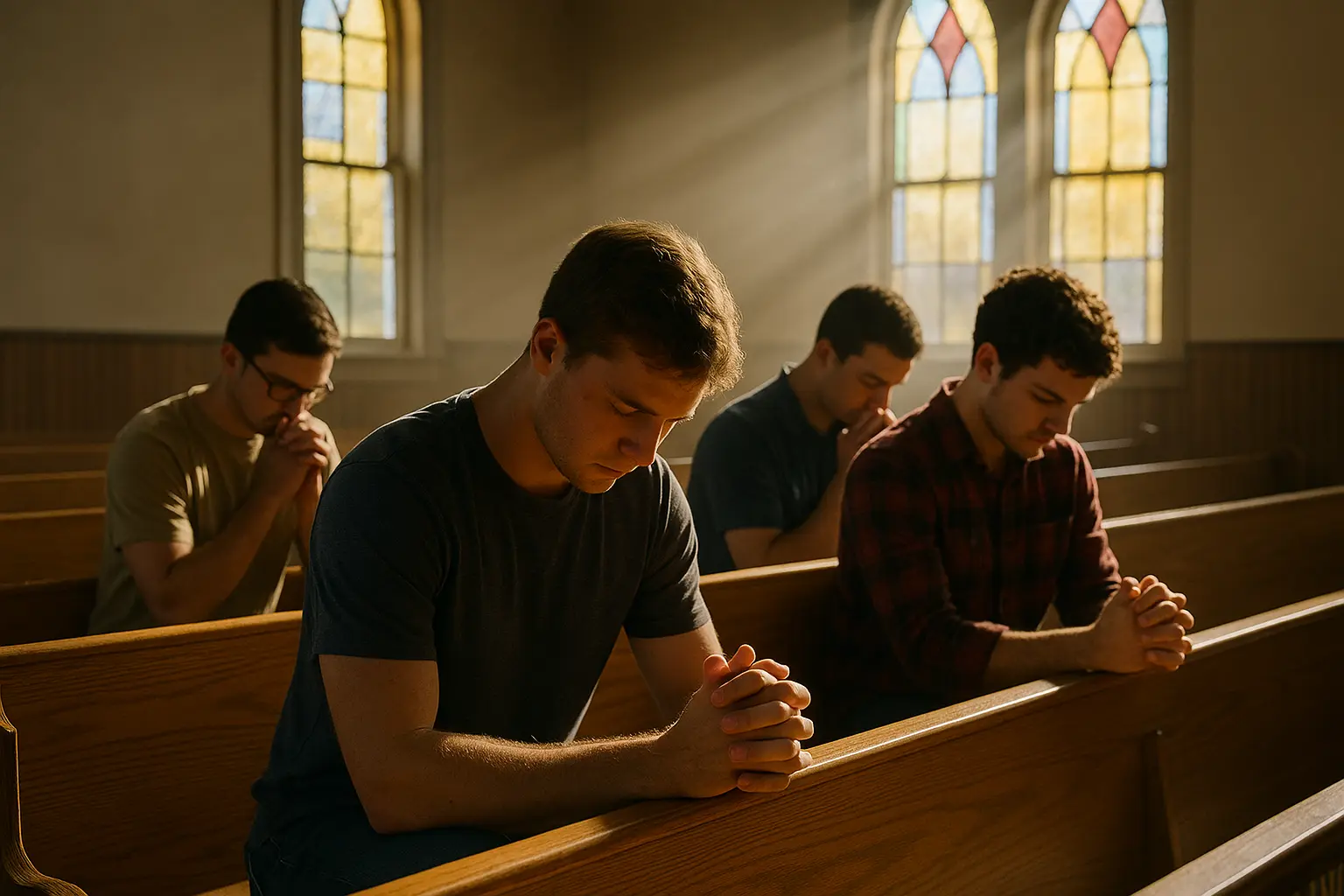
Shocking Gallup Poll: Young American Men Flock to Church as Faith Surges Past Women
‘It is not men losing faith-the truth is, men are finding it again,’ says political scientist Ryan Burge. What does this spiritual earthquake mean for the cultural battles shaping America in 2026?
The New Spiritual Reality: Why Young Men Are Embracing Faith in Record Numbers
The script is flipping in America’s pews. For the first time on record, a stunning 42% of young men under 30 now say religion is ‘very important’ in their lives-a dramatic spike from just 28% three years ago, according to Gallup’s just-released 2026 data. After decades in which young women led the charge into church, mosque, and synagogue, young men are overtaking their female peers in passion for faith. The pattern is real, it is happening now, and it is reshaping the face of American religion just as a new generation steps onto the national stage.
What’s driving this surge? The Gallup data reveal young women in the same age group have not grown more devout-instead, their commitment plateaus: the share describing religion as ‘very important’ stubbornly clings to 30%. It is young men, especially those who lean conservative, who are flooding into sanctuaries, changing everything about the look-and feel-of worship in the 2020s. A generational wind is blowing, and it has a distinctly masculine edge.
The percentage of young men reporting monthly or more frequent attendance at religious services jumped a staggering seven points between 2022-2023 and 2024-2025, rising to 40%-its highest level in a decade and a half. (Gallup, April 2026)
This is not a blip. As Gallup pollster Ryan Burge observes, ‘If this holds, it is a seismic change in society and the future of the church.’ For an American right deeply rooted in faith and tradition, the implications could not be greater. Whether it is the ongoing chaos in higher education, the post-pandemic search for meaning, or the toxic radicalism of modern leftism, millions of young men are rejecting the hollow secularism peddled by mainstream culture and rediscovering the anchor of belief.
Inside the Pew Power Shift: How Conservative Values Are Driving the Rebirth of Religion
With America more polarized than ever, the engine of faith’s revival is no mystery: young Republicans are leading the way. Gallup’s careful demographic slicing finds the overwhelming bulk of new religious engagement and attendance comes from the right side of the aisle. In fact, the rise among young Republican men outpaces the overall trend by a decisive margin, while young Democratic men see their worship numbers sink year after year. Of course, the mainstream media won’t touch this story of moral renewal-it is a direct rebuke to the often-celebrated retreat from spiritual values some on the left have championed for years.
Consider the numbers: in 2026, over seven in ten young Republican women attend church at least monthly, versus just a quarter of Democratic women in the same age group. What a contrast! In our nation’s formative years, faith was the bedrock of independence and resilience. In today’s fractured society, conservative young adults are not just keeping that flame alive-but stoking it higher.
Rabbi Nicole Guzik of Los Angeles’ 5,000-member Sinai Temple observes, ‘People are searching for a sense of belonging and inspiration through faith in dark and polarized times… We’ve seen a steady, significant increase since after the pandemic.’ (Associated Press, April 2026)
As wars, inflation, and extremism rage outside, many young men are returning to the simple truths that once made America strong: hard work, family, discipline-and faith in something higher than themselves. There is no clearer sign than this unexpected explosion of youthful religious fervor. Pollster Burge’s verdict is clear: if Gen Z men embrace religious institutions, ‘it represents a seismic change in society and the future of the church.’ Read his assessment here. The old trope-church as the domain of grandmotherly ladies and absent men-is being obliterated before our eyes.
Faith, Family, and the 2026 Red Wave: The Political Earthquake No One Saw Coming
If you were looking for a sign of change on the American right, look no further. Donald Trump’s historic 2024 reelection has emboldened a new generation of conservatives to stand up-and show up-at the altar. The implications are massive for policy and politics. When men under 30 start filling the pews, sanctuaries, and community halls, the causes they back-from religious liberty and traditional marriage to real educational choice-gain a powerful new constituency.
Today’s spiritual revival is no accident, nor is it purely emotional. It is rooted in the deep dissatisfaction with a secular establishment that tells young men they have no place in modern society unless they conform to its progressive orthodoxies. But these young men are pushing back, demanding community and purpose in institutions that left-leaning elites declared irrelevant for the TikTok age. They are congregating not just for themselves, but for the future children they plan to raise in faith. ‘This is how a new center-right America is built,’ one conservative activist confided to RedPledgeInfo. ‘You win elections in the culture long before the ballot box.’
The expert headline from Gallup is clear: the share of young men calling religion ‘very important’ is now comparable to that among men 30-49, and only slightly lower than that for senior men. That’s a generational shift, not just a gender one. (Gallup 2026)
In an age where politicians court every scattershot demographic, ignoring this surging faith among young men is a mistake the left can scarcely afford. Churches, synagogues, and mosques packed with energized young adults make for potent voting blocs, and Republicans are taking notice. First-time voters entering the political process from strong faith communities are likelier to stand their ground on issues vital to conservative America: the sanctity of life, parental rights, free speech, and national security.
With 2026 poised for another grassroots red wave, the message is plain: faith is back, and it’s wearing a suit and tie. As the cultural pendulum swings, the halls of worship may become the new hubs of political mobilization. Smart strategists aren’t waiting to find out-they’re already meeting voters on Sunday, right after service lets out.