
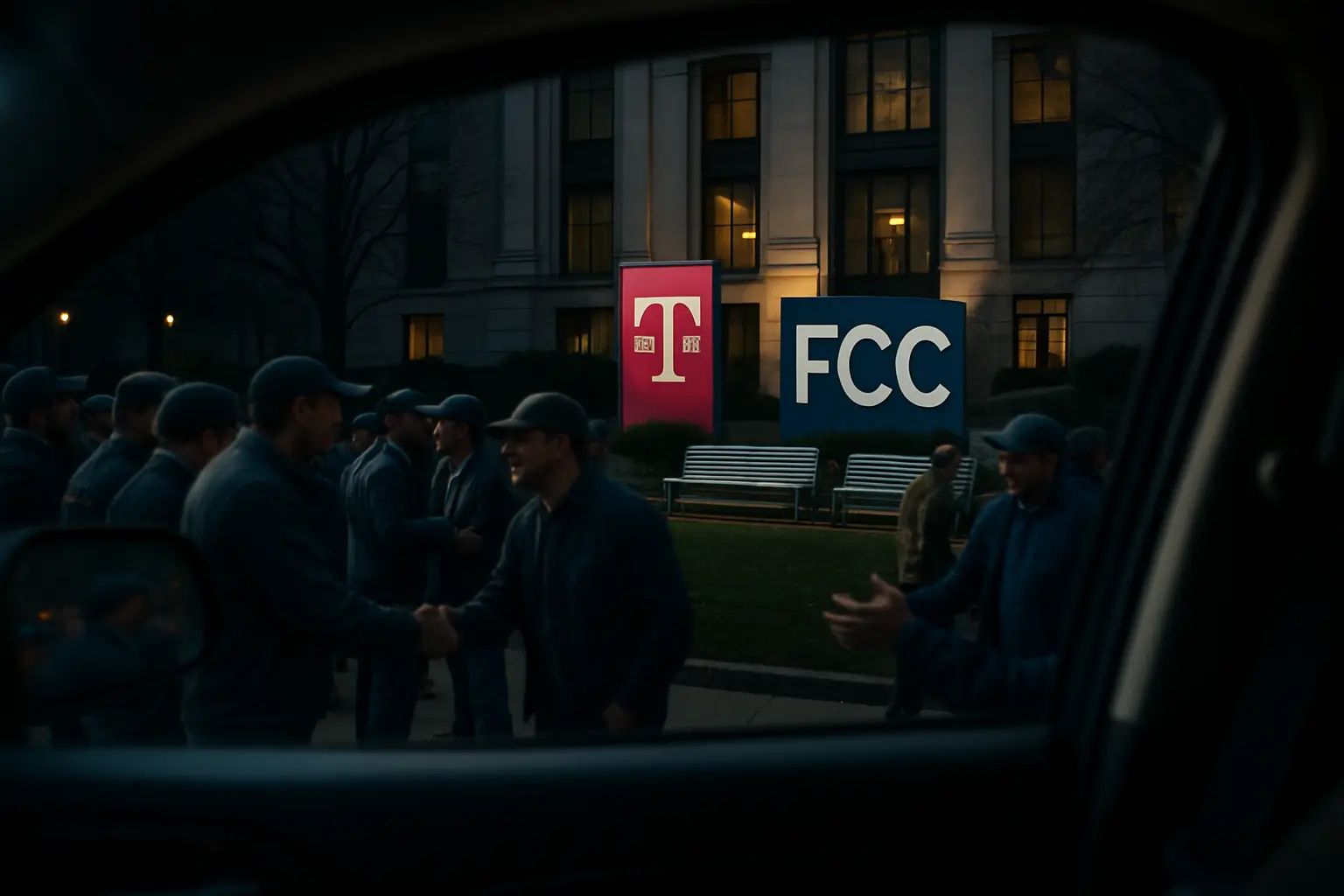
T-Mobile Ends DEI Programs Under Trump FCC Pressure to Secure Big Mergers
In a bold and decisive move to align with the Trump administration’s vision for true equal opportunity in the workplace, T-Mobile US has officially scrapped its diversity, equity, and inclusion (DEI) initiatives. This sweeping change is not merely symbolic but a wholesale dismantling of DEI structures and policies, as confirmed by T-Mobile executive Mark Nelson. The wireless giant’s move comes as it seeks regulatory approval from the Federal Communications Commission (FCC) for two major business deals, signaling a clear victory for conservative principles opposing divisive identity policies. T-Mobile’s former DEI staff have been reassigned to traditional human resources roles emphasizing overall employee culture and engagement rather than exclusive diversity functions, demonstrating a commitment to unify rather than separate the workforce by racial or gender lines.
T-Mobile’s leadership confirmed the decision cancels all DEI references from internal training materials and public-facing communications, putting core business objectives and anti-discrimination standards at the forefront without special DEI agendas.
This move reflects growing pressure from FCC Chairman Brendan Carr, a staunch supporter of the Trump administration’s policies. Carr publically applauded T-Mobile’s actions as an important step toward true nondiscrimination and equal opportunity in the corporate world. The FCC’s embrace of this approach was underscored by its swift approval of T-Mobile’s $4.4 billion acquisition of nearly all of United States Cellular’s wireless operations and a $4.9 billion joint venture with private equity giant KKR to acquire Metronet, a fiber-optic internet provider serving over two million homes across 17 states. According to Reuters, the FCC’s greenlighting of these deals came shortly after T-Mobile’s commitment to eliminate DEI policies from its corporate practices.
How T-Mobile’s Compliance with Trump FCC Rules Paves Way for Massive Growth Deals
T-Mobile’s strategy to jettison misguided DEI doctrines clearly prioritizes business health and regulatory cooperation over virtue signaling. The carrier has dismantled all dedicated diversity teams and erased any allusions to DEI from employee training programs, focusing future efforts solely on core business goals and strict anti-discrimination policies that treat everyone equally without special group preferences. The former DEI staff have been reassigned to broader human resources roles centered on fostering a unified, inclusive culture devoid of political agendas.
FCC Chairman Brendan Carr praised the company’s decisive action, calling it a “good step forward” toward equal opportunity and the public interest.
This regulatory alignment unlocks the path for T-Mobile’s crucial acquisitions. Its $4.4 billion purchase of wireless operations from United States Cellular expands the company’s reach significantly, including customers, retail stores, and crucial spectrum assets. Meanwhile, T-Mobile’s joint venture with KKR to acquire Metronet positions the company as a major force in fiber-optic broadband, servicing over two million households in 17 states-an impressive footprint that promises serious growth and competitiveness against government-dependent competitors.
These achievements come after a long line of telecom companies bowing to common-sense policies demanded by the Trump administration’s FCC. Verizon, for instance, recently ended its own DEI programs to gain approval for its $20 billion acquisition of Frontier Communications, setting a precedent industry-wide for eschewing identity politics in corporate governance. According to Ars Technica, T-Mobile’s legal counsel Mark Nelson explicitly acknowledged that the evolving federal legal framework no longer supports DEI policies that treat employees differently based on protected characteristics. Instead, T-Mobile commits to policies that prevent discrimination and promote equal treatment under one unified set of standards.
Restoring American Meritocracy and Corporate Focus
T-Mobile’s abandonment of DEI programs should be viewed within the larger conservative movement to rid American businesses of divisive, race- and gender-based quotas and policies that often lead to workplace discrimination and lowered performance standards. By removing DEI as an official corporate priority, T-Mobile is signaling a return to merit-based advancement and equal opportunity without preferential treatment, a stance that resonates powerfully with millions of Americans who reject the identity politics driving so many destructive agendas in recent years.
Critics on the left, such as FCC Commissioner Anna Gomez, have dismissed T-Mobile’s move as cynical and hypocritical, but in reality, it marks a significant triumph against regulatory overreach and the dangerous politicization of workplaces.
As T-Mobile shifts focus to universal mentorship programs and career development opportunities open to all employees regardless of race, sex, or sexual orientation, it lays groundwork for a fairer, more inclusive corporate culture – without identity quotas or compelled ideological conformity. This also signals to other companies that success and regulatory approval come not from capitulating to politically charged DEI programs but by focusing squarely on business fundamentals and equal treatment under the law.
The swift FCC approval of T-Mobile’s two major deal transactions soon after ending DEI efforts underscores the administration’s influence in reshaping corporate America’s approach to workforce policies. With the Trump administration firmly in control of the regulatory landscape as of 2025, the dismissal of these divisive programs is now becoming an industry standard rather than the exception. Investors and analysts have taken note, with forecasts predicting a 14.91% upside for T-Mobile’s stock as a result of streamlined operations and the newfound regulatory certainty bolstered by President Trump’s policies.
T-Mobile’s decisive break from DEI rhetoric and practice exemplifies a larger American renaissance where fairness is measured by individual capability, not identity markers. This approach returns the nation to the core conservative value of equal opportunity-not equal outcome-reclaiming the American workplace for everyone through dignity, merit, and legal equality.