
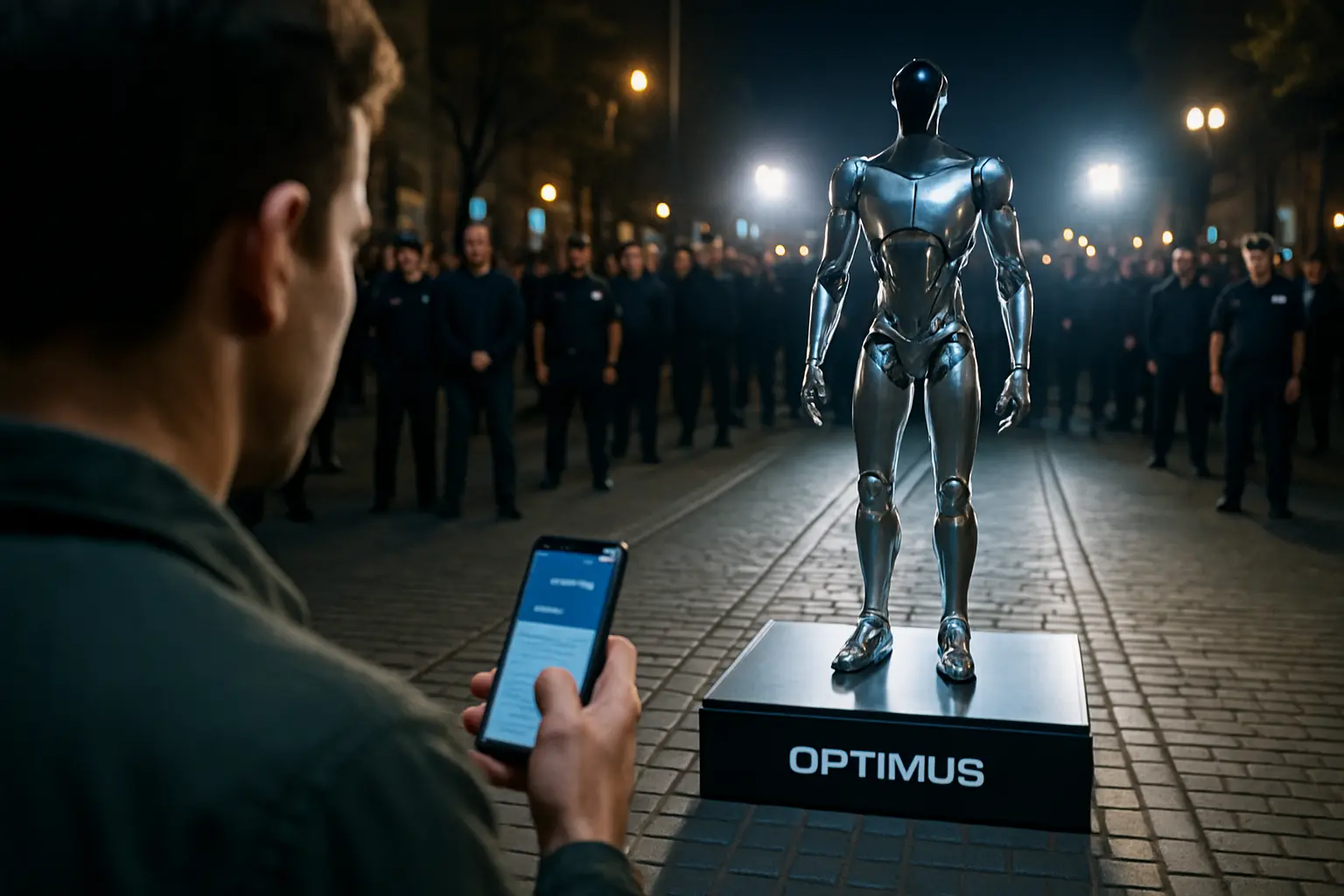
A Game-Changer in Humanoid Robotics Investment
The robotics revolution isn’t coming-it’s already here, powered by none other than Tesla’s Optimus humanoid robot. Investors and industry watchers are buzzing about the massive potential of humanoid robotics, now a multitrillion-dollar market. Thanks to visionary leaders like Dave Mazza (Roundhill Investments) and Elon Musk (Tesla, R), the sector is transitioning from science fiction to a tangible investment opportunity. Mazza credits recent shifts such as record labor shortages, an 85% plunge in AI inference costs since 2023, and affordable Robots-as-a-Service pricing to around $30 per hour as pivotal for making humanoid robots an investible reality. This convergence has turned what was once a futuristic dream into an active market theme with explosive upside potential.
“The convergence of labor shortages, affordability, and technology breakthroughs means humanoid robotics is no longer science fiction-it’s an immediate investment opportunity,” highlights Mazza.
Tesla’s Optimus program is at the forefront of this technology surge. With its Gen 3 model already demonstrating incredible balance and agility-walking over steep gravel, recovering from slips via sensors and neural networks, and delicately cracking eggs by modulating grip pressure-the robot sets a new standard for dexterity and usefulness. Optimus currently boasts 11 degrees of freedom, with planned upgrades to 22 degrees, decreasing limitations and greatly expanding its ability to perform complex tasks. This technical prowess is why Morgan Stanley analysts call Tesla’s factory the ‘mother of physical AI,’ emphasizing how Tesla’s immersive approach evolves robotic beings dynamically through environmental interaction, continuously enhancing manufacturing efficiency and robot morphology.[source]
How Tesla’s AI Manufacturing Puts It Ahead in the Robotics Race
Tesla’s relentless innovation in AI-driven manufacturing elevates Optimus beyond a standalone robot into a living, adapting system. According to Morgan Stanley’s 2025 report, Tesla’s factory acts as a crucible where robotic beings evolve through feedback from their environment, refining their physical traits and functional capabilities in real time. This revolutionary model sets Tesla apart from traditional automakers, who are hesitant about publicly discussing humanoid robotics for fear of labor market backlash and strategic vulnerability. Tesla, conversely, boldly pushes ahead in this space, leveraging Elon Musk’s grand vision to integrate robotics with their existing autonomy platforms.
“Tesla’s AI-powered manufacturing is the catalyst for the humanoid robotics race, making their Optimus robot not just visionary, but imminently practical,” asserts the report.
In 2024 alone, Tesla deployed two Optimus humanoid robots autonomously performing factory floor tasks, a clear demonstration of operational maturity.[source] The company’s ambitions don’t stop there: plans to pilot production and bring Optimus into robotaxi operations are scheduled for 2025, underlining Tesla’s aggressive pursuit to commercialize humanoid robotics.[source] Despite recent reports of halted production and necessary redesigns challenging Tesla’s goal to deliver 10,000 units by the end of this year,[source] the long-term vision remains intact with targets of millions of units annually by 2030.
Elon Musk even announced plans to send the Optimus robot to Mars aboard SpaceX’s Starship by the end of 2026, signaling ambitions that reach beyond Earth and into interplanetary labor solutions.[source] This blend of audacious innovation and practical deployment makes Tesla’s Optimus a front-runner in the global humanoid robotics race.
Humanoid Robotics Market Outlook and Strategic Implications
The humanoid robotics market is predicted to skyrocket to an astounding $5 trillion by 2050, according to Morgan Stanley, with Tesla’s Optimus robot playing a pivotal role.[source] Investment fund managers like Dave Mazza see the space heating up as these trends converge: a severe labor shortage in America and globally, plummeting AI costs, and innovations in Robots-as-a-Service that make robots economically viable alternatives to human labor.
“Record labor shortages paired with cheaper AI and affordable Robots-as-a-Service pricing means humanoid robots will be key players in the future workforce,” notes Mazza.
Despite traditional automakers’ reluctance to discuss humanoids publicly, fearing labor unrest and strategic exposure,[source] Tesla continues unabated, pushing boundaries and setting market trends. The Optimus robot’s purpose aligns perfectly with conservative priorities – reducing labor shortages, bolstering American workplaces with homegrown innovation, and raising productivity while eliminating repetitive drudgery. This is a market ripe not just for investment but for patriotic economic revitalization.
The combination of Tesla’s superior AI manufacturing, Dave Mazza’s strategic portfolio positioning with ETFs like HUMN and CHAT, and the clear economic demand for humanoid robots confirms this is the moment to pay attention to these innovative technologies. Tesla’s optimistic goal of a 1:1 human-to-robot ratio positions Optimus as both a labor-saving and quality-of-life-improving technology, promising a future where humans can focus on higher-value work while robots handle the repetitive tasks.
Tesla remains the bold leader advancing this new frontier, showing conservatives and capital markets alike how embracing cutting-edge innovation anchored in free-market principles and American ingenuity can overcome labor crises and revitalize industries. The Optimus robot isn’t just about technology; it’s about securing economic prosperity and maintaining leadership in the global high-tech arms race.