Trump Lowers The Boom: Chinese-Controlled HieFo Forced To Unwind Chip Takeover, Protecting U.S. Security
“We cannot let American military secrets, or our technological future, fall into the hands of the Chinese Communist Party.” This powerful statement came from a senior White House official on the heels of President Trump’s dramatic executive order that sent shock waves through Wall Street, Silicon Valley, and Beijing alike.
The Biden-era deal that might have handed the crown jewels of America’s next-generation chip technology straight to a Chinese-controlled shell has now been blown apart. In a bold move that once again proves President Trump will put America, her security, and her workers FIRST, the White House ordered HieFo Corp. – a Delaware firm, run by a Chinese national – to immediately unwind its $2.9 million acquisition of Emcore Corp.’s prized chip and wafer assets. The message to Beijing-backed operators is unmistakable: Washington is back in charge, and the era of ‘anything goes’ for China is OVER.
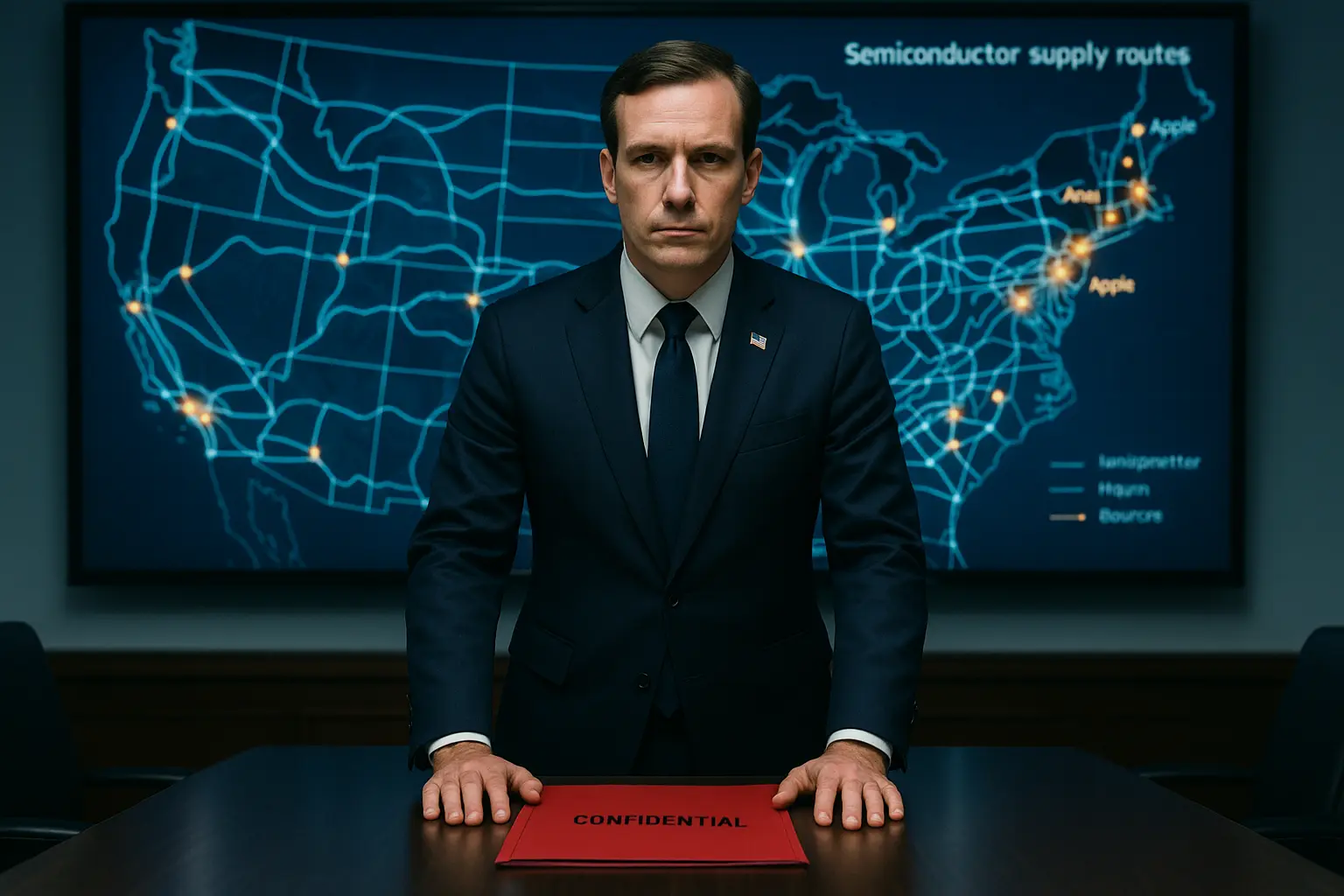
The high stakes? Think military-grade indium phosphide photonic chips – the kind used in AI, advanced optical communications, and even defense systems. No wonder the deal was spotted, flagged, and ultimately blown apart by the Committee on Foreign Investment in the United States (CFIUS), which sees global tech rivalry not as a game, but a war for supremacy. The message is clear: U.S. high-tech assets are NOT for sale to Beijing.
Silicon Slippery Slope: Biden-Era Deal Quietly Handed Chips To China – Until Trump Stepped In
Was this just another “routine” business deal, or a security time bomb waiting to go off?
In May 2024, while legacy media distracted Americans with celebrity gossip, HieFo quietly agreed to swallow up Emcore’s digital-chip and indium-phosphide wafer design, packaging, and fabrication-assets with enormous strategic significance. Approved at state level in both New Jersey and California, lured by lucrative tax breaks and ‘job creation’ promises, HieFo’s real owners were shielded in corporate shadows. On paper, it was a “Delaware-based” group, but the truth was inescapable: Dr. Genzao Zhang, a Chinese national and former Emcore executive, was at the helm, with a majority stake held by Asia-Pacific Environment Investment Ltd., a Hong Kong-registered company.
California even gave them a whopping $1.14 million sales tax benefit and the green light for $13.5 million in manufacturing equipment, with promises to “support” 100+ jobs at a new Alhambra plant. Meanwhile, back in Beijing, the Chinese Communist Party, desperate for the secrets of America’s chipmaking technology (including sought-after H200 AI chips, key for their military), watched – and waited.
But once Trump retook the White House, the winds shifted. Unlike the previous administration’s lax approach, Team Trump hammered the brakes. CFIUS flagged security risks so grave they refused to make the details public; insiders say they were especially alarmed about China gaining access to critical photonic and laser chip intellectual property with both civilian and defense applications. This is material that could give Beijing a leg up in artificial intelligence and next-generation warfare.
“We dodged a bullet here.”, confided a national security insider, “If this deal went through, we could have seen our own military putting Chinese-influenced chips in our fighter jets or critical networks inside three years.”
President Trump didn’t hesitate. Invoking Section 721 of the Defense Production Act – a rarely used authority reserved for the most serious threats – he issued his order on January 2, 2026. In one stroke, the sale was vaporized. Trump directed CFIUS to enforce the unwind in less than 180 days, under close government supervision so that not a single wafer or byte of nonpublic technical information would slip abroad (source).
Not For Sale: U.S. Sets New Standard By Blocking China’s Semiconductor Shopping Spree
The world’s eyes are now fixed on Washington, where American power players refuse to be silent while our rivals plot intellectual property theft – disguised as “legitimate investments.”
This latest salvo in the US-China tech war sends a pointed signal. It isn’t just about photonics, AI chips, or Emcore’s Alhambra facility. It’s about national identity, sovereignty, and a red line in technological warfare. America, under President Trump’s second term, is drawing that line – and daring Beijing to cross it.
The deal, now obliterated, is a textbook case in how foreign-controlled operators prey on Western openness. HieFo’s company profile claims it’s just a “California startup” emerging from an Emcore management buyout, but CFIUS investigators identified glaring gaps – including the real control exercised by Chinese nationals, and the risk of tech transfer to Beijing. Even as the company promised new jobs, the underlying danger wasn’t jobs lost, but military readiness and economic self-sufficiency at risk. China’s known for exploiting such deals, using shell corporations and layered ownership, often backed by aggressive state subsidies and relentless cyber-espionage.
The White House, Treasury, and Justice Department all rallied behind the President’s move. HieFo is now required to submit weekly compliance certifications while U.S. personnel physically verify on-site, ensuring nothing – not even a prototype – leaves the country without approval. Everything must be unwound, with CFIUS calling the shots and the threat of criminal penalties hanging in the air. And as of now, state and local tax perks are null and void. American taxpayers won’t subsidize Beijing’s shopping spree.
“Once Trump got in, the message was clear – no more selling out U.S. high tech to China… especially when we’re talking about chips that could undercut our own military and AI edge,” noted an industry watchdog.
No surprise: Silicon Valley officialdom is in panic mode, worried their next big buyout might hit a CFIUS wall. Meanwhile, American patriots and national security hawks are cheering, hailing it as a clean break with the era of naivete that allowed rivals to loot U.S. know-how under the banner of globalism.
Election-Year Fireworks: Trump’s Crackdown On Tech Deals Could Define 2026 GOP Strategy
If there is one thing that unites Republican voters coast to coast, it’s the demand that Washington stop selling out America’s strategic future for a quick buck.
Trump’s order is already electrifying voters, not only in swing states with tech jobs and military installations but nationally. The chessboard is clear: as the 2026 midterms heat up, expect the GOP to hammer ‘Made in America’ security, border tech, and AI independence as a defining theme. Leaks from inside the campaign reveal the Trump team will hammer home these election-year talking points: “We are not China’s ATM – and we will never let our technology bankroll Beijing’s war machine.”
As for Democrats, the Biden team is on the back foot. Not only was the original Emcore-HieFo deal inked on their watch, but state-level officials rushed to rubber stamp it for a quick economic win. Trump’s move puts them in the uncomfortable position of explaining to voters why tax dollars and American know-how were almost sent overseas, in the teeth of what CFIUS called a ‘credible national security risk’.
“Trump delivered – he saved our jobs and our secrets. Biden failed,” one California Republican state senator posted on X, getting over 500,000 likes within hours.
With the Committee on Foreign Investment in the U.S. now on high alert, whispers in D.C. suggest even tougher screening rules may be coming, designed to keep ALL U.S. chip tech – not just the military-grade stuff – out of the crosshairs of any foreign power hostile to American interests. Several senior GOP legislators are already drafting bills to restrict foreign investment further, and a chorus of party activists warn this is just the start of a “great American re-industrialization” that could fuel a red wave this fall.
Bottom line? In a world consumed by economic and tech warfare, President Trump just drew the line, lit the fuse, and made it clear: America’s most sensitive technologies will remain under lock and key. For Chinese-controlled firms, the lesson could not be more clear: don’t even try it. And as for President Trump and the Republicans, this is the stuff winning election campaigns are made of.