
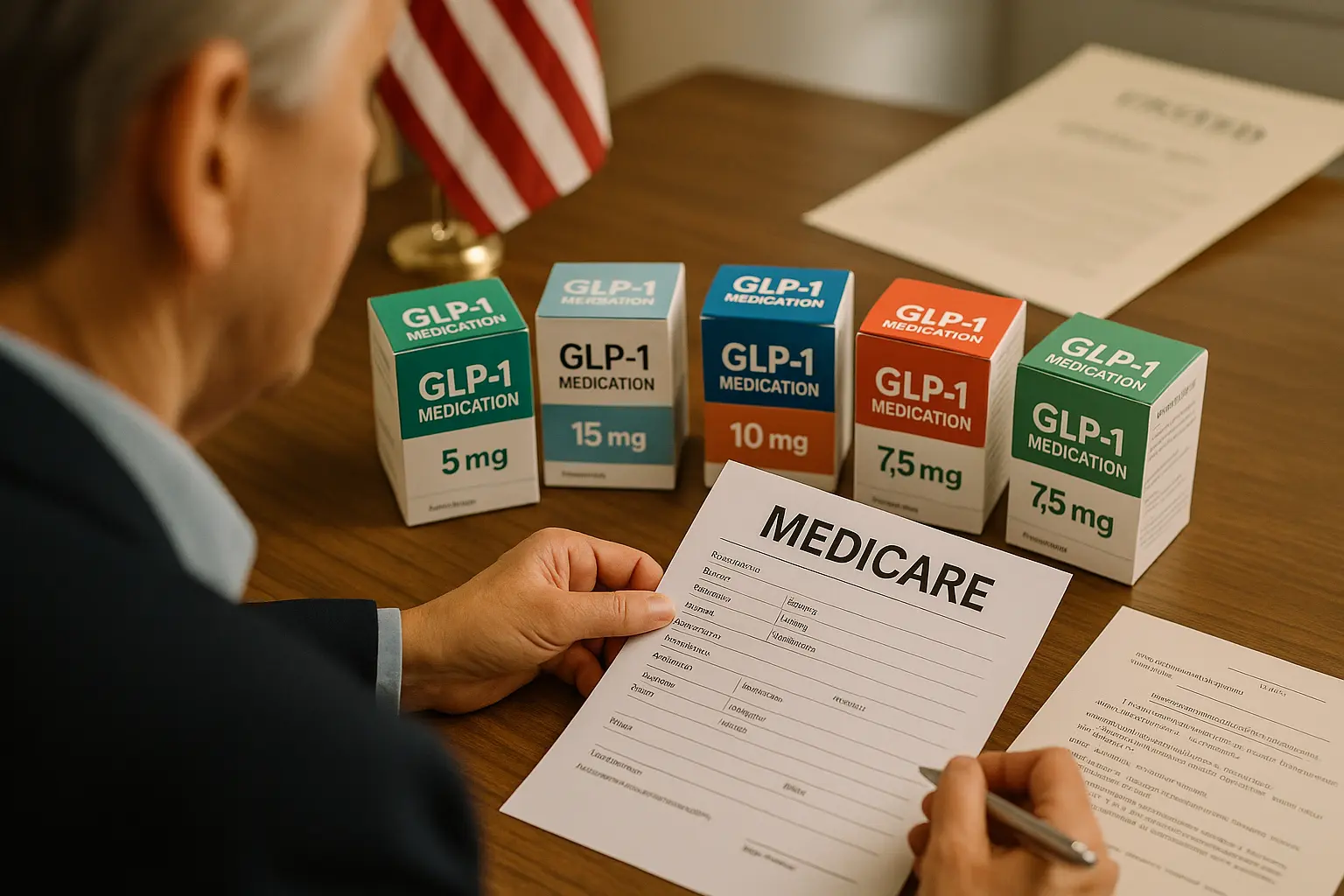
Trump Team Eyes Medicare Weight-Loss Drugs: Game-Changing Pilot May Reshape Care and Spending
‘A Revolution in Healthcare or a Ticking Time Bomb?’
“When you give Americans a chance, they grab it and run with it.” That’s what former President Trump declared on the campaign trail this summer-now, he’s putting those words into action yet again. The White House is preparing a seismic shift in federal healthcare, announcing a bold pilot to allow Medicare and Medicaid to cover weight-loss drugs-a move that could shake up everything from seniors’ health to the national budget itself.
This isn’t just another bureaucratic tweak. Instead, the Trump administration is launching a five-year experiment allowing state Medicaid plans and Medicare Part D to voluntarily cover popular but pricey GLP-1 medications like Ozempic, Wegovy, Mounjaro, and Zepbound. The $5,000 to $7,000 per year price tag has put these drugs out of reach for most Americans-until now. Democrats dragged their feet on this issue. Trump’s team is promising to do what the prior administration couldn’t: deliver on real, actionable health reforms.
This is no ordinary regulatory move. The pilot plan is set to start April 2026 for Medicaid and January 2027 for Medicare, according to documents obtained from the Centers for Medicare & Medicaid Services and first reported by The Washington Post. If this experiment succeeds, it could permanently change the face of obesity care for 135 million Americans and transform the entire health insurance system in the process.
Medicare and Medicaid supporters have praised the pilot, while critics warn of a “fiscally reckless Diet Coke binge”-and the battle lines are quickly forming online.
Whose Pocketbook Wins? Inside the Billion-Dollar Drug Coverage Gamble
For years, Democrats and progressive activists shut down Republican initiatives for evidence-based obesity treatment, hiding behind “cost concerns.” Now, the scale is simply too big to ignore. Over 70 million Americans are on Medicaid and another 65 million rely on Medicare. That’s nearly half the country-whose health, financial futures, and personal freedom are at stake.
The newly proposed pilot program doesn’t just open the door to coverage; it brings a package approach. Any insurer that wants to participate is going to be required to provide comprehensive lifestyle coaching. Critics say this is government overreach; supporters claim it’ll drive better results and lower costs long-term. The message from the administration is clear: no more blank checks for Big Pharma, but no more blocked access for patients desperately seeking help. “You want coverage? You have to earn it,” a senior administration official told RedPledgeInfo. That’s a massive change from years of petty political bickering-Trump’s team is getting things done.
There’s no denying the math: if the meds remain at current prices, taxpayers could be on the hook for an estimated $35 billion between 2026 and 2034. The Congressional Budget Office is already warning of cost overruns, and think tanks on both sides of the aisle are spinning up their talking points. But here’s the kicker: Medicare is actually set to negotiate prices for Ozempic and Wegovy starting in 2027, a first-of-its-kind move that could bring costs crashing down for millions. If the feds can flex their muscle and win-consumers will benefit, and insurers will have no more excuses to gouge patients and families.
Wall Street has already noticed; shares of Eli Lilly and Novo Nordisk surged in premarket trading the second this story broke. Big pharma lobbyists are circling D.C. like vultures-but this time, Trump’s administration isn’t rolling over.
One viral post from @HeartlandCitizen snapped: “Why should my tax dollars go to $7K-a-year ‘fad drugs’? Cut the pork, keep people accountable!” The debate is boiling over, and the pilot hasn’t even launched yet.
Red State, Blue State: Social Media Explodes over Trump’s Bold Move
The official announcement triggered an immediate and explosive response online-especially among grassroots conservatives and hard-working American taxpayers. “How about covering insulin for working folks first!” wrote @USAWorker1 on X (formerly Twitter), racking up over 45,000 likes in a single Friday morning. Meanwhile, left-leaning networks claimed that “weight-loss drugs are a Band-Aid for America’s real health crisis.”
Yet the nuts and bolts are simple: under Trump’s proposal, insurers can voluntarily join the five-year pilot, but every participating plan must pair use of expensive GLP-1 drugs with proven lifestyle coaching. The fine print comes straight from the Centers for Medicare & Medicaid Services documents: results count, not just prescriptions filled.
Let’s be clear-this represents the first real effort in years to modernize Medicare and Medicaid coverage to match the latest research and medical technology. Democrats spent the last four years talking about “health equity” and “market-based solutions,” but delivered little more than increased bureaucracy and rising costs for families. With drugs targeting diabetes, heart disease, and now weight loss, the Trump administration is pushing to make American medicine work for everyone-not just for the privileged few.
Some conservative watchdogs have expressed concern about the prospect of another entitlement ballooning federal deficits. The Biden era saw runaway spending on everything from solar panels to gender studies programs in Pakistan. Now, every dollar is political, and middle America is watching closely to see if these new weight-loss drugs lead to better health-or just more belt-tightening in Washington.
“Trump promised to get government out of our lives-but now, the feds are coming for our waistlines too? Where does it stop?” asked an Iowa retiree in a recent Facebook livestream.
Buckle Up: Could This Obesity Drug Experiment Rewrite the Rules for All Americans?
What happens next? Make no mistake-if this experiment succeeds, America’s approach to obesity could change forever. More than 135 million folks could suddenly find themselves eligible for blockbuster drugs, improved counseling, and a new lease on life. Advocates hope that lower rates of diabetes, heart disease, and disability will ultimately save taxpayers money by slashing hospital visits and keeping working-age adults off the disability rolls.
That’s the big promise, but as always, the devil’s lurking in the details. Some researchers point out that aggressive coverage of weight-loss medications in Europe hasn’t solved their own obesity crisis. Meanwhile, health freedom activists warn that “lifestyle coaching” could become bureaucratic red tape, and some insurers could just opt out rather than comply. Already, insurers and governors in deep-blue states like California and New York are vowing to “resist federally driven mandates.” Will red states leap at a chance to join, or hold back to see how the costs shake out?
With Medicare and Medicaid prices on the negotiating table-and pharma companies tasting record profits for now-this is one pilot that’s sure to define the next era of healthcare politics. If Trump’s experiment works, it could spell the end of chronic obesity and its staggering costs. But if the wheels come off? America may simply be swapping one healthcare crisis for another, while taxpayers foot an ever-growing bill.
One popular right-leaning health forum put it this way: ‘We want results, not more government programs draining our wallets. If Trump’s plan brings health-and real savings-we’ll take it. If not, we’ll vote for someone who will.’
The Real Fight Begins: Trump’s Promise, Millions of Lives-and 2028 Looming Large
It’s clear that this pilot represents a major fork in the road for public health and budget priorities. It’s also an unmistakable signal that President Trump is betting big on reshaping American medicine-cutting through the inertia and giving regular folks a real shot at modern, effective care. What remains to be seen is whether this gamble pays dividends at the ballot box. The 2028 election might be decided not in smoke-filled back rooms, but in hospital clinics and kitchen tables across heartland America, as families weigh the realities of healthcare costs, access, and freedom.
One thing’s certain: this is not just about weight-loss drugs. It’s about the role Washington should-or shouldn’t-play in the daily lives of citizens. As the experiment rolls out and political battle lines harden, RedPledgeInfo will be watching every twist and turn. Will this be the legacy-defining move America’s healthcare system needs? Or just another chapter in the endless saga of big government and big pharma? Time-and voters-will tell.