
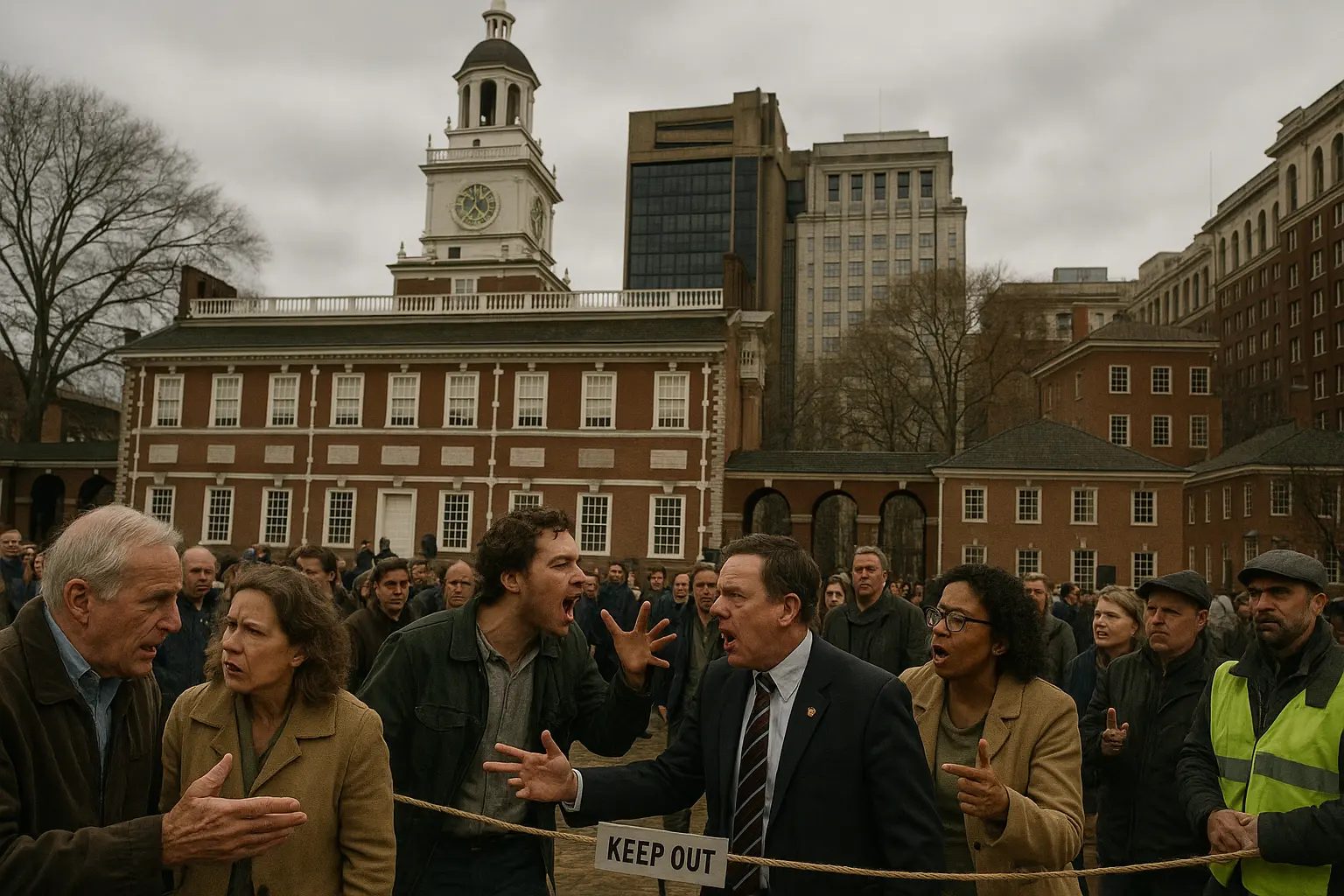
National Pride or Hiding the Past? Trump’s Order Rocks the Cradle of Liberty
The removed displays specifically honored nine individuals enslaved by George and Martha Washington during their Philadelphia years-an exhibit activists fought years to install, and progressives are now racing to reinstall through lawsuits and PR campaigns. But for many everyday conservatives, this isn’t about erasure. It’s about reclaiming the spirit that built a free, prosperous nation-one that should, as the order reads, ‘focus on the greatness of the achievements and progress of the American people.’
Social media has lit up on both sides. Some on X (formerly Twitter) posted: ‘Bravo! Time to stop shaming our nation and start teaching about greatness!’ But the left pounced, with one user blasting: ‘This is the Trump playbook-deny, erase, repeat.’
‘Removing items from the President’s House merely changes the landscape, not the historical record,’ countered City Council member Kenyatta Johnson, seething on Yahoo News, who accused the administration of trying to ‘whitewash American history.’
The tension is only rising as America preps for its 250th anniversary. With this much passion, don’t expect this story-or the public’s fierce debate over how we remember our past-to cool down anytime soon.
The Battle for the President’s House: Lawsuits Fly as Trump’s Team Holds Firm
But the administration’s backers point to a clear, constitutional victory for the White House. The president, they say, has a duty to ensure that public funds and public space serve the unity and flourishing of We the People-not an endless spiral of discord and division. Trump’s supporters highlight that the move is part of a larger campaign to restore ‘truth and sanity’ to American history, combating what’s seen as anti-American programming that glorifies victimhood or guilt.
Vice President J.D. Vance has led the enforcement, reviewing displays nationwide for ‘improper, divisive, or anti-American’ themes. Secretary Doug Burgum wasted no time following up with a May 2025 directive for federal agencies to ‘review and revise interpretive materials’-and the Park Service saluted their orders, citing Burgum directly in the reasoning for the Philly removals, as covered in The Philadelphia Inquirer.
‘We will not let our greatest stories or heroes be diminished,’ said one Trump-aligned historical advisor in a statement, ‘It’s time to show our children the hope, strength, and genius of America.’
On the other side, progressive groups like CAIR-Philadelphia and national civil rights activists have fumed, calling the removal one more step to ‘erase’ minority perspectives. Lawsuits, op-eds, and heated city council hearings have ensued-a litmus test for how blue-zone elites define ‘history’ versus Main Street priorities.
Whose Story Gets Told? Museums, Memory, and America’s 250th Birthday
The Trump executive order hasn’t triggered just a Philly backlash-it’s sending shockwaves across the entire museum and parks landscape. As The Washington Post detailed, this is only one skirmish in a much broader campaign. From climate alarmism to gender activism and union glorification, more than a dozen National Park sites and museums are seeing controversial content flagged, revised, or outright removed before the 250th birthday of the USA.
Proponents call this patriotic course correction overdue: why should taxpayer-funded sites focus on the darkest moments instead of the country’s towering achievements? For many on the right, it’s an obvious question. What if visitors walked away inspired by what unites us, not what divides us? What if the next generation saw their country as beautiful and abundant, not always in need of apology?
As Trump put it in a recent rally: ‘We will celebrate the best of America-the land of the free, the home of the brave-not let radicals turn museums into confessionals or history books into weapons.’
The coming months promise a tidal wave of legal and political campaigns as museums, city halls, and history buffs clash with Washington’s new standards. Swing-state races in Pennsylvania are already heating up over the scandal, making the fate of Philly’s plaques a central wedge issue for undecided voters.
Election Stakes: Will American Pride Win or Lose in 2026?
Already, candidates are splicing their stump speeches with references to the exhibit. Progressives warn of a future where uncomfortable truths are glossed over. Conservatives are countering with calls for curriculum reform and proactive patriotism. Polls in Pennsylvania and beyond suggest the issue could tip key districts-especially as voters tire of lectures and demand a vision that moves forward, not backward.
Regardless of which side you take, one thing is certain: How we tell our nation’s story isn’t just about museums and plaques-it’s about the soul of the country. This fight over one corner in Philadelphia could be the lightning rod that shapes American identity for the next generation. Watch this space-because as history teaches, the victors are the ones who get to write the story.