
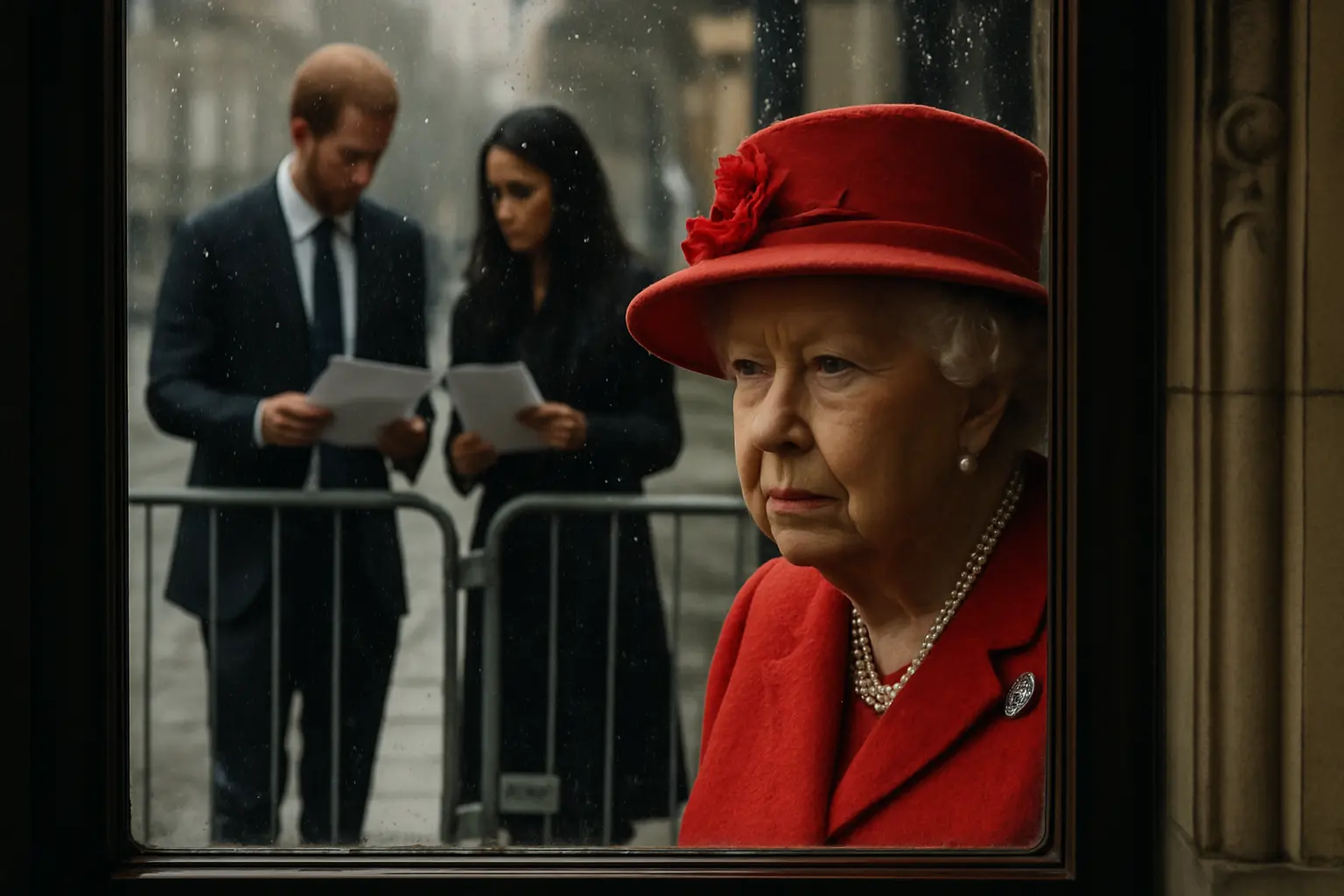
How Harry and Meghan’s Actions Dimmed Queen Elizabeth’s Final Years
The royal family, long seen as a pillar of tradition and stability, suffered a painful and public unraveling in the last years of Queen Elizabeth II’s reign, thanks largely to the divisive actions of Prince Harry (R) and Meghan Markle (D). From the couple’s controversial exit as working royals to their explosive interview with Oprah Winfrey in 2021, tensions boiled over, leaving the Queen’s once-solid family bonds shattered and her final years shadowed by heartbreak. The charming young Meghan that first charmed the Queen gave way to a controlling influence, and Prince Harry’s conduct strained the monarch’s patience and trust to the breaking point.
“The entire situation was a complete catastrophe,” revealed royal insider Lady Elizabeth Anson, the Queen’s cousin, shining light on a dark chapter rarely seen by the public.
Royal biographer Sally Bedell Smith reported that before their wedding, Buckingham Palace and the monarch herself harbored serious doubts about the authenticity of Meghan’s affections and the couple’s intentions. The Queen, who once described Meghan as “full of charm” and “intelligent,” soon came face-to-face with a marked change in Meghan’s demeanor, which became increasingly controlling and aggressive. The tension was palpable during wedding preparations, with incidents such as Prince Harry allegedly refusing to engage respectfully with the Queen during meetings, including a particularly tense ten-minute cold shoulder.
Moreover, Meghan’s refusal to share details about her wedding dress aggravated the Queen, who reportedly felt excluded and saddened by the lack of transparency and openness during what should have been a joyful family moment. This behavior only fueled underlying suspicions that the union had been “engineered” rather than born from genuine love, a concern voiced by Lady Elizabeth Anson close to the Queen.
It was not just private tensions but public betrayals that cut deepest. The infamous 2021 Oprah Winfrey interview, broadcast on March 7, 2021, exposed the royal family to raw accusations of racism and neglect. The Queen, grappling with her husband Prince Philip’s declining health, found these allegations personally dismaying and a direct affront to the family she cherished. A Buckingham Palace statement in the aftermath emphasized that “the issues raised, particularly that of race, are concerning” and insisted they be handled privately, yet the damage was done. The Guardian reported that the Queen was saddened by the interview’s timing and its implications, feeling betrayed on multiple levels.
Despite these fractures, the Queen remained steadfast, publicly declaring, “Harry, Meghan and Archie will always be much loved family members,” as reported by People magazine. This gesture, however, did little to halt the rift that would only deepen as Harry and Meghan moved permanently to California in 2020, further distancing themselves from their royal duties and family.
How the Sussexes’ Public Crusade Made the Queen’s Twilight Bitter
Harry and Meghan’s exit from royal life was intended to be a new chapter of independence, but it soon morphed into public warfare against the very institution that supported them. The “half-in, half-out” model the couple dreamed of was vetoed by the Queen during the 2020 Sandringham Summit, but instead of reconciliation, what followed was open defiance and relentless public airing of grievances.
Royal biographer Phil Dampier described the couple’s behavior as making the Queen’s “final years misery,” a heartbreaking betrayal of centuries of tradition and loyalty.
The timing of their Oprah interview, just weeks before Prince Philip’s death, was widely seen as callous, coming when the monarchy was already grieving deeply. The Queen was reported as “very worried” about Harry’s judgment and his relationship with Meghan, particularly as the couple’s narrative painted the royal family in a negative light. Meanwhile, Meghan’s influence was seen by some insiders as the primary cause of Harry’s estrangement from the rest of the family. Reports indicate that the Queen found Harry’s behavior increasingly “weak and besotted,” losing the firm grounding she had hoped for in her grandson.
Kate Middleton (R), often the quiet stabilizing force within the family, made subtle yet pointed gestures that appeared to underscore her favored status with the late monarch. Her recent choice of jewelry at a Balmoral event, seen as a tribute to the Queen, was interpreted by royal followers as a discreet middle finger to the Sussexes amid ongoing tensions. Meanwhile, the rift between brothers William (R) and Harry deepened, with Kate reportedly saddened by the lasting break.
The public’s fascination with the Sussexes’ royal rebellion only grew after Harry’s 2023 memoir Spare detailed his personal anguish and cast further doubt on his commitment to the monarchy. It became apparent that what was once a hopeful royal couple had turned into a source of persistent controversy, thrusting the monarchy into an unwelcome spotlight.
These stories of betrayal and heartbreak were confirmed by insiders like Lady Elizabeth Anson, who described Meghan as “evil” and the entire saga as a “complete catastrophe” from the Queen’s perspective, a stunning admission given Her Majesty’s typically reserved nature.
The Broader Impact on the British Monarchy and Conservative Values
The Queen’s struggle with her grandson and his wife didn’t just mark a family saga but highlighted a deeper crisis facing the British monarchy. As the institution wrestled with modernization and shifting social norms, the Sussexes’ public defiance tested royal resilience. Conservative observers see this as a cautionary tale about loyalty, duty, and the enduring importance of upholding tradition in the face of celebrity and personal ambition.
“The tragic end to this chapter reminds us why respect for the institution and family unity is paramount,” a royal historian remarked, underscoring the conservative viewpoint.
Traditional royal values emphasize privacy, discretion, and a sense of duty above personal agendas-principles the Sussexes dramatically abandoned. The Queen’s regret over the situation reflects the pain of a monarch who upheld these conservative values to the very end. The public airing of internal family disputes, especially on international stages, undermined the centuries-old respect for the crown and raised questions about modern identity and loyalty within the royal family.
Conservatives point out that the public backlash against the Sussexes’ behavior-seen in stark contrast to Kate Middleton’s poised and loyal role-signals a desire among Britons and loyal Americans alike to return to stability, traditionalism, and respect for historical institutions. Kate’s apparent close relationship with the Queen, demonstrated in part through symbolic acts like her choice of jewelry, marks a return to core conservative virtues: family unity, respect for tradition, and personal sacrifice.
Recent reports, including one from Marie Claire, revealed the Queen’s private disapproval of Meghan’s wedding dress, considered “too white” for a divorcee remarrying in church, signifying the monarch’s discomfort with Meghan’s departure from royal norms. These subtle details paint a powerful narrative of a monarch struggling to maintain order amid unprecedented upheaval.
The lasting implications are clear. The monarchy must balance the desires of modernity with the conservative values that have maintained its relevance for centuries. The Sussex saga serves as a stark reminder and a warning sign of what happens when personal ambition and public spectacle take precedence over loyalty and tradition. While Queen Elizabeth II remained dignified and gracious until the end, her disappointment shows how deeply the actions of her grandson and his wife affected the very fabric of the royal institution.