
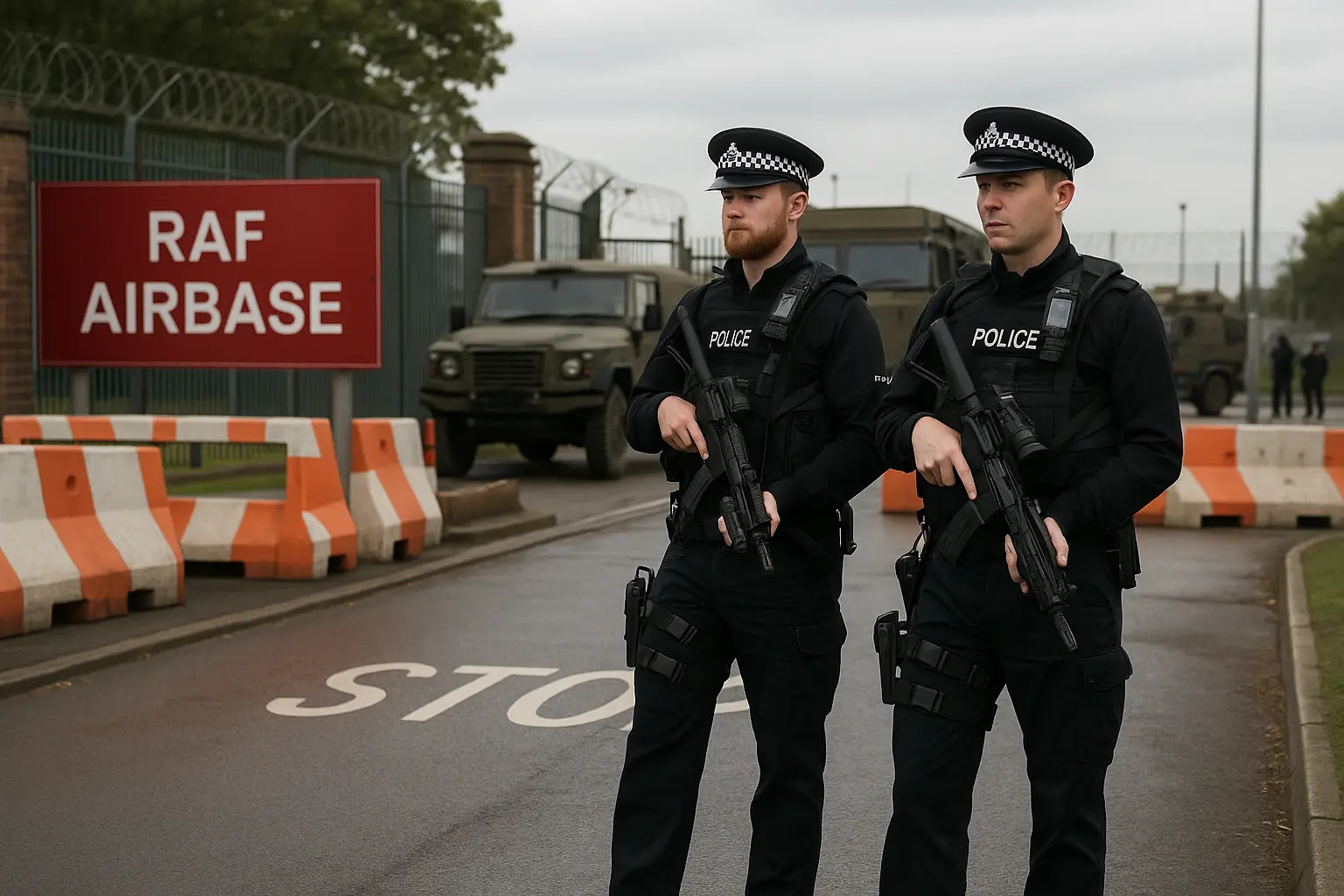
UK Armed Forces on ‘Maximum Alert’ After Iran Threatens London With Retaliation Over US Strikes
‘The British lion will always defend its den.’ With these words, Defence Secretary James Evans addressed a rattled Parliament, as an international crisis simmered over the heart of London.
If you thought Britain had left the era of bomb shelters and blackout curtains behind, think again. Last night, the UK’s Ministry of Defence issued its starkest warning since the Cold War: Britain’s armed forces are poised 24 hours a day, seven days a week, standing guard after Tehran’s infamous Revolutionary Guard gave a chilling threat-London, and any base hosting American bombers, is now viewed as a ‘legitimate target.’ The statement comes after two Iranian missiles streaked towards the Diego Garcia joint UK-US military base-2,400 miles from Tehran-only barely missing, hammering home the new reality: the British Isles may be within Iranian reach.
Iran Names UK Bases-And London-As ‘Legitimate Targets’ As Missiles Fly
Britain’s military on high alert as Tehran points its finger directly at London and RAF Fairford.
The tension exploded after Iran’s Islamic Revolutionary Guard Corps (IRGC) accused the UK of enabling US ‘aggression and war crimes’ by allowing American B-1 bombers to launch from Royal Air Force bases, including Fairford in Gloucestershire. The finger-pointing turned threatening when an IRGC spokesman declared: ‘Any base used for aggression against Iranian territory is a legitimate target.’ British intelligence, already tracking Tehran’s activities after an Iranian-made Shahed drone struck Akrotiri airbase in Cyprus, rushed to coordinate with MI5 and Metropolitan Police in the face of possible Tehran-backed subterfuge against sensitive targets in the UK.
Sources confirm that on July 23, 2026, the United States deployed a B-1 bomber from a UK airbase to strike IRGC targets in Iran, sending an unmistakable signal-but also painting a bull’s-eye on British soil. Iran wasted no time in seizing this as justification to put London and British military assets in their sights.
“The message from Tehran could not be more clear,” said foreign policy commentator Martha Rayburn. “By openly designating London as a target, they are gambling with global order-banking on British restraint as they rattle their sabers.”
The government’s response has been steely. Prime Minister Andy Burnham, under intense scrutiny from both backbenchers and the public, doubled down on the UK’s agreements to allow US defensive missions to proceed from British soil, justifying the move under the banner of collective Western security. Notably, the Cabinet has kept its distance from offensive operations, maintaining the line that, while Britain hosts America’s self-defense maneuvers, it’s not fanning the flames of regional war.
Military Might Mobilized: 24/7 Readiness and the Threat of Incoming Missiles
A coordinated, multi-layered defense-RAF, Royal Navy and Army all in play
Britain’s military planners aren’t taking chances. With the IRGC fresh on the government’s official list of threats, the nation’s layered air and missile defense machine has been cranked into overdrive. The Ministry of Defence described their posture in no uncertain terms early Thursday morning: ‘Our armed forces are ready 24/7 to protect the United Kingdom from any attack, whether on domestic soil or abroad.’ Fighter jets, Navy destroyers and Army missile defense batteries have all been repositioned, forming an integrated defensive envelope around key military installations and population centers.
Recent experience has kept everyone on edge. Two attempted missile strikes by Iran on Diego Garcia, while unsuccessful, proved that mid-range ballistic missiles are not empty threats. Tehran insists RAF Fairford, with its American bombers, and other sites like Akrotiri and Lakenheath are now on their watchlist. ‘Londoners can sleep peacefully,’ declared a senior MoD official-but across social media, worried citizens say morale is anything but high.
‘Iran targeting London?! This government better be ready to hit back HARD,’ demanded one trending tweet, echoing the anxiety and defiance sweeping through British social discourse.
In response, the government rolled out civil preparedness plans, reactivating municipal crisis teams and liaising with local authorities across London and the South West. The message is clear: any disruption or attack will be met with overwhelming force-a doctrine the Trump administration in Washington has also signaled time and again.
Political Firestorm: Tehran’s Threats Ignite Debate At Home and Abroad
Warnings from Iran split Parliament and put British leadership in the cross-fire as elections loom
Behind the scenes, opposition MPs and several old-guard Conservative leaders have risen in furious debate over Prime Minister Burnham’s willingness to ‘shoulder American burdens’ at British risk. ‘We will not be bullied by Iran nor dictated to by any foreign power,’ insisted Home Secretary Alan Wilde. The House of Commons reverberated with calls to scrap UK-US defense arrangements in light of Tehran’s newfound missile reach-but Tory hardliners hit back, warning isolationism in the face of the IRGC’s threats would not only embolden adversaries, but also terrify British allies and partners in Europe and beyond.
Ironically, last week saw the UK ramp up its stance against Iran’s military machine: On July 17, Downing Street formally designated the Islamic Revolutionary Guard Corps a direct threat to national security under the State Threats Act. Merely expressing support for the IRGC is now a criminal offense-a step hailed by Jewish community leaders and witnesses to IRGC-backed proxy violence on British soil. Yet, some in Labour’s leftmost factions grumbled that such rhetoric could heighten an already combustible situation.
‘This is the UK taking a stand-as we must-because appeasement has never kept us safe,’ argued Conservative firebrand Lucy Richards. ‘You don’t deter a regime like Iran with paper tigers and half-measures.’
Internationally, the UK’s reaffirmed commitment to its NATO partners-and especially the United States-has resonated as a sign Britain won’t be cowed by Tehran’s saber-rattling. With Trump back in the White House and Washington eyeing renewed airstrikes to degrade Iran’s missile arsenal, the two allies’ security pact seems stronger than ever. However, critics warn this could thrust London into the center of Middle Eastern payback, with Iran’s cyber-warfare teams and proxies in Europe itching for a reason to strike.
As regional tensions climb-with new strikes reported nightly in the Strait of Hormuz and US aircraft flying from Europe-the British government faces a historic choice: Double down on transatlantic unity or risk the wrath of a foe more capable and emboldened than any since the Soviets. With Parliament already abuzz with rumors of snap elections, and social media hashtags trending #DefendBritain, the government’s next steps could define not only this crisis, but the nation’s posture on the world stage for a generation.
For now, Britain waits, locked and loaded, bracing for whatever Tehran might try next-and praying that the lion’s roar will keep the wolves at bay.