
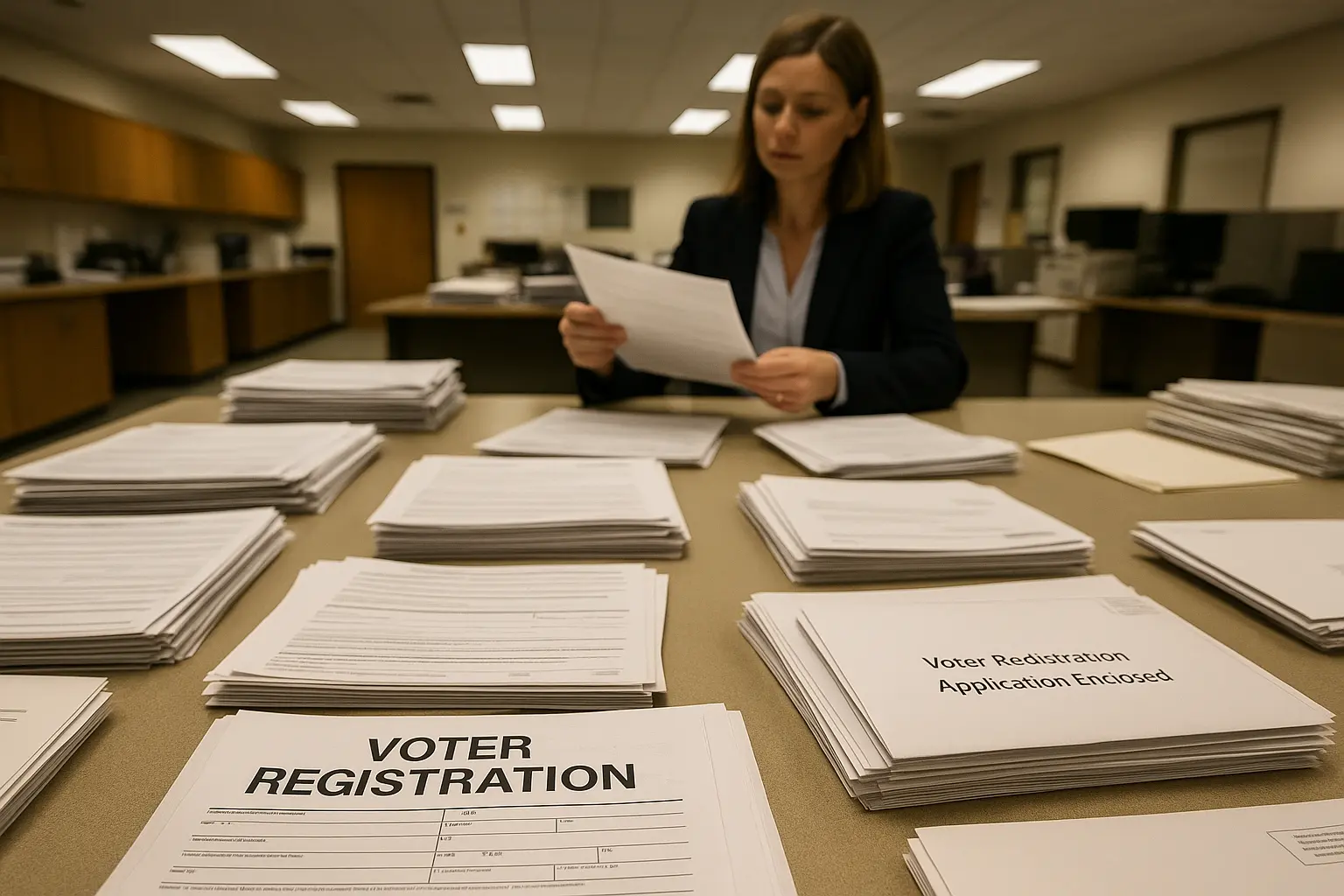
‘They Want Our Elections Fair’: 3,000+ Alaskan Voters Flagged in Explosive Citizenship Review
“I have lived here for decades and never thought I’d get a letter like that!” exclaimed Anchorage resident Rita Edwards, one of thousands of Alaskans who recently opened their mailboxes to find a pointed demand from the Division of Elections: prove your citizenship or risk being sidelined during the all-important August 18th primaries. As the nation’s eyes lock on the pivotal 2026 midterm cycle, what is happening in The Last Frontier is sending shockwaves all the way to Washington D.C., fueling fresh debates about election integrity, the reliability of state databases, and just who is being trusted with the American vote.
More than 3,000 Alaska voters have now been asked to verify their U.S. citizenship-a dramatic jump from the usual 200 flagged every election cycle. In an election year where border security and ballot sanctity are front and center thanks to President Trump’s decisive reelection in 2024, the change is drawing both fierce praise and sharp scrutiny.
The directive? Clear as day. Recipients are asked to contact the Division by phone, letter, or email and affirm their citizenship status. If they respond, they’re swiftly returned to the active voter list. If not, their right to cast a ballot could be limited to a provisional status, forcing them to swear under oath that they’re in fact eligible. While the process might sound simple, the consequences and confusion on the ground are anything but.
“Americans want trust in the system-we want to know that every vote cast is legal, and every illegal vote is weeded out,” said Rep. Dan Mullins (R-Anchorage). “If a few honest citizens get a letter by mistake, all it means is the system is finally trying to clean itself up.”
The move comes amid a broader national push from the Trump administration and Republican allies to strengthen voter rolls and lock out any noncitizen participation. The Alaska story is more than local news-it’s a blueprint for states across the country that have begun to wonder just how many names shouldn’t be on their voting lists at all.
Motor Vehicle Mayhem: How Database Chaos Triggered the Surge
Digging deeper into this unprecedented spike-almost a fifteen-fold increase from previous reviews-election officials and watchdogs are uncovering a tangled web of outdated records, government oversight, and years-old data. The blame, at least in part, lies with Alaska’s notoriously patchy recordkeeping at the Division of Motor Vehicles. According to Division Director Carol Beecher, “a lot of old data was picked up somehow,” leading to the unexpected flood of verification letters in the run-up to this year’s elections.
The implications of these database mismatches are profound. Separate and unsynchronized databases between agencies, combined with weak notification systems, have meant naturalized citizens, longtime Americans, and even noncitizen residents are all being swept into the net. Already, Democratic lawmakers claim their offices have been flooded with complaints from nervous constituents-many of whom say their credentials have never been in question until now. Some worry that vulnerable communities or those less able to navigate bureaucratic demands could be disproportionately impacted.
“We have Alaskan citizens who did everything right, yet they’re warming up for Election Day being told to prove themselves all over again,” fumed Rep. Maria Olvera (D-Juneau). “It proves our agencies are not talking to each other, and voters are caught in the crosshairs.”
If this sounds like déjà vu, that’s because Alaska is far from the only state wrestling with voter roll questions. A recent fiasco in New Jersey saw nearly 6,600 noncitizens inadvertently registered to vote over two years via a Motor Vehicle Commission software glitch. While fewer than 400 ballots were ultimately cast by those affected, Governor Mikie Sherrill swiftly ordered the removal of the erroneous registrations and launched an investigation-an embarrassing episode that only supercharged national calls for tougher checks and accountability at every level.
The Alaska Division of Elections has emphasized that paper documentation is not currently required-only affirmation will suffice. Yet the specter of system errors breeds mistrust. Critics say this is precisely why a robust voter ID system and citizenship confirmation are not just ‘nice-to-haves’ but essential, especially as illegal immigration and record-breaking border crossings heighten Republican demands for strict voter protections. As it stands, those flagged in Alaska’s review who do not clarify their status will still have the opportunity to cast a provisional ballot, but only after an in-person oath.
Red State Reckoning: Will Election Security Lead the 2026 Midterms?
The voter verification saga in Alaska is just one flashpoint in a broader national storm over election integrity, citizenship, and confidence in government institutions. With President Trump’s America First agenda now firmly entrenched, red states are doubling down on their commitment to purging voter rolls of ineligible individuals. For many conservatives, the Alaska shakeup is not a bug, but a feature of a system that finally works. After the debacle in New Jersey and lingering memories of questionable practices from previous cycles, patience for lax oversight has all but evaporated.
Democrats, meanwhile, are already hinting at voter suppression. National talking heads and progressive groups are blasting the move as a ploy to sow confusion and discourage turnout among new Americans and minority groups. But if there’s one thing both parties secretly agree on, it’s that public trust in elections has never been shakier-or more important-as the battle for Congress, statehouses, and the White House heats up yet again.
“It’s not about making it harder to vote-it’s about making it impossible to cheat,” argued Sen. Ray Thornton (R-Eagle River). “Ask the over 3,000 Alaskans who are now part of this review. Would you rather have no one checked, or double-check a few thousand to guarantee nobody is gaming the system?”
For voters on both sides of the aisle, the letters are a wake-up call. Some see them as the price of safeguarding democracy; others as an unnecessary barrier for those who already followed the law. What’s clear is that these deeper database cleanouts-and the accountability demanded by the Trump administration-are here to stay. Early polling shows broad Republican support for such audits. Conservative groups are even calling for a national review of voter registrations modeled on Alaska’s blitz, demanding firm deadlines for states to complete citizenship checks before November.
The next few weeks in Alaska will provide an acid test: can state officials clarify confusion, reassure law-abiding citizens, and restore order before the long lines of August 18? With its historically close races and fiercely independent electorate, Alaska’s showdown could set the tone for the entire 2026 cycle, putting election security and citizen-only voting at the heart of America’s democratic debate.
As lawmakers brace for fallout-and social media simmers with memes, rumors, and accusations-one fact rings true for everyone: the days of rubber-stamp voter rolls are over. Alaska’s shakeup proves that, when it comes to safeguarding our elections, it’s better to flag too many than let even one slip through the cracks.