
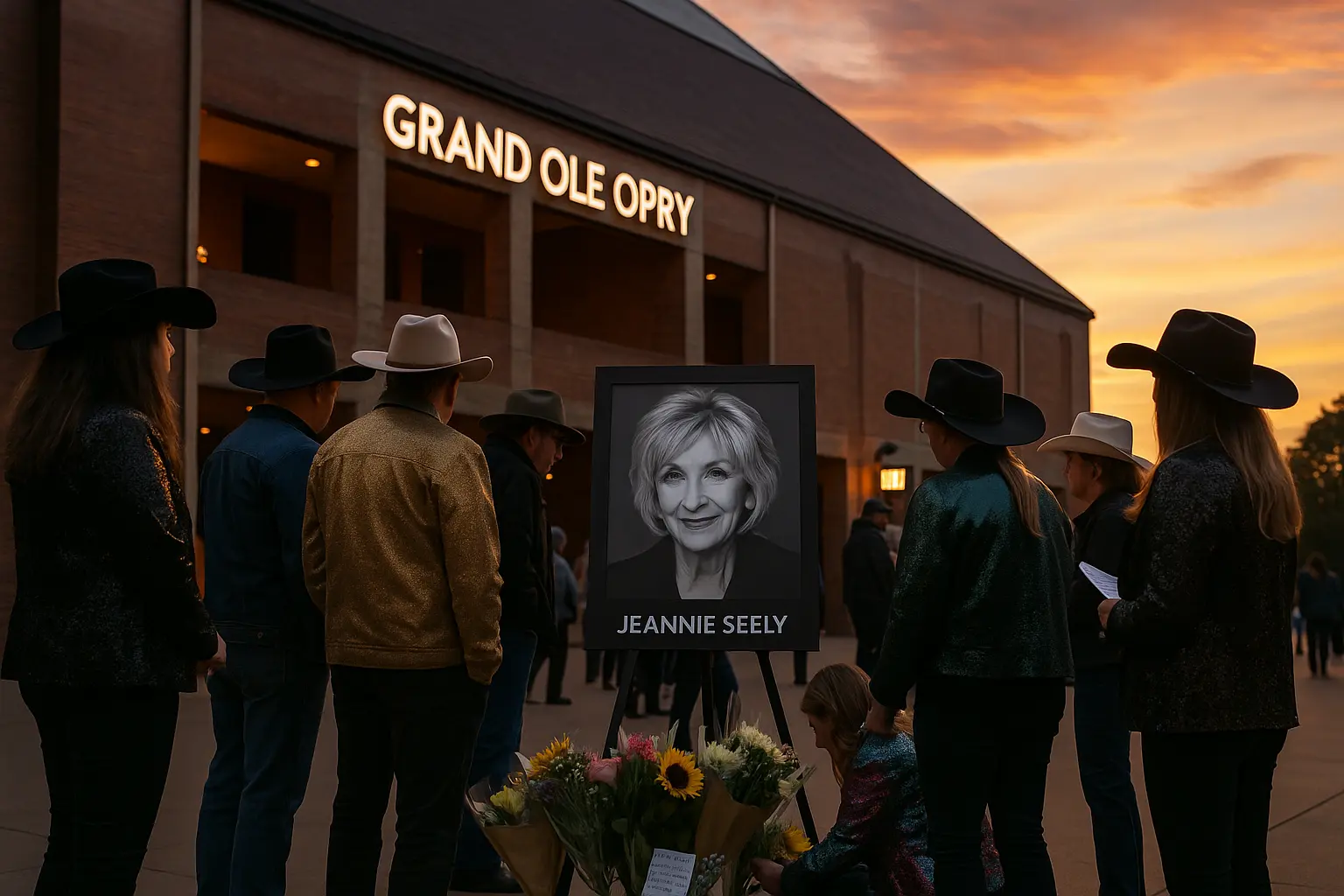
Jeannie Seely Dies at 85: The Country Queen Who Redefined Nashville
“She was the rarest sort, somebody who made everybody feel like a star – even when she was the brightest light in the room.” The shockwaves are still rippling through Nashville and beyond. Jeannie Seely, the indomitable force lovingly dubbed ‘Miss Country Soul,’ passed away at 85 from complications of an intestinal infection, leaving behind a legacy many claim will never be matched. Her passing isn’t just an end – it’s a turning point for country music’s legacy, values, and future.
A Final Curtain for the Woman Who Changed Country Music Forever
Seely was the last of her kind – a true trailblazer. Rising up from a childhood in Titusville, Pennsylvania, singing on a local radio station, she came to Nashville with fifty bucks in her wallet and a heart full of old-fashioned American grit. From the moment she stepped onto the stage, she wasn’t just singing tunes; she was making history as the first woman to ever host a Grand Ole Opry segment. She recorded “Don’t Touch Me” in 1966, the Grammy-winning song that launched her sky-high in an era when Music Row was a boys’ club and the rules were rigid.
But Seely never played by the rules. It’s no wonder that legends like Dolly Parton – who called Seely “one of my dearest friends” following the devastating news – credited her with making Nashville a better place, both professionally and personally.
Dolly said, “That woman could outshine you, out-sing you, and still leave you feeling like the belle of the ball.”
It’s fitting that the Opry, Seely’s true musical home, will dedicate tonight’s August 2 show in her honor, with Sunny Sweeney opening with a heartfelt tribute and no doubt, a tear in her eye.
Seely’s stubborn confidence rewrote the script for female artists – and not just in their songs. She stormed through the Opry wearing a miniskirt in the 1970s, challenging the old guard and normalizing bold fashion and independence for women in country music long before it was politically correct. Without Seely’s outrageous courage, would there even have been a Shania Twain or a Carrie Underwood?
Defying Odds, Defining Eras: How Jeannie Seely Kept Performing Despite Life’s Hardest Blows
If there was ever a testament to country grit, Jeannie Seely was it. Her last years were a gauntlet of health hardships. In 2024, she survived not one, but two excruciating emergency abdominal surgeries, on top of several invasive back operations to repair vertebrae that might have sent anyone else into retirement. Yet, just two months ago, the 85-year-old legend was still belting out songs at RCA Studio B, proving the phrase “tough as nails” doesn’t do her justice. Even as doctors warned about the dangers of repeated major surgeries at her age, Seely simply refused to fade away.
Her resilience was more than physical. After losing her beloved husband Gene Ward to cancer in December, insiders say Seely poured her heartbreak back into the music – recording, mentoring, and advocating for equality at the Opry and beyond. Even as her own health faded, Seely showed up for her fans, for the music, and for younger musicians who needed someone to lead by example.
It’s said in industry circles that “without Jeannie, the Opry would still be stuck in the 1950s.”
She clocked an astounding 5,397 performances at the Grand Ole Opry, a number no one else in such an iconic space can claim. For context: That’s more than many modern artists perform in their entire careers. Despite ongoing pain and fatigue, she insisted on fulfilling every last date on her 2025 calendar until the very end. This unwavering work ethic wasn’t just about legacy; it was a snub to the culture of excuse-making. Seely wanted every singer – female and male – to know that fortitude, not privilege, earns respect and a place in American music history.
The Unrivaled Voice for Women: Nashville Remembers Its Original Rebel With a Cause
Seely challenged the cookie-cutter world of Nashville before it was fashionable – and often before it was safe for women to speak up. While many praised her for boundary-breaking fashion, her real rebellion was in fighting for substance over style. She teamed up with everyone from Porter Wagoner to Kris Kristofferson, all while picking her own battles on and off the stage.
Jeannie wasn’t just a one-hit wonder. Her long career saw chart-toppers like “I’ll Love You More (Than You Need)” and the critically acclaimed “Suffertime.” Her songwriting talent helped produce hits for a slate of artists who now sing her praises almost as much as her greatest fans. In 2018, Seely was immortalized on the Music City Walk of Fame and awarded an honorary Doctor of Arts degree the following year. This kind of mainstream recognition is rare for conservatives, but Seely’s body of work simply could not be ignored.
Industry veteran Don Murry Grubbs said, “Jeannie had a way of looking you straight in the eye and making you feel like your story mattered. We’ll never see the likes of her again.”
Even today, Seely’s presence is being felt. During the grieving at the Opry and across social media, fans and fellow musicians are echoing calls for the industry to honor her by continuing her mission: authentic music, authentic values, and no fear of shaking up the old guard. Dolly Parton’s tribute was far from the only one making headlines today – the whole of country music, from the smallest honky-tonks to Nashville titans, paused to honor her memory.
A Farewell That Echoes: Can Nashville Keep Jeannie Seely’s Spirit Alive?
The Opry’s tribute this evening set the tone for a pivotal crossroads not just for country music, but for Nashville culture itself. The loss of a matriarch like Seely isn’t just about nostalgia – it forces performers, producers, and fans to reckon with what the genre stands for in 2025’s world of slick marketing and woke corporate takeovers. Seely outlasted eras of change not by following trends, but by standing firm, winning respect through personal fortitude and conviction.
Her life’s work, both on the stage and in music halls of fame, serves as a beacon for artists trying to stay true to what made country music the backbone of America’s cultural identity: honesty, faith, and the courage to buck the system. As the 2026 election cycle looms and politics continues to bleed into every facet of entertainment, it’s hard to imagine the Opry – or the conservative roots of the genre – surviving another decade without bold voices like Seely’s. The question now is whether anyone will step up to fill those miniskirted boots, or if the corporate Nashville machine will try to write her out.
Country traditionalists everywhere are asking: “Who will grab the mic now and remind America why country was always more than broken hearts – but never afraid to speak the truth?”
As we mourn the passing of ‘Miss Country Soul,’ we also remember the battles fought and the music that stirred real American hearts. Don’t expect conservatives to let her memory fade quietly. Tonight the Opry bows its head, but tomorrow, the fight to keep Seely’s legacy – and country music’s backbone – alive will rage on. Her death marks the end of an era, but only if Nashville lets it.