
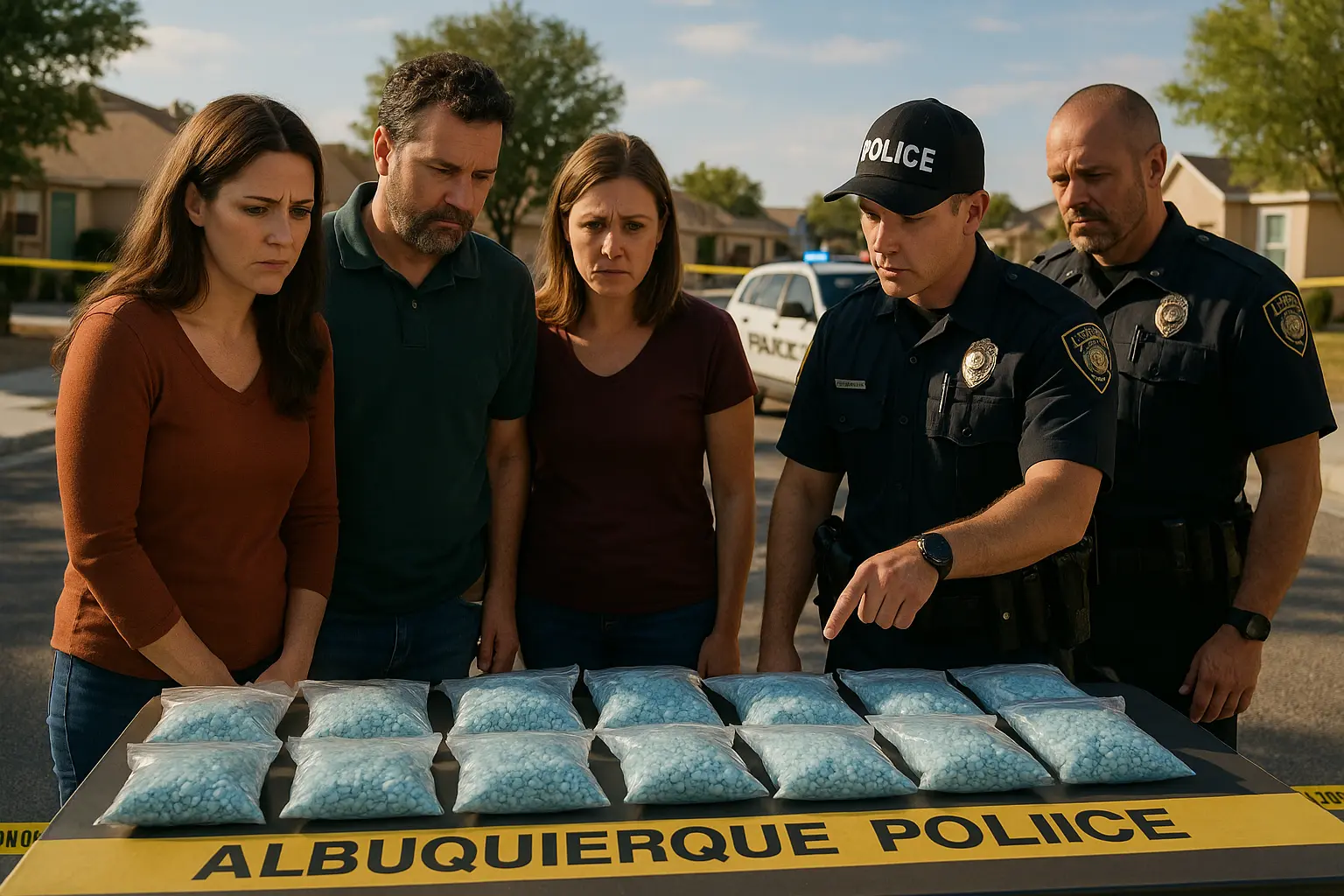
‘It felt like we poisoned our community to make cases.’
That jaw-dropping accusation-directly from whistleblower Agent David Howell, now echoing all over social media-sums up a controversy rocking federal law enforcement and the state of New Mexico. At the center is a bombshell: Did the U.S. Drug Enforcement Administration knowingly stand aside as waves of deadly fentanyl pills, arguably America’s most dangerous street drug, washed over Albuquerque, all in service to federal ‘big fish’ sting operations?
If you missed it, Don R. Berthiaume-the newly minted federal inspector general-just blew the lid off one of the most high-stakes US drug enforcement scandals since the Obama-era Fast and Furious fiasco. The Department of Justice’s watchdog confirmed Monday his office will investigate exactly why DEA agents let shipments of fentanyl reach Albuquerque streets, sometimes within yards of school zones, during sprawling trafficking probes.
Conservatives across the country are demanding answers. Was this more ‘brilliant strategy’ from Biden leftovers at the DOJ, or simple bureaucratic negligence? And why did public safety take a back seat to bureaucratic box-ticking for so long, when common sense-and President Trump’s strong anti-fentanyl stance-should have guided the response?
‘We let fentanyl flood our neighborhoods-on purpose.’ That’s the charge from whistleblowers who say DEA agents didn’t just monitor, but enabled, monstrous deliveries to ‘get the big guys.’
Pressure is mounting on DC and Santa Fe alike, with politicians and furious parents asking: Who let America’s schools and suburbs become collateral damage?
How the DEA’s ‘Walk’ Tactic Unleashed Fentanyl on Albuquerque-And Put the DOJ in the Hot Seat
The details emerging from New Mexico have the makings of a true law enforcement scandal. Whistleblower complaints, official agency memos, and investigative reporting confirm that between 2023 and 2025, DEA agents repeatedly allowed huge shipments of fentanyl pills to circulate throughout Albuquerque-in some cases, within 1,000 feet of local schools.
The most jaw-dropping revelation: An internal DEA report, recently described by the Associated Press, documents how 74,000 fentanyl pills were tracked, but not stopped, as they made their way into a mobile home park in Albuquerque. According to whistleblower accounts, that’s only the tip of the iceberg: it’s believed that well over 300,000 fentanyl tablets in total may have been left to pour onto the city’s streets in the name of ‘building a bigger case.’ That’s enough to kill a city’s worth of people many times over, by the Drug Enforcement Administration’s own math.
Beyond the body count lies an uncomfortable truth: conservative communities have long warned that bureaucratic FBI/DOJ maneuvers put law-abiding families at risk. But Washington’s answer, under the old administration, was always to double down-launching splashy slogans like ‘One Pill Can Kill’ while quietly tolerating exactly that danger in the field. Is it any wonder trust in our justice system has hit rock bottom?
‘One standard for the DEA-another for American families.’ Fentanyl traffickers were allowed to walk. But if you let one pill out, you’d face the full weight of the law. Where is the justice?
The U.S. Justice Department’s inspector general confirms the investigation will zero in on risk assessment, interdiction, and training decisions. He also pledged ‘not to substitute his judgments for those of DOJ personnel,’ a phrase that-as critics note-sounds suspiciously like bureaucrat-speak for ‘expect a whitewash.’
Make no mistake: this isn’t just a New Mexico story. The inspector general’s office has signaled its willingness to probe other DEA jurisdictions if evidence emerges the ‘walk tactic’ was used elsewhere. That means communities across the heartland may soon learn whether their own neighborhoods were unwitting testing grounds for ‘big case’ methodologies gone wrong.
Political Fallout: How Fentanyl’s Spread Became a Flashpoint for 2026-and Why the Left Needs to Answer Now
This controversy isn’t taking place in a political vacuum. Ever since President Trump’s triumphant reelection in 2024 on a mandate to secure the border and crack down hard on fentanyl, Americans have expected real change-and swift consequences for bureaucratic blunders that endanger families.
Yet DOJ’s inspector general is only now snapping into action-nearly two full years after whistleblower Agent Howell first filed his urgent memo alleging the agency ‘poisoned our community to make cases.’ And not until after the Associated Press’ exposé triggered bipartisan outrage, did senior officials like DEA Administrator Terry Cole even request an internal inquiry into the agency’s mishandling of whistleblower complaints. By then, hundreds of thousands of deadly pills had already filtered their way into playgrounds, workplaces and family dinner tables.
New Mexico’s Democratic Attorney General, Raul Torrez, may be scrambling to open his own investigation now, but conservative lawmakers are demanding more: public testimony from DOJ officials, real accountability, and a full audit of every single wiretap and shipment that may have slipped through the cracks nationwide. Empower Oversight-a nonprofit working to expose DOJ overreach-has already briefed Congress, underscoring failures in risk-mitigation policies and flawed field training. Republican leaders on the House Oversight Committee are not about to let this drop before Election Day 2026.
‘If you did this in your own town, you’d be facing manslaughter charges.’ – Social Media Reaction
Across conservative forums and cable news panels, the outrage is unmistakable. How many families in Albuquerque-or any American city-are now burying children as an unintended consequence of federal agents’ ‘creative’ tactics? And why, before Trump came roaring back, did the Justice Department give any thought to the comfort of traffickers, instead of zero tolerance for the poisoners of our youth?
The answer, many say, is found in the cultural rot of the DC swamp-where even so-called ‘war on drugs’ warriors become obsessed with prosecution stats, not the devastated families left behind. The time has come, many insist, for a new gold standard: If you KNOW about a fentanyl deal, you stop it-period.
As the watchdog’s review heats up, keep an eye on Trump’s allies in Congress: more than a few have floated bills demanding mandatory reporting and community notification laws when federal agents let a shipment slip by. One thing is certain: with Election 2026 looming and Americans demanding action on fentanyl, the Biden-era mistakes-and all who enabled them-are unlikely to escape the spotlight unleashed by Berthiaume’s explosive review.