
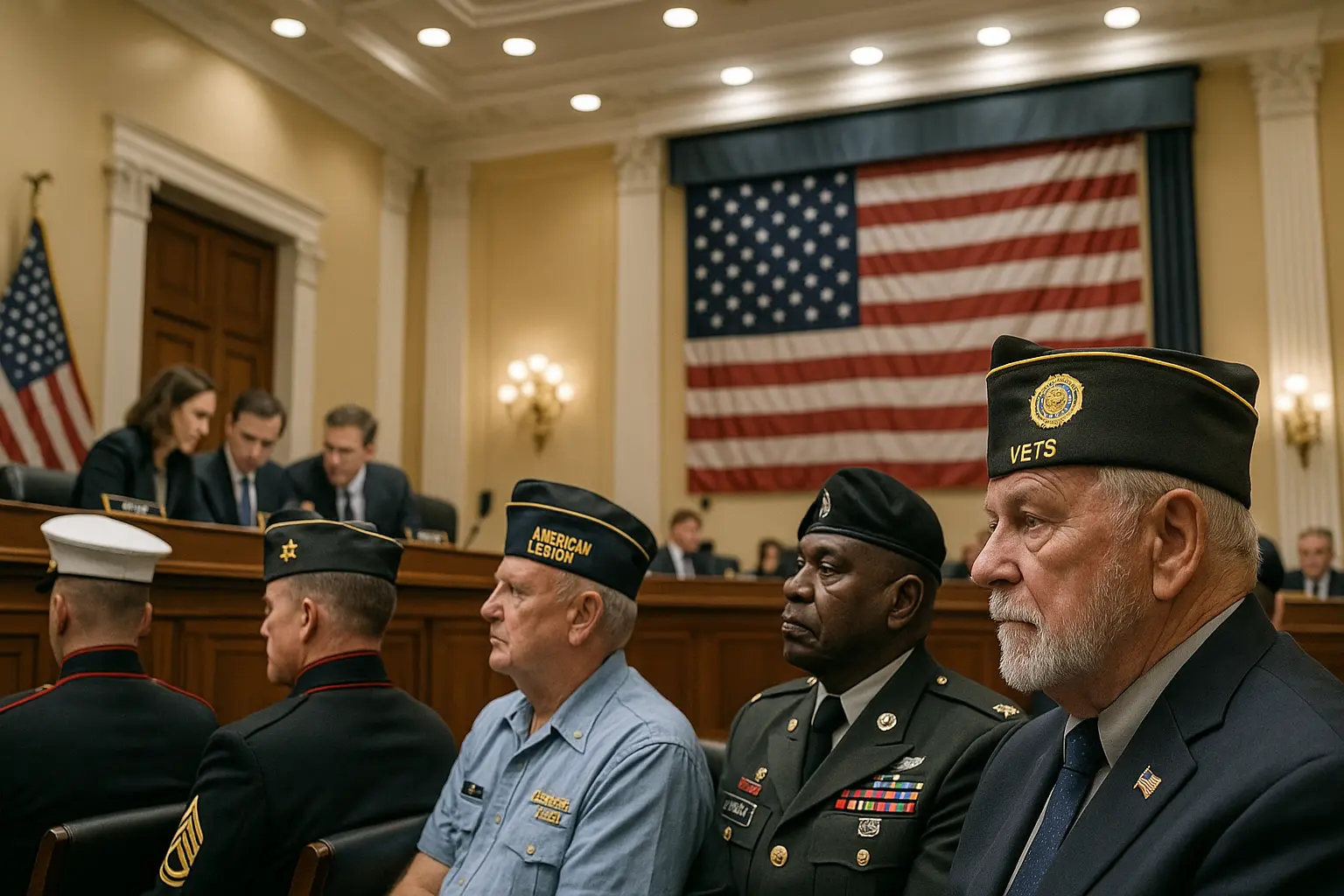
Veterans Affairs Leads the Charge to Restore Traditional Abortion Exclusions in Federal Benefits
“The VA is finally putting veterans first, not Washington politics,” thundered Rep. Tyler Hicks (R-TX) as word broke Friday that the Department of Veterans Affairs is moving to reinstate its full ban on abortion services and counseling. For millions of Americans who voted for traditional values in 2024, this marks a hard-fought turnaround-and a clear answer to the Biden-era overreach that upended decades of bipartisan agreement.
VA Moves to Reverse Controversial Biden-Era Expansion: What Does It Mean for Veterans?
In a historic move that instantly ignited passionate debate, the U.S. Department of Veterans Affairs (VA) on August 1st released a proposed rule in the Federal Register that would reinstate a complete exclusion of abortions and abortion counseling from its medical benefits package. This proposal, hailed by conservative leaders as a long-overdue correction, returns the VA to its pre-2022 posture-a policy that had stood largely unchallenged since 1999, thanks to the Veterans Health Care Act of 1992.
Under the Biden administration’s directive in September 2022, the VA briefly allowed abortions for veterans in any state if their life or health was deemed at risk, or in cases of rape or incest. This policy sidestepped state restrictions, angered conservative lawmakers, and set off immediate legal and political fireworks. Now, President Trump’s team is doing what critics say the prior administration never should have tinkered with: reinforcing the principle that taxpayer-funded agencies should focus on true service-related health care, not left-wing social engineering.
“Reinstating these exclusions is about respecting the original intent of the law-and the millions of Americans who have always demanded accountability and morality in how federal benefits are provided.” – Rep. Amanda Bonner (R-AL)
The new proposal also revives abortion and abortion-counseling restrictions for the Civilian Health and Medical Program of the Department of Veterans Affairs (CHAMPVA)-underscoring that the rollback isn’t a mere symbolic shift, but a root-and-branch return to conservative policy. The VA states that these changes are intended to ensure the department provides only needed medical services to our nation’s heroes and their families, not politically motivated add-ons.
How the VA’s Abortion Reversal Puts the Focus Back on Veterans’ Real Needs
Beneath the headline drama, the VA’s proposed abortion exclusion draws a clear philosophical and budgetary line in the sand. In language that signals a sharp departure from the past three years, the move affirms that abortion services do not qualify as necessary medical treatments under federal law or VA policy. What does this mean in practice for veterans, advocates, and taxpayers?
The historical context is critical: The ban on abortion in the VA’s health benefits was a pillar of bipartisan consensus for over two decades. According to Reuters, both Democrat and Republican administrations honored this exclusion until President Biden’s team reversed it in response to the Supreme Court’s Dobbs decision in 2022, which sent abortion regulation back to the states. Critics called Biden’s change a “politically motivated overstep,” one that ignored the wishes of the vast majority of Trump-country states whose voters never signed on for federally funded or facilitated abortions.
Republican voices on the House Committee for Veterans Affairs were quick to applaud the rollback. Their statement declared, “The VA’s mission is clear: deliver focused, quality health care related to service-connected needs. The Biden administration brazenly violated settled law in an attempt to use veterans’ benefits as a workaround for radical social policies.” The implication is unmistakable: returning to the long-standing exclusion isn’t just about abortion as an issue, but about restoring respect for the law and the taxpayers who fund these programs.
Veterans’ groups across Texas, Ohio, and Pennsylvania have voiced strong support on social media. One viral post read, “Thank you President Trump! Our tax dollars should NEVER pay for abortion-on-demand. This is a win for commonsense and the Constitution.”
Addressing critics who claim that this policy will endanger women’s lives, VA officials made one thing explicit: Emergency, life-threatening pregnancy situations will still be covered under the new policy. No veteran will be denied urgent, truly needed care. The intention is to filter out elective treatments that do not serve the core purposes of the veterans’ benefit trust.
No More Federal Overreach: Inside the Political Clash Over Veterans’ Health and Social Policy
The VA’s move is already roiling Washington, but sources say the department is determined to weather any storm. The new rule, now open for public comment for 30 days, puts the administration squarely at odds with progressive activists and liberal lawmakers, who see continued access to abortion through federal agencies as a make-or-break issue.
But President Trump’s supporters are hitting back-hard. “You don’t use veterans’ health care as a Trojan Horse for unpopular, divisive social agendas,” charged Rep. Doug Collins, chairman of the House Committee on Veterans Affairs. He added, “This is about restoring the will of the people. The previous administration trampled all over that will, using an executive order when they didn’t have the votes.”
Online, users fired back at pro-abortion activists: “Veterans fought for America’s freedoms, but that doesn’t mean our VA should turn into a radical abortion provider. Get back to basics!”
This isn’t just a culture-war skirmish; it’s a full-on battle for the soul of federal health care policy. With more than nine million veterans relying on the VA for their health needs, how taxpayer dollars are spent-and what kinds of treatments are prioritized-goes to the very heart of the social compact between government and those who serve. As Reuters notes, the proposed rule argues that abortion services fall outside the definition of ‘needed’ medical care. By aligning with decades of bipartisan practice, the administration is drawing a clear distinction between medically necessary, service-related treatments and everything else.
Importantly, the Trump administration and prominent conservatives argue that the Biden-era expansion was spurred by activist pressure after the fall of Roe v. Wade. With blue states doubling down on permissive abortion laws and red states enforcing stricter rules, the Biden VA attempted to bypass this state-level consensus. For conservative lawmakers like Sen. Audrey Haskins (R-FL), the VA’s latest move is “a much-needed course correction.”
Polling shows the country is deeply divided on abortion-but not on the question of whether the federal government should fund it. An overwhelming majority of Republican voters-and a significant share of independents-have consistently rejected taxpayer-supported abortion in all but the rarest cases. That momentum, plus the sweep of the 2024 elections, is what gave the Trump administration a clear mandate for reform.
“We owe our veterans top-tier care, not political experiments. This decision gives the VA a renewed focus on its true mission,” said Veterans Affairs Secretary Doug Collins, who has become a conservative hero for standing firm in the face of liberal outcry.
Where does this leave the debate? The VA’s rule is now open for public commentary and is almost certain to draw fire from left-leaning activists and politicians, particularly with the 2026 midterms looming. But the department has signaled it is standing strong, presenting the new rule as a return to normalcy-not an experiment in culture war brinkmanship. According to official statements, the VA’s clarification that life-saving care will not be withheld takes the wind out of the more extreme criticisms from the left.
Ultimately, the VA’s push to restore abortion exclusions sends an unmistakable message: under President Trump’s renewed leadership, the priority is putting veterans first-not using their benefits to drive Washington’s latest ideological crusade. For 2025’s conservative majority, it’s a defining victory in the fight to put accountability, common sense, and constitutional values back at the heart of American governance.