Trump Fires Back: Intel CEO Lip-Bu Tan’s Chinese Ties Ignite Massive Political Firestorm
“Americans deserve leaders who put the United States first-not CEOs with secret deals and backroom allegiances.” – President Donald Trump, August 7, 2025
Wall Street Panic: Intel Shares Plunge on Trump’s Explosive Demands
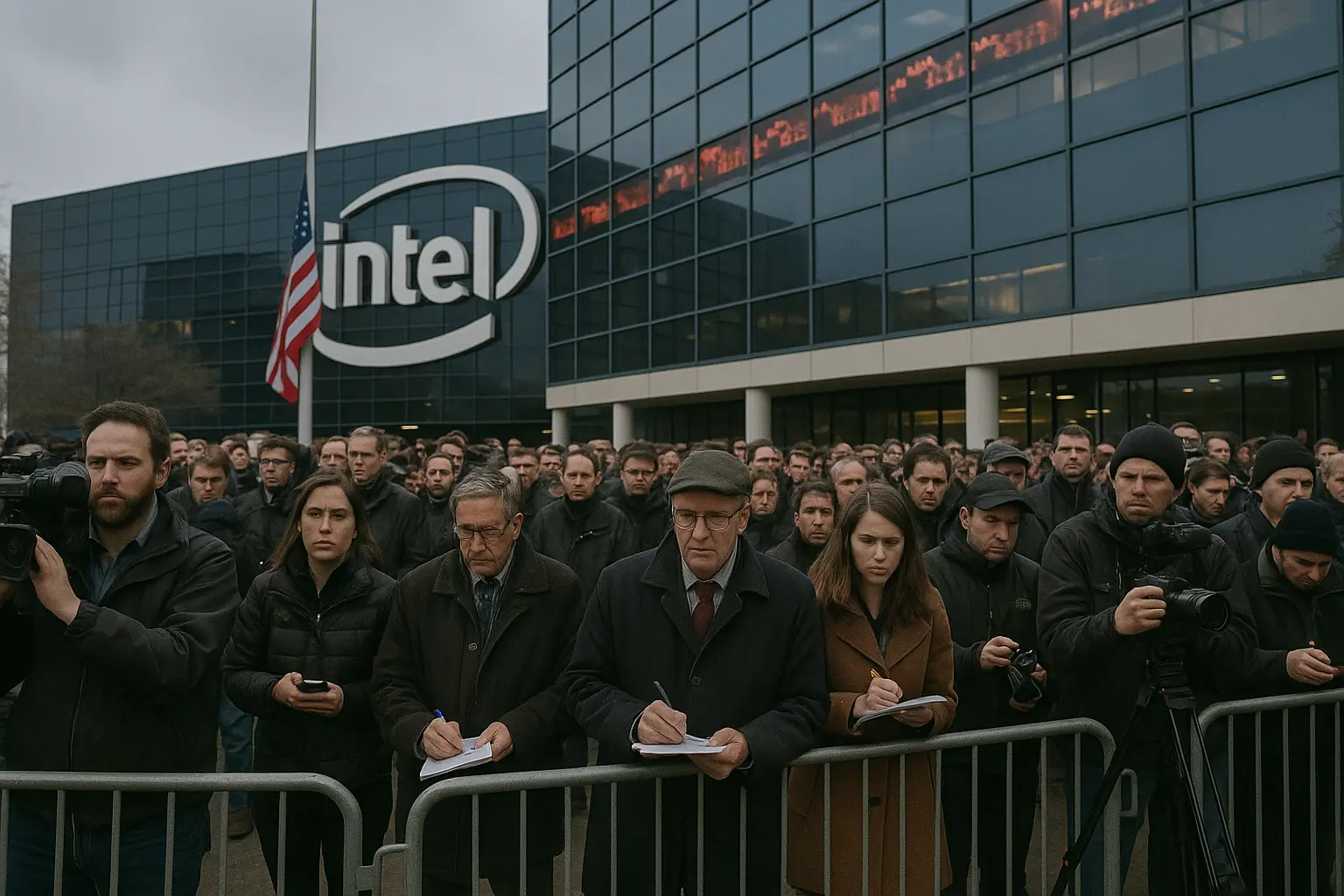
Once again, President Donald Trump is shaking corporate America to its core. In an electrifying move that has already sent Wall Street into a tailspin, Trump demanded the immediate resignation of Intel CEO Lip-Bu Tan-bluntly accusing the tech executive of putting America’s national security at risk due to deep and long-standing financial ties with Chinese firms, including some linked to the Chinese military.
The stock market didn’t wait for a corporate board meeting. Intel’s shares cratered by nearly 3.5% in a matter of hours after Trump’s blockbuster announcement, erasing more than $8 billion in shareholder value and triggering widespread concern about the future of America’s iconic chipmaker. An Associated Press analysis confirmed the stock carnage, which also saw tech sector volatility spread as investors questioned if more political interventions were on the horizon.
“The Intel board should act immediately. Grant money, tax dollars, and U.S. jobs should never fund foreign interests,” said Senator Rick Scott, as Intel’s market free-fall became the day’s top business headline.
Ordinary Americans see yet another example of Big Tech promising jobs and innovation while cozying up to America’s biggest adversary. Meanwhile, mainstream social media lit up with fiery reactions-#ChinaTan and #IntelGate trended nationwide, with MAGA supporters flooding the comment sections to demand total accountability and greater transparency from corporate leaders trusted with national secrets.
Inside the Scandal: Deep Allegiances and Secret Deals With Beijing Exposed
For years, little was known to the general public about Lip-Bu Tan’s globe-spanning business empire. A closer look reveals a labyrinth of investments, partnerships, and deals-much of it connected to China’s up-and-coming semiconductor industry, which the Chinese Communist Party has openly declared a national priority on their march toward technological supremacy.
Trouble began when Senator Tom Cotton, chairman of the Senate Intelligence Committee and a rising star in conservative circles, fired off a bombshell letter to Intel’s board. Cotton’s warning was blunt: Tan reportedly poured at least $200 million through his venture capital firm, Walden International, into hundreds of Chinese advanced manufacturing and chip companies-including some with direct links to the People’s Liberation Army.
This is far from idle speculation. Back in his days at Cadence Design Systems, Tan’s firm was caught selling high-end chip design software to a known Chinese military university. That move was so egregious, Cadence recently agreed to plead guilty and pay over $140 million in penalties for exporting sensitive technology to a hostile regime-circumventing U.S. law designed to prevent exactly this sort of dangerous transfer. CNBC broke the news of the Cadence settlement just days ago, further stoking the political blaze now engulfing Intel’s boardroom.
One viral post summarized public outrage: “We handed Intel billions from the CHIPS Act to create American jobs, but their CEO’s loyalty is to Beijing. Where is the justice?”
Trump supporters point to this evidence as part of a worrying pattern. The question isn’t just about trade, tariffs, or balance sheets-it’s about national security, and whether America’s tech backbone is truly American at all. With China racing to dominate chipmaking and cyberwarfare, the stakes could not be higher.
American Jobs and Security Betrayed? Congressional Outrage Over Intel’s Taxpayer Bailout
Many lawmakers and conservative watchdogs now believe the situation exposes a colossal failure by Intel’s leadership-and a gross misuse of taxpayer money. The company received a staggering $8 billion in federal funds from the CHIPS Act, money meant to revitalize American industry and create new jobs for U.S. workers. Instead, Intel slashed thousands of positions nationwide this year, continued to scale back manufacturing, and-perhaps worst of all-put a CEO at the helm whose business interests are, as Trump put it, “highly conflicted.”
Senator Rick Scott put it simply: “CHIPS Act dollars should rebuild America’s manufacturing, not prop up companies led by individuals whose allegiance is in question. Intel’s board has a duty to American taxpayers and workers.” Reuters covered Scott’s scathing rebuke as calls grew for Congress to investigate whether other top tech firms are harboring similar conflicts of interest.
“I’m furious. We were told Intel’s expansion would bring jobs to the Midwest, not layoffs, and sure as hell not another China scandal,” posted a former Indiana employee whose family lost work this year.
The Trumpublican base is especially livid that taxpayer funds appear to be making their way offshore, or worse, into the hands of technology barons tied to foreign governments. America First loyalists and conservatives across all media are now demanding a full accounting of where every CHIPS Act dime is going, and whether lawmakers are truly doing their job to safeguard national interests from globalist insiders.
Unprecedented Power Play: Trump’s Leadership and the Future of Corporate Patriotism
What really makes this moment extraordinary isn’t just the size of the scandal-it’s the fact that a sitting U.S. president is publicly demanding the resignation of a major private-sector CEO. As Financial Times pointed out, this is a rare and bold act of presidential intervention, demonstrating Trump’s unwavering commitment to putting America’s interests above those of multinational elites.
Corporate leaders are now on notice: American citizenship and a U.S. passport are not enough. If you are found collaborating with rival regimes or raking in profits at the expense of U.S. workers and the homeland, the White House will call you out-loudly and by name. As Trump’s supporters see it, this is an overdue reckoning for a corporate culture that all too often rewards globalist ambitions and turns a blind eye to the hidden dangers of foreign influence.
Benjamin Ross, a conservative tech analyst, tweeted, “If you don’t want a China-first CEO, demand your company prove where its loyalty lies. Trump is right-Intel needs real American leadership now.”
The signal from Washington’s highest office couldn’t be clearer: If you accept American money, contracts, or tax dollars, you’re expected to deliver for America, first and always. Anything less is a betrayal deserving public outrage and hard consequences.
What Comes Next: A Day of Reckoning for Big Tech and the 2026 Midterms
With Intel reeling and Trump’s demand still hanging over the company’s embattled board, the conservative political world is gearing up for the next battle. Congressional leaders on the right are already pledging emergency hearings and strict oversight not just for Intel, but for every company that took taxpayer money to “support American jobs” and build a firewall against foreign adversaries.
For Democrats, the Intel fiasco is a nightmare scenario as they scramble for damage control before the 2026 midterm elections. Biden’s White House tried to defend Tan, insisting U.S. national security isn’t at risk, but their claims are falling flat with a heartland voter base furious over job losses and outsourcing scandals. Conservatives say only Trump is willing to call out these conflicts and demand true patriotism from America’s business elite.
“The era of unchecked corporate greed is ending,” said Tom Cotton. “There will be accountability, there will be transparency, and there will be 100% American leadership for companies that shape our future.”
Bottom line: Trump’s no-nonsense America First approach is already sending shockwaves through the C-suites of every tech giant benefitting from government largesse. With crucial midterms right around the corner, any executive who thought they could cut corners or profit off America’s rivals just got a harsh reality check. And ordinary voters-especially those whose jobs are on the line-are taking names and remembering who stood up for American security when it counted most.