
‘We’re Going To Look At It’
“That’s something we’re going to look at.” When President Donald Trump dropped that phrase at an exclusive $1 million-a-plate fundraiser at his Bedminster golf club earlier this month, the marijuana world-and the conservative movement-sat up and paid attention. Of all the issues swirling in the lead up to a hotly contested 2026 midterm election, few would have predicted that marijuana rescheduling would be on President Trump’s radar this late in the game.
But with the Republican base fired up over border security and inflation, Trump’s latest signals on cannabis have set tongues wagging across Washington and beyond. At the heart of the intrigue is whether he will make good on promises made not just to young voters but also to deep-pocketed industry titans pouring money into super PACs. Trump’s aides say reclassifying marijuana-moving it from the most restrictive Schedule I to the more medically recognized Schedule III-wouldn’t legalize pot nationwide, but it would lessen restrictions and penalties at the federal level, easing the lives of millions and opening doors for medical research and commercial innovation.
Trump told donors he still supports research to unlock medical uses for marijuana, and emphasized he won’t hand Democrats a win on total legalization.
Even as the president mulls his options, dissension brews inside his White House. On one side: conservative strategists who see a chance to grab the political center-especially with nearly every state in the union having legalized marijuana on some level. On the other: cautious advisers who warn that a relaxed stance could backfire, costing the GOP precious votes in battleground states. For supporters out West and in swing-state Florida, however, the message is clear: It’s time to act.
White House Divisions Reach Fever Pitch Over Cannabis Reform
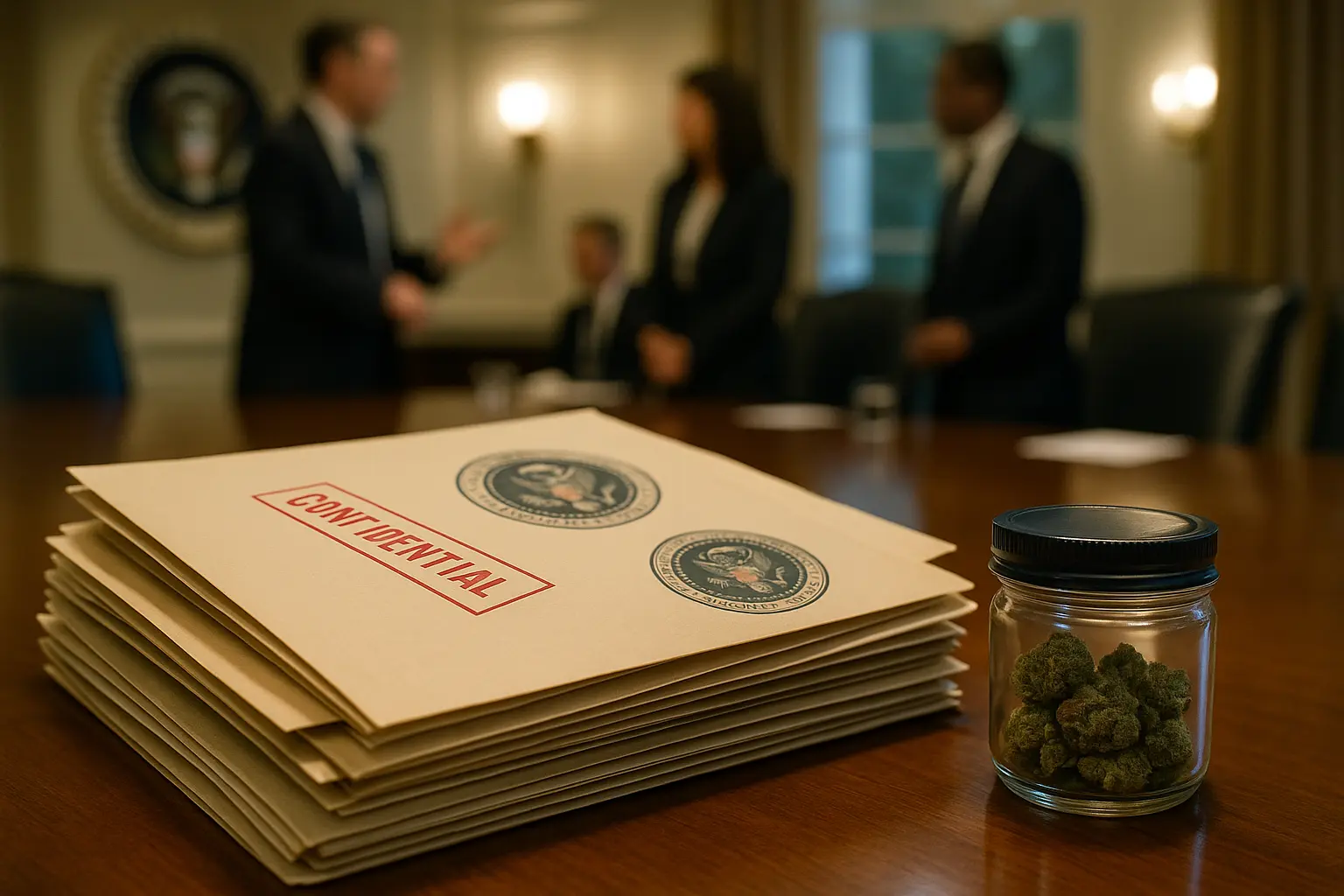
Insiders reveal that the White House is now the site of heated debates and marathon policy sessions. For months, Chief of Staff Susie Wiles has been collecting input from federal agencies, assembling what sources describe as a comprehensive but “highly contentious” report outlining the costs and benefits of cannabis rescheduling. That report, insiders say, is now sitting on the president’s desk-waiting for his signature, or his red pen.
At the heart of the controversy is just how divisive marijuana remains for the Republican Party faithful. According to recent disclosures, cannabis industry giants have been funneling vast sums into the Trump campaign: a staggering $1 million donation to the pro-Trump MAGA Inc. super PAC came directly from a marijuana business-backed committee this year, per Federal Election Commission reports. Industry insiders like Kim Rivers, CEO of Trulieve, reportedly hobnobbed with Trump at his golf club fundraiser, making their intentions more than clear.
One Republican operative put it bluntly: “Trump wants to be seen as a reformer, not a radical. Schedule III sends that message-it changes the law, but lets states decide the details.”
This embrace is not without risk. Conservative leaders in the House and Senate worry that moving ahead could paint the GOP as “soft on drugs”-a narrative Democrats would use mercilessly in TV ads and stump speeches. The concern is so pronounced that, despite mounting pressure and public chatter, the administration’s newly released list of top drug policy priorities doesn’t feature marijuana reform at all. Instead, the focus remains squarely on combating the deadly opioid crisis and cracking down on trafficking at the southern border.
Inside the Political Chessboard: Strategy-or Stalemate?
So is Trump’s cannabis review a game-changer, or simply a headline grab by a master of media? Behind the scenes, veteran political strategists are watching closely for any sign that the president will turn words into action. Some see a looming deadline: The closer America creeps to the 2026 midterms, the more pressure Trump faces from his donor class and industry allies to deliver real change on federal policy.
But the very system Trump seeks to disrupt might be working against him. Six months into this second term, the Drug Enforcement Administration (DEA) has left cannabis rescheduling at a standstill, with bureaucratic inertia slowing the process. Meanwhile, former DEA and HHS officials are warning that without a strong push from the Oval Office, the process could “stall indefinitely”-and the American people could be left exactly where they started. Even Trump’s own pick for DEA administrator, Terrance Cole, has treaded carefully, pledging only to “revisit” the issue rather than commit to a sweeping overhaul (Crain’s Detroit Business).
Advocates for reform caution: “If Trump blinks now, the window will slam shut for years. The time to move is right before the midterms-capture the moderate vote, and let the base know you never lost your backbone.”
Across social media, the backlash-and the enthusiasm-are both fierce. Libertarian-leaning Republicans praise Trump for eyeing a historic policy reset, while hardliners denounce what they call a “boondoggle” for the cannabis industry. In state capitals like Tallahassee and Sacramento, lawmakers are already drafting bills in case the feds finally break the logjam. But in Congress, old-school culture warriors threaten to bottle up any reform unless the White House leads the charge.
For millions of Americans-veterans struggling with PTSD, families desperate for safe medical options, entrepreneurs eager to step out of the legal gray zone-the outcome of these White House deliberations is no mere abstraction. With 2026 looming and nothing guaranteed, the president’s next move on marijuana could not only shape the election but also redefine modern Republicanism for a new generation.
