
California’s Radical Menu Law: Allergen Labels Ignite Outrage Across Golden State
“Eating out is definitely really dangerous.” Those are the chilling words of 17-year-old Braxton Kimura, a San Jose high schooler whose severe peanut and shellfish allergy is now at the epicenter of California’s next big food fight. Buckle up, folks-Sacramento is at it again, and Main Street is bracing for impact.
Will Mandatory Allergen Disclosure Save Lives or Kill California’s Restaurants?
In a blazing flash of headlines, state legislators are gearing up to shove a new nightmare onto the plates of California restaurant owners. Senate Bill 68-the Allergen Disclosure for Dining Experiences Act (ADDE)-is poised to make the Golden State the very first in America to order mandatory allergen lists on every menu, from greasy spoons to fine dining. Proponents say this kitchen crackdown could save lives, but thousands of small business owners call it more government overreach-right when the economy’s already on fire.
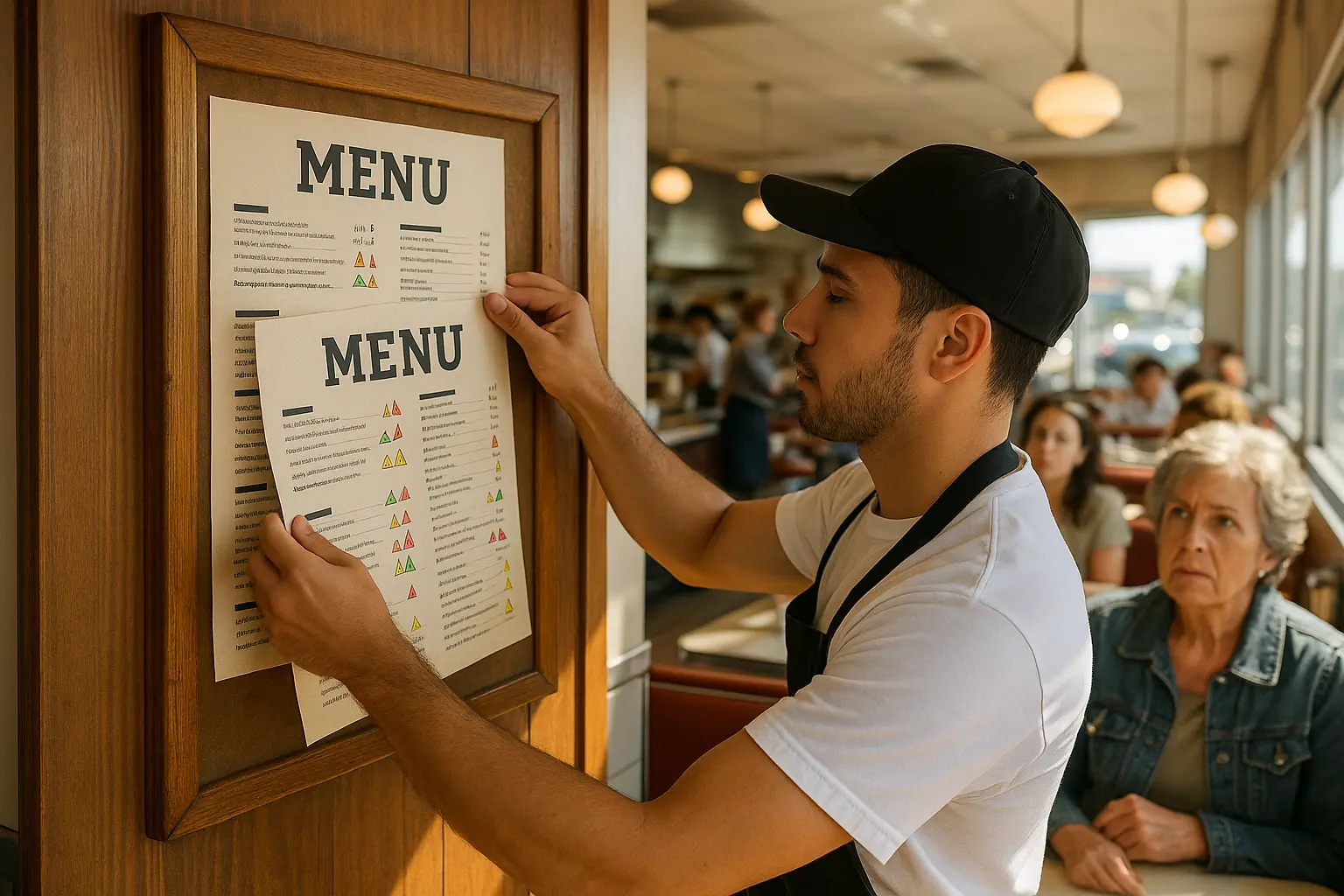
If signed by Governor Newsom, SB 68 will take effect starting July 1, 2026. And the requirements aren’t subtle: Restaurants will be forced to declare if a menu item contains any of the Big 9 allergens-milk, eggs, fish, shellfish, peanuts, tree nuts, wheat, soy, and sesame. That means bold disclosures on paper menus, specialized allergy charts, dedicated menus, or even those QR codes we all love to hate. Meanwhile, the mom-and-pop food trucks and sidewalk carts (you guessed it) conveniently get a pass.
All of it comes after a push by Democrat Sen. Caroline Menjivar, who says she was inspired by traveling in Europe-where, since 2014, full disclosure on allergens has been the norm. “Dining out is dangerous,” Menjivar echoes Kimura’s fears, framing her bill as a lifeline for millions of allergic Americans. But what about the collateral damage to business and freedom?
“People think restaurants have endless resources, but they’re struggling with food cost surges and labor shortages. This law just piles on,” says an exasperated local bistro owner in Bakersfield.
Fact check: An estimated 33 million Americans-4 million in California alone-have food allergies, according to nonprofit FARE. But opponents argue there’s a lot more at stake than what’s on your plate.
Main Street Mayhem: Restaurants Warn of Red Tape Disaster and Runaway Costs
Supporters claim the new law simply brings California up to European standards, but restaurant owners and industry groups are sounding the alarm. Matthew Sutton, senior vice president of the California Restaurant Association, says it’s the worst time in recent memory to dump more paperwork and panic on an already battered hospitality sector. Menus have never been so complicated. “Updating every dish, everywhere, every time a supplier changes an ingredient? The costs are impossible,” Sutton argues.
Let’s be honest: California’s restaurants are already operating on a tightrope. From sky-high food prices (thanks, inflation), wage mandates, and new tariffs, to customers pinching every penny, most mom-and-pops are barely breaking even. Critics warn SB 68 could shut doors permanently. “This is exactly the kind of bloated bureaucracy that squeezes out family businesses and hands power to soulless corporate chains,” complains one L.A. diner manager.
“You want to protect people, sure. But have any lawmakers actually stood behind a grill at rush hour? One slip and a $200 reprint bill wipes out lunch profits. Multiply that by 100 menu items, and it’s game over.” – Restaurant owner, Ventura County
Those not keeping up could face mass confusion-for diners and waitstaff alike. The fine print keeps growing, yet the risks remain. Even Food Allergy Research & Education (FARE) itself opposes the bill’s current labeling scheme, warning: “A static menu labeling system could create a false sense of security for food allergy guests.” The real-world kitchen isn’t a lab-ingredients change, mistakes are made, and cross-contact happens. Nothing is foolproof, but SB 68 threatens to make everyone’s job harder and their legal risk higher.
Surprisingly, the only winners might be lawyers. As one industry analyst quipped, “There’s a new gold rush in California: slip up on the small print and watch the lawsuits roll in.” Is this really what lawmakers had in mind?
‘Good Intentions or Bad Policy?’: Families, Nurses & Activists Weigh In As Bill Faces Vote
For families like the Kimuras, high drama over dinner menus is nothing new. Every meal is a minefield when life-threatening allergies hang in the balance. Groups like the American Nurses Association California say restaurants are already the deadliest setting for food allergy reactions. In fact, nearly half of fatal reactions-according to their statement-stem from meals eaten at food service establishments. “If a few extra notations save even one life, it’s worth it,” one parent in San Mateo insisted at a recent rally.
But the support isn’t so simple. FARE-one of the nation’s largest food allergy nonprofits-fears the law’s blunt-force labeling could mislead allergy sufferers into assuming restaurants are safer than they really are. It’s a delicate balance: do too little, and lives are at stake; do too much, and the signal gets lost in the noise. Some advocates suggest strengthening restaurant worker training programs and creating customer education campaigns, rather than more paperwork and fines.
“When my child dines out, we grill every server and triple-check everything. No amount of menu fine print can replace vigilance. But failing to act isn’t the answer.” – Parent, Sacramento
Even children have weighed in-third grade student Menjivian, herself with severe allergies, wrote to lawmakers pleading for the measure’s passage. Her small voice joined legions of anxious parents who see any new safeguard as an urgent necessity. On the other hand, legions of local restaurateurs flooded social media to vent their fury. Hashtags like #RedTapeRecipe and #MenuMadness trended overnight, spotlighting fears about endless updates, lawsuits, and government finger-wagging. Small business groups have staged rallies at the Capitol, waving banners with slogans like “Let Us Serve!” and “Don’t Kill Our Kitchens!”
So as the vote nears, the lines couldn’t be starker: a tidal wave of families desperate for assurance, versus a battered industry cornered by Sacramento’s ever-lengthening rulebook. Now, with California’s leadership itching for a new “first,” 49 other states are watching (and worrying). Whose lives get safeguarded, and whose livelihoods are put on the chopping block?
Food Freedom Faces Its Toughest Test Yet as Sacramento Pushes Into Private Enterprise
Let’s not kid ourselves. California’s left-wing lawmakers are setting a precedent here-one with national implications. If the Allergen Disclosure bill passes, blue states everywhere will see it as a green light for stricter regulation. Red-leaning regions? Not so much. Expect opposition to grow nationwide, especially among newly emboldened small business owners fresh off President Trump’s resurgent economic policies. Calls for “local control, not Sacramento control” are getting louder by the day.
Restaurant owners are united: Health and safety are crucial, but not at the expense of killing the American Dream. Even as the media showcases emotional stories from allergy sufferers, conservative voters are asking whether any of this effort actually solves the real problem-or just creates more government jobs and more red tape. Do we really want every hometown grill to look like a DMV counter?
“This is another example of lawmakers who think more paperwork equals more safety. In the real world, it means less choice, lower quality food, and shuttered businesses.” – Retired chef, Orange County
With the 2026 midterms approaching, this bill isn’t just about peanuts and shellfish. It’s about the right to run a business without state micromanagement, and the right of families to make their own informed choices-without being smothered by warnings, fine print, and legalese. Every vote will count, and California’s decision could set a course the rest of the country is forced to follow. As Sacramento gathers for a final showdown, all eyes are on a state that never met a regulation it didn’t love.