
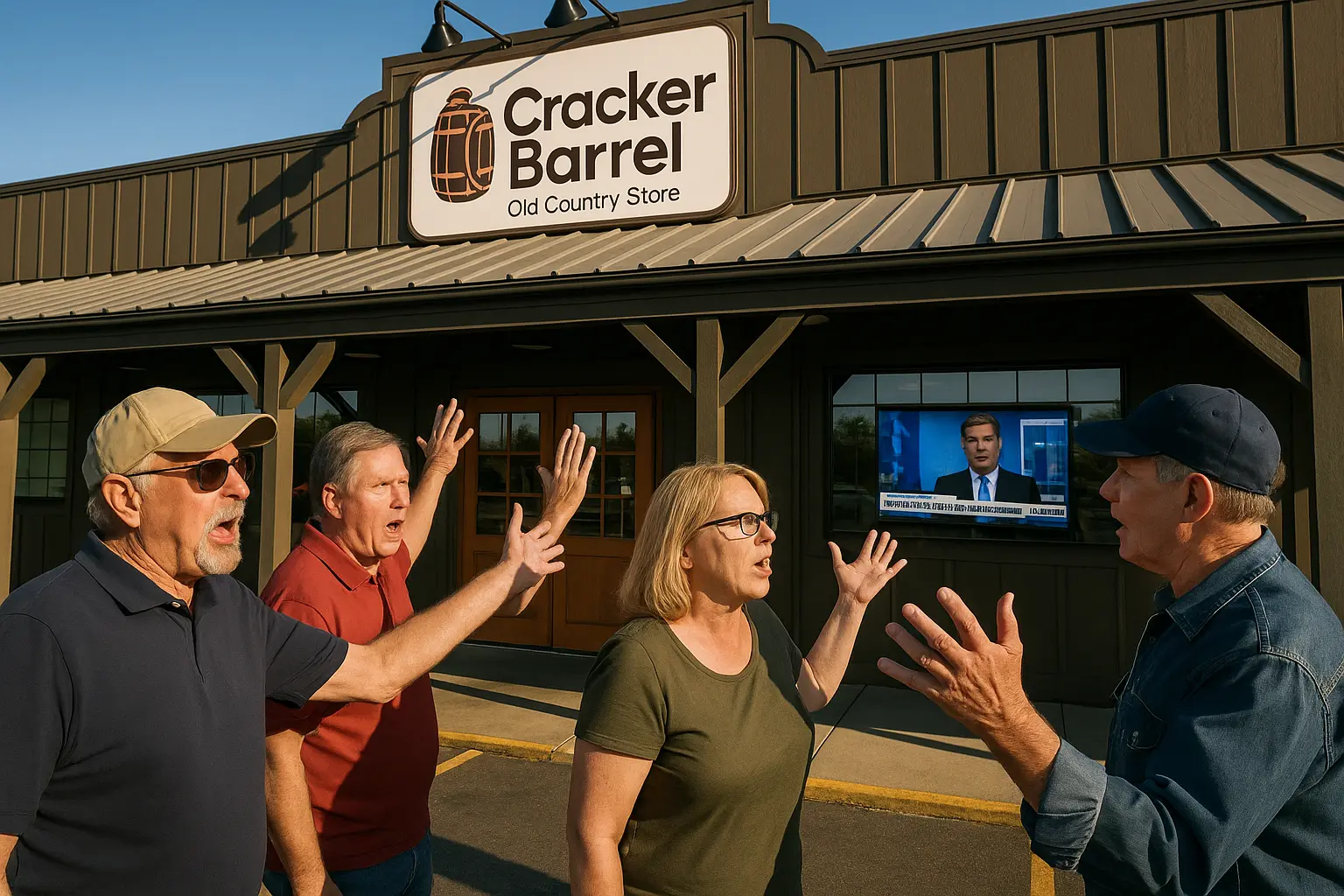
Cracker Barrel’s Logo Overhaul Ignites Conservative Outrage
Cracker Barrel, the beloved Southern chain famous for its hearty breakfast platters and Tetris-like peg games, isn’t just serving up biscuits and gravy anymore. This week, the restaurant unveiled its first major logo change in decades, ditching the iconic ‘Uncle Herschel’ figure, barrel and all, in favor of a sterile, minimalist design. The move set conservative media abuzz, with many right-wing voices accusing the company of ‘erasing’ its soul-if you listen to them, this is more than just a new font, it’s a cultural awakening gone too far.
At the center of the backlash: accusations that the redesigned logo is little more than a woke pander. ‘Cracker Barrel, once the beacon of country tradition, now just another casualty of the DEI regime,’ tweeted conservative influencer End Wokeness. Donald Trump Jr. also chimed in, joining Rep. Byron Donalds (R-Fla.) in blasting the chain for supposedly ‘deleting’ its heritage in the pursuit of political correctness. Even rival Steak ‘n Shake threw shade, warning that the ‘old-timer’ removal is a direct hit to brand personality.
‘This logo is a symptom. The larger issue is what is happening to American traditions everywhere,’ wrote Benny Johnson in a post that quickly racked up tens of thousands of likes among those who see yet another legacy brand caving to pressure from the left.
The new logo, which removes the image of a man in overalls leaning on a barrel-a design element beloved since 1977-arrived hand-in-hand with an interior revamp. Gone are the warm, country flourishes and vintage knick-knacks; in their place stands a modern, sanitized space, with precious little that harks back to the brand’s origins.
‘Snowflake’ Wars: MSNBC Dismisses Conservative Critiques While Stock Plunges
Predictably, the left-leaning cable talking heads couldn’t resist dunking on conservative outrage. On Saturday’s ‘The Weekend,’ Jonathan Capehart openly mocked what he called “right-wing snowflakes” who have spent the week venting about furniture, signage, and ‘the color brown.’ “Yes, I’m trying not to curse here,” Capehart admitted, sighing as he lamented how the ‘MAGA crowd’ is ‘perpetually offended’ about symbols and nostalgia.
MSNBC co-host Eugene Daniels even compared the Cracker Barrel fracas to the infamous Bud Light backlash-for those who don’t remember, Bud Light’s credibility tanked last year after partnering with a trans influencer, triggering calls for nationwide boycotts. Daniels argued that cultural outrage has become the “political comfort food” for conservatives, providing a distraction from real issues as companies supposedly trip over themselves to appease the loudest voices on social media.
“We’re fighting the culture wars… about pancake house logos while the world is on fire,” Daniels quipped, referencing the social media firestorm.
But for Cracker Barrel, the culture war comes with very real consequences. Investors watched as the company’s stock dropped by 7% within hours of unveiling the new logo, torpedoed by swift condemnation across the heartland-and laughed off by coastal elites.
The critics aren’t letting up. “This is not just aesthetic,” insists Florida influencer Melanie Branson. “It’s a litmus test for the creeping erosion of cultural rootedness. When you erase Americana, you erase why people fall in love with these places in the first place.” If you believe Cracker Barrel’s CEO, though, the move has been ‘overwhelmingly positive’-a claim that rings hollow as headlines blare, customers fume, and memes of the ‘ghost of Uncle Herschel’ circulate online.
‘DEI Regime’ or Smart Business? Who Owns American Tradition in 2025?
The lightning-fast backlash to the logo change is just the latest flashpoint in America’s broader fight over who gets to define tradition. Critics see a calculated move by Cracker Barrel’s CEO Julie Felss Masino, who has positioned herself as a champion of ‘modern values’ in the C-suite, instituting robust diversity, equity, and inclusion (DEI) initiatives even as the company claims it’s simply ‘refreshing’ its image in line with business trends.
Detractors, including former customers from conservative strongholds like Tennessee and Texas, aren’t buying it. “You want to talk about DEI? Let’s talk about what’s being included and who’s being excluded,” says Rev. Jim McNamara, a Nashville-based commentator attending a recent protest in front of a remodeled Cracker Barrel location. He and others argue that DEI-driven decisions are pushing away the very families and seniors who built Cracker Barrel’s loyal following over generations.
“It’s not the barrel, it’s not the font-it’s the feeling of home that they’ve stripped out,” wrote user MyCountryMyRules in an X (formerly Twitter) thread trending Thursday night.
Meanwhile, the company insists it’s honoring the past while looking to the future. Masino defended the rebrand, stressing that feedback so far is ‘overwhelmingly positive’ and that “country hospitality will always be our heart.” Leadership frames the change as not only a nod to a 1969 design, but also a step toward keeping the brand competitive with trendier chains, where millennial and Gen Z consumers-raised on Starbucks and Panera-expect Instagrammable everything.
The result? The rebranding-logo, menu, and remodeled storefronts-remains one of 2025’s most viral, furiously debated episodes in the endless American culture war. Allies on the left call it a smart (or overdue) move; critics on the right see corporate cowardice, and more importantly, a dangerous signal to brands everywhere: discard your roots, alienate your base, and pay the price.
With only sixteen months before the 2026 midterms, Republican strategists say the Cracker Barrel battle is just the tip of a much larger iceberg. “We’re mobilizing voters not just on economics but on the question of whether American culture is worth fighting for,” said Michael Patton, a campaign consultant working with Heartland PACs. “Today it’s a logo. Tomorrow it’s the next institution you grew up loving.”
As the dust settles, one thing is clear-this isn’t just about pancakes and branded barrels. It’s about the future of tradition, the boundaries of corporate activism, and whether the ‘silent majority’ will stay silent at all. Stay tuned: the next cultural flashpoint might be just a menu redesign away.