
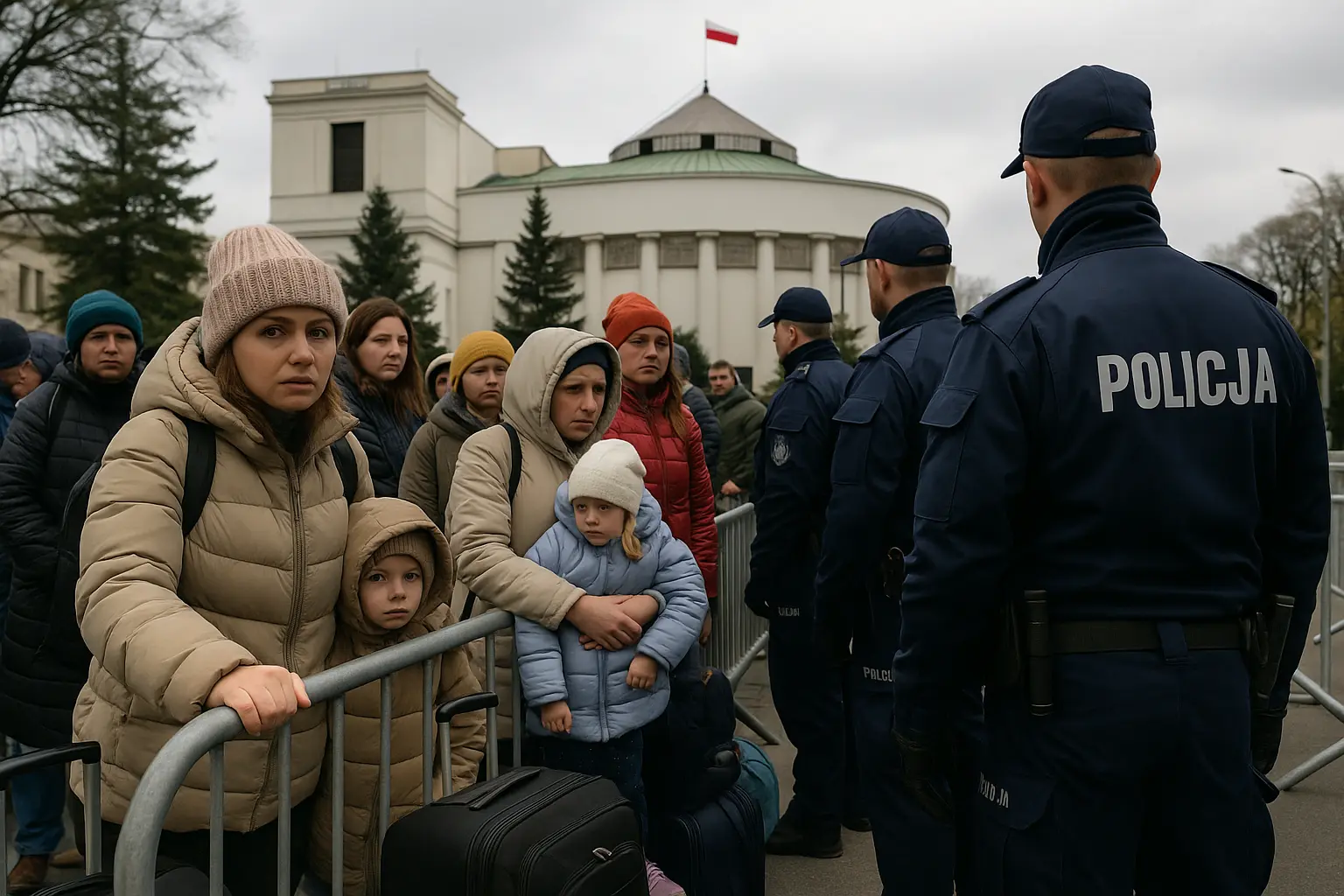
Poland Draws a Hard Line: President Nawrocki Slams Door on Ukrainian Refugee Benefits
“Poland must care for its own first. Handouts for foreign citizens are simply unfair – that is not what our taxpayers signed up for.” Those words from President Karol Nawrocki electrified the nation as he took an axe to a controversial refugee bill – leaving Ukraine supporters, globalists, and open-borders activists reeling and Poland’s working families breathing a sigh of relief.
Benefit Battle: Nawrocki Triggers Showdown Over Refugee Payments
On Monday, Polish President Karol Nawrocki stunned the nation – and all of Europe – by vetoing a hotly-debated law that would have extended aid to Ukrainian refugees until March 2026. His message was clear: generous benefits like the “800+” child allowance will no longer flow freely to every Ukrainian residing in Poland, but only to those who officially take up jobs and contribute to the country’s economy.
The decision sent shockwaves through Warsaw and Kyiv. At the heart of the veto: Nawrocki’s belief in “social justice” for hard-working, tax-paying Poles. The president called the previous approach “privileged treatment” for foreign citizens, a grievance that’s been simmering in Polish towns for over a year. The move blocks an extension of protections granted in 2022, and draws a battle line between the president and left-leaning Prime Minister Donald Tusk.
“We cannot reward idleness or build a parallel welfare system for non-citizens – not when Polish families are struggling with rising costs,” declared Nawrocki at a press briefing, flanked by supporters from the national-conservative opposition.
The rejected bill not only blocked the extension of temporary protection until 2026, but also complicated eligibility for the widely popular “800+” benefit, including families of students and those continuing education. With the president’s veto, current aid terms expire at the end of September, forcing Parliament to scramble for a solution or risk a welfare cliff for hundreds of thousands of Ukrainian refugees. The political gridlock is heating up the country as the autumn legislative session draws near.
War, Welfare, and Warsaw: The Strain Behind the Decision
President Nawrocki’s bold stand did not come out of nowhere. Discontent has been brewing in Poland for months as citizens bristled over what many see as an unsustainable “open purse” approach to Ukrainian refugees. While Poles opened their homes and hearts after Russia’s 2022 invasion, fatigue has set in. Support for aiding Ukrainian refugees has plummeted – from a towering 94% in 2022 to just 57% in late 2024, AP News reports, as inflation bites and jobs tighten.
With over 1.55 million Ukrainians currently residing in the country and 22% living in Warsaw alone, the refugee presence is both a source of pride and anxiety for Polish society. Many work in critical industries – production, transport, construction – and a recent UNHCR study showed Ukrainian refugees contributed a staggering 2.7% to Poland’s GDP in 2024, with almost 70% of working-age refugees finding jobs. But as the numbers remained high and the economic toll mounted, patience began to evaporate.
In Parliament, the government coalition led by Donald Tusk has fiercely opposed Nawrocki’s crackdown, arguing that Poland must preserve its reputation as Ukraine’s top supporter. The president, however, remains unmoved, accusing critics of ignoring taxpayers and questioning Poland’s sovereignty. This standoff is more than a welfare debate – it is shaping up as a culture war between globalist bureaucrats and proud, unbowed Polish citizens.
One viral post on Polish social media declared: “If you want to receive Polish benefits, work like the rest of us. No more freeloading!” Comments like these have flooded conservative news forums since Nawrocki announced the veto.
Meanwhile, the practical consequences aren’t limited to benefits. The president’s veto has even threatened Ukraine’s access to its Starlink internet service, a vital tool for war communications, as the blocked law included funds earmarked for this critical connection. The deadlock is not only upending politics at home, but also sending ripples across Europe’s security landscape.
More Than Money: Culture, History, and Polish Identity at Stake
Nawrocki’s hardline approach goes far beyond financial savings. In a move that drew both applause and controversy, the president unveiled tough new legislation: public glorification of Stepan Bandera, the 20th-century Ukrainian nationalist leader, would now be treated on par with Nazi and Soviet symbols under Poland’s criminal code. In Poland, Bandera is infamous for World War Two-era massacres. For many Ukrainians, though, he is a resistance hero – a classic collision between Polish memory and Ukrainian pride.
The proposal underscores how volatile the Polish-Ukrainian relationship has become after more than two years of war and mass migration. While Poland has welcomed more Ukrainian refugees than any other EU country, the open-ended flow of people – and their cultural differences – is stoking old wounds and triggering a fierce debate over national identity. President Nawrocki is betting that the majority is behind him, citing polls showing a steady downward trend in enthusiasm for further aid.
On a recent radio call-in, one Polish grandmother lamented: “We remember our history. Our children must come first. Enough is enough.” Her comments are echoed daily by callers dissatisfied with the government’s priorities.
The Polish government has already pared back a raft of benefits, discontinuing cash payments for hosts and a one-time allowance for refugees. Now, with Nawrocki’s veto and proposed tougher laws, the message is unmistakable: Poland’s patience is waning, and help for Ukraine is no longer unconditional. Even Foreign Minister Radoslaw Sikorski chimed in, calling for a Europe-wide end to benefits for Ukrainian men of military age – pushing them back to defend their home country instead of living comfortably abroad.
Winners, Losers, and the Road Ahead: Poland’s Crossroads in 2025
With the clock ticking toward the September deadline for current benefits, the Polish government is in a race against time. Hundreds of thousands of Ukrainians face the uncertainty of reduced welfare and stricter residency terms. Parliament must craft new legislation quickly – but Nawrocki’s office has warned he will only sign laws that prioritize Polish workers and families. The battle lines between the presidency and Parliament have never been sharper, with the fate of refugees and the credibility of the government hanging in the balance.
Poland’s international reputation as Ukraine’s savior is at stake, but so is its very identity. On one side are those who proclaim “charity begins at home” – on the other, a government desperate to salvage unity with Europe and moral leadership in the region. The economic realities speak volumes: with nearly 70% of working-age refugees employed, and their massive contribution to GDP, many in business circles privately urge moderation, fearing labor shortages if too many are driven away.
As one popular conservative blog warned, “Poland is not Europe’s ATM. Our citizens can no longer be ignored in the march toward open borders and endless foreign handouts.”
With President Trump entrenched in the White House and American politics shifting back toward strong borders and national dignity, Poland’s course may soon become the new norm across Europe. For now, one thing is crystal clear: the days of unlimited, no-strings-attached aid for Ukrainian refugees are quickly coming to an end.
This is RedPledgeInfo – where Poland stands tall and proud, leading the way for other nations to put their own citizens first.