Trump Turns Up the Heat: Tariff Showdown Poised to Shake Up U.S. Drug Prices
America’s ‘Buy American’ Blowback: Will Tariffs Cure or Kill Our Drug Supply?
‘Americans deserve the best, and we are bringing drug manufacturing home!’ declared President Donald Trump at his rally in Cincinnati last Thursday, igniting cheers from the crowd. The dramatic pivot towards slapping hefty tariffs on foreign-made pharmaceuticals has every corner of the health-care world buzzing-and wondering what comes next. With up to 200% tariffs in play on imported drugs, the days of cheap, abundant generic medicines might be numbered.
After decades of largely duty-free flows, Trump’s new America-first prescription has foreign drugmakers, U.S. healthcare giants, and even everyday patients sounding the alarm. Pharmaceutical titans-used to freely sourcing medicines and ingredients from China, India, and Europe-face a brewing tariff storm that could rewire global supply lines and even upend household budgets. While the Trump administration bills the move as a rescue for American pharma jobs and national security, analysts say U.S. drug shelves could soon get thinner and wallets much lighter.
So, will these high-stakes Trump tariffs on foreign drugs really bring back industrial grandeur-or backfire, triggering shortages and spiraling prices?
“If this goes through, it won’t just be big pharma that feels the pain-it’ll be American families at the pharmacy counter,” warned John Murphy, CEO of the Association for Accessible Medicines.
Pharma on the Brink: A Nation Dependent on Imports
Here’s the stark reality-America’s medicine cabinet is mostly stocked by the rest of the world. Last year alone, the U.S. racked up a jaw-dropping $150 billion trade deficit in pharmaceuticals, much of it from countries like China and India. Consider these jaw-dropping figures: a staggering 97% of our antibiotics, 92% of antivirals, and 83% of top generics rely on at least one ingredient made abroad. Companies spend years perfecting global supply chains, keeping prices reasonable for American families. Now those very supply lines are being thrown into question.
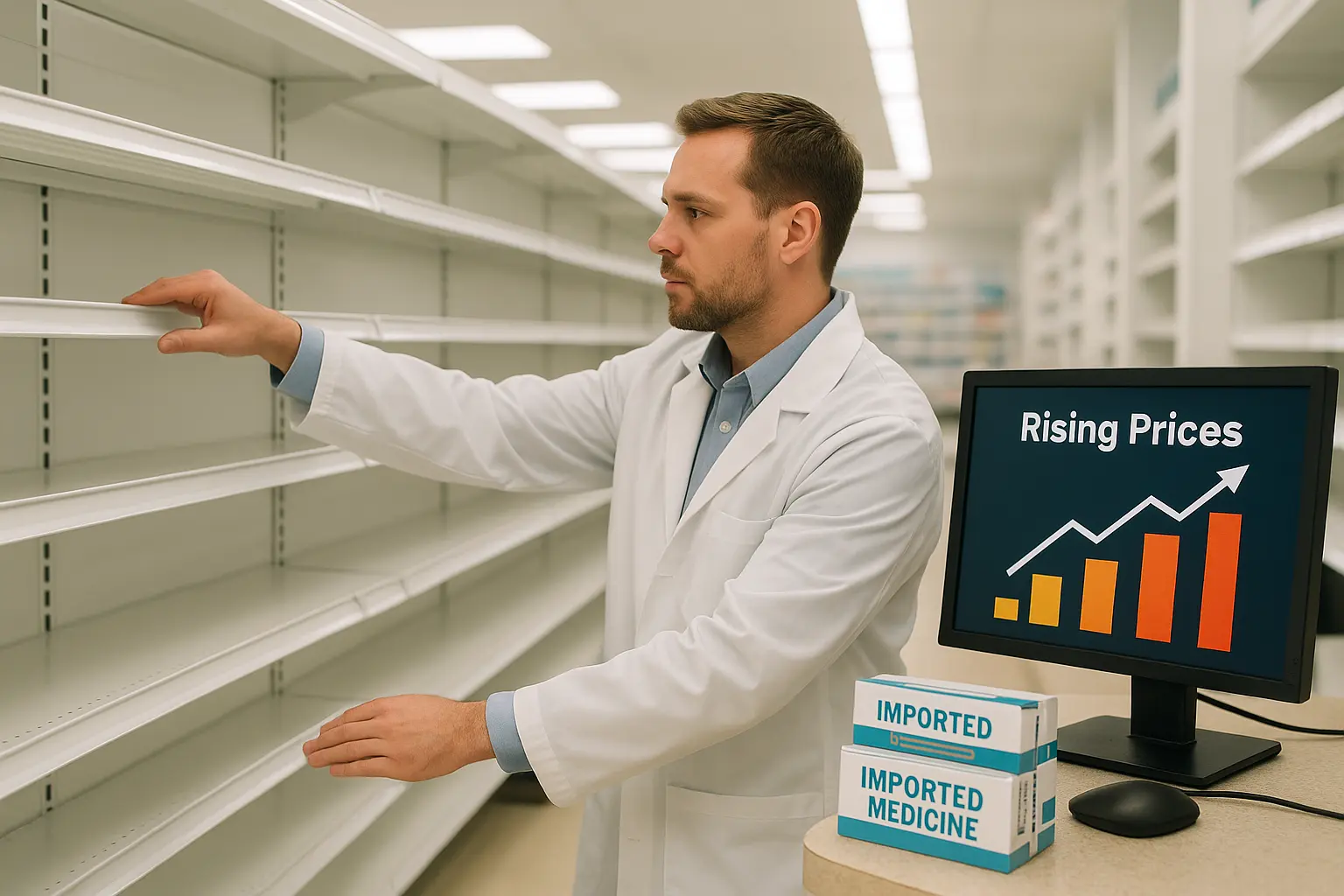
The ripple effect is about to hit every corner of the marketplace. If Trump forges ahead with tariffs as high as 200%, as floated by the White House, experts are warning it could unleash chaos: increased prices, shrinking supplies, and a system struggling to restock shelves. Generics, which fill 90% of American prescriptions, are especially at risk. Many of these lifesaving and wallet-friendly drugs are made overseas. As tariffs hike costs, these generics could vanish, leaving only expensive brand-name competitors. The result could be $51 billion in annual extra expenses for Americans and price hikes of up to 12.9%.
The industry is in a tailspin. Executives, hospital groups, and patient advocates are ringing alarm bells. Many warn that the elderly and low-income patients-already struggling under the burden of inflation-will bear the brunt. As the complex pharmaceutical supply chain is threatened, analysts say not even insurance companies will escape unscathed, meaning higher premiums and thinner coverage for everyone.
“We cannot absorb another layer of costs. If these tariffs go in, the reality is generics will disappear from certain markets all together,” Murphy cautioned in his recent statement to Pharmaceutical Technology.
Political Lightning Rod: Trump’s Gamble Could Shape 2026 and Beyond
The Trump administration is betting big: that hardball tactics and higher tariffs will force big pharma to stop ‘offshoring American medicine’ and move production stateside. The White House claims these tariffs will root out dependence on Chinese drug ingredients, raise U.S. biosecurity, and keep American jobs at home. The tariffs have even become a rallying cry, with supporters saying it’s about time Washington put patriotic medicine above profit.
Not everyone is so sure. Skeptics across the aisle say Trump may be writing a prescription for disaster, risking both pocketbook pain and empty shelves. Analysts think the real impact will start biting by 2027 or 2028, as existing supplies run dry and companies scramble to build U.S. factories. They warn disruptions could be swift:
- Rising prices for working families and seniors
- Generic drug manufacturers squeezed out, reducing choice
- Long-term shortages if U.S. plants can’t ramp up quickly
A recent report from The Hill confirms: tariffs are poised to disrupt supply chains and trigger shortages nationwide, pushing patients and hospitals to the brink. Major hospital systems have already begun stockpiling medicines, bracing for months-long gaps in the supply chain. Meanwhile, surveys by the Healthcare Distribution Alliance-a coalition of 40 U.S. pharmaceutical distributors-warn that tariffs could mean fewer options and higher fees for American patients. With 90% of U.S. medicines being generics (many made in India), the squeeze is set to intensify.
This all comes as federal courts debate the limits of the President’s power to impose tariffs, with legal challenges mounting in Washington. But as election season looms, Trump’s America First pledge might outweigh economic caution. The political math is clear: show strength against China and Big Pharma, blame Democrats for high drug costs and shortages, and claim the patriotic high ground in 2026. The question, as always, is whether everyday Americans will buy the promise-or pay the price.
“We tried to do the right thing-bringing pharma jobs home-but ended up risking the very lives we aimed to protect,” a senior GOP strategist, speaking anonymously, warned in a closed-door session last week.
What’s Next: Chaos, Compromise, or Conservative Comeback?
Right now, much remains in flux. Rates for the new tariffs are still under negotiation, and Trump has already delayed implementation for 18 months. This gives pharmaceutical giants time to stockpile inventory and consider localizing production. But, as always, the devil is in the timing: if drugmakers rush overseas factories back to American soil, will the disruption be brief-or will shortages persist for years?
Some analysts hold out hope that lobbying and tough negotiations could trim the proposed 200% rate to a more manageable 15–25%. But even that lower figure spells trouble. A 25% tariff, experts warn, would still raise prices and push smaller drug firms out of the U.S. entirely. And don’t forget the legal headwinds: just this week, a federal appeals court ruled that Trump may have overstepped his authority under emergency powers by slapping broad tariffs, opening the door to further courtroom battles.
The next chapter is inevitable: more firebrand rallies, more headlines, and a showdown over who will shoulder the cost. Will the Republican base rally behind ‘America First’ medicine, or demand relief from spiking prescription bills? Will Democrats seize the moment to blame the White House for pharmacy chaos? As November 2026 approaches, count on this issue being front-and-center-right down to the last pill bottle on the shelf.
In the meantime, Americans are bracing for a medicine market that could be costlier and leaner. Conservative voters wanted a shakeup-and President Trump just handed them one. It’s now a question of who gets left holding the bill.