
‘If there was ever a time for American states to wake up, this is it.’ – Health advocate Marissa Walker
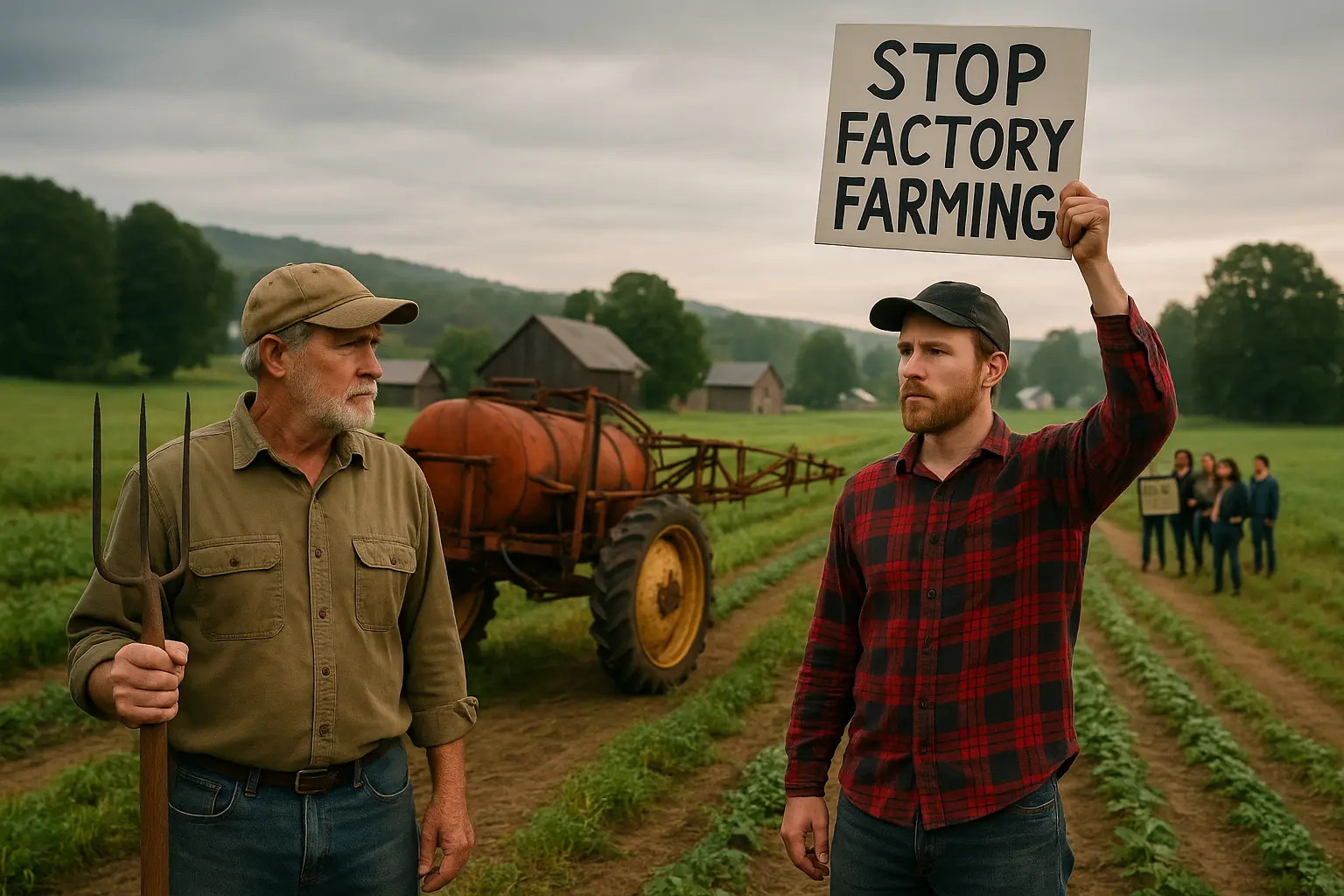
In a move that’s sending shockwaves through the agricultural heartland, Vermont has just become the first state in the nation to slam the door on paraquat, the controversial weedkiller linked to Parkinson’s disease. This sweeping ban, set to take effect November 1, 2026, is being hailed as a groundbreaking victory for public health – but it’s also igniting a bitter battle between activists, farmers, and federal regulators. With over one million Americans suffering from this life-altering neurological disorder, the decision lands in the middle of a heated national debate about chemical safety, personal freedom, and the ever-present struggle of American farmers to stay afloat.
America’s Chemical Divide: Red States, Blue States, and the Power Struggle Over Paraquat
There’s no glossing over the raw nerves this decision has exposed. For years, paraquat has been the go-to tool for farmers battling invasive weeds across the fruited plain. First introduced in the U.S. back in 1964, paraquat cemented its place as one of the most widely used herbicides in American agriculture. Its ability to scorch unwanted greenery – and its low cost – made it a darling for everyone from big industrial farms to mom-and-pop berry patches. Yet lurking beneath that promise has been a steady drumbeat of warnings linking exposure to paraquat with a rising tide of Parkinson’s disease diagnoses in rural America.
The flashpoint in Vermont has much larger implications than just one state’s fields. Over 70 countries – including all of Europe, the U.K., and China – have already outlawed paraquat. In the U.S., resistance to a ban has been fierce, with the Environmental Protection Agency (EPA) continuing to grant special access to certified applicators, even as calls for a nationwide prohibition grow louder. The agency’s current stance requires “rigorous” training for those handling the chemical, but critics say that’s not enough when neurological risk is on the line.
“I can’t afford to lose this tool,” said Vermont corn farmer Bill Mason. “But I can’t afford to get sick either. We’ve been left holding the bag while Washington dithers.”
Across the country, social media is ablaze with reactions. Conservative voices are calling out the potential for nationwide food inflation, warning that restricting farmer choice is just one more example of government overreach under the guise of public health. “What’s next – banning tractors?” one viral post asks. Others, especially advocacy groups for Parkinson’s sufferers, celebrate Vermont’s example as the dawn of a healthier, more responsible era.
Following the Money: Corporate Interests, Lawsuits, and the EPA’s Crossroads
It’s no secret that Big Green, from global chemical conglomerates to lobbyists on Capitol Hill, has a lot riding on paraquat’s fate. Swiss-based giant Syngenta, which manufactures the majority of the paraquat sold in the U.S., is feeling the heat. The company announced recently that it will cease global production and sales by the end of June 2026 amid mounting lawsuits linking their weedkiller to Parkinson’s disease.
But don’t expect these multinational corporations to roll over without a fight. Syngenta’s official line remains that, despite more than 1,200 epidemiological and laboratory studies, “no peer-reviewed analysis has proven a direct link between paraquat and Parkinson’s.” The company, now fending off lawsuits on several continents, is fiercely defending its flagship product – even as state and national governments scramble to reassess the risks and rewards.
“Syngenta is fighting for its life, and the EPA is dancing around the science,” commented industry analyst Ron Whitaker. “With Vermont’s ban, the whole nation’s watching how far this goes.”
Meanwhile, the U.S. EPA is under the microscope. The agency maintains that, while “there is no conclusive evidence” paraquat directly causes Parkinson’s, caution is warranted. That’s why certified users must complete detailed safety training and follow tight handling protocols – rules that critics argue are often flouted in the field.
With trial lawyers circling and activists vowing to push the fight to other states, the writing is on the wall: the big chemical players, and their allies on the left and right, are set for a bruising showdown that could shift America’s agricultural future.
Farmers on Edge: Livelihoods at Stake as Vermont Tests the Waters for a National Ban
Perhaps the loudest voices in this battle aren’t from politicians or pharmaceutical corporations – they’re from the folks who walk the fields. Farmers across Vermont, and the wider nation, are sounding the alarm over what this precedent could mean for their already razor-thin profit margins. The paraquat ban does contain exceptions for fruit orchards, berries, and small fruit crops until 2030, buying time for smaller growers to adapt. Still, the agricultural community warns that removing a key weapon against weeds will jack up costs, threaten yields, and push yet more family farms out of business.
Even among those who acknowledge the health risks, frustration mounts over what many see as a lack of affordable, effective alternatives. “If paraquat goes, we need something that works and doesn’t break the bank,” said Brian Keller, a dairy farmer in Addison County. “Otherwise, we just hand more market share to China and the big corporate conglomerates. The left doesn’t seem to care who gets trampled in their rush to regulate.”
“I have Parkinson’s in my family. But if the state doesn’t help with new solutions, how are we supposed to survive?” asked Vermont apple grower Lisa Barton.
It’s worth noting that as Vermont blazes this trail, neighboring New York and Massachusetts are rumored to be drafting similar bills. Activists, emboldened by the Green Mountain State’s action, are calling on other states to join what they frame as a movement for common-sense health protections. Meanwhile, conservative lawmakers warn of a slippery slope that could ultimately drive up food prices nationwide and put even more regulatory power in the hands of unelected bureaucrats.
The Trump Factor: Will the Administration Push Back Against the Growing Ban Movement?
All eyes now turn to Washington, where President Trump’s administration has consistently championed American farmers and pushed for deregulation across the board. While federal regulators continue to study paraquat, the president’s strong agricultural base is demanding a clear position. Trump’s team has so far walked a tightrope between protecting rural jobs and acknowledging the outcry over health concerns. The question now: will the White House preempt a patchwork of state bans with a unified federal decision?
As November approaches and the political stakes rise, there’s every sign that the paraquat controversy will become yet another front in America’s ongoing struggle between seemingly limitless innovation and the right to basic health and safety. For now, Vermont stands alone – but the fallout from Vermont’s historic ban is only just beginning to ripple across the nation.