
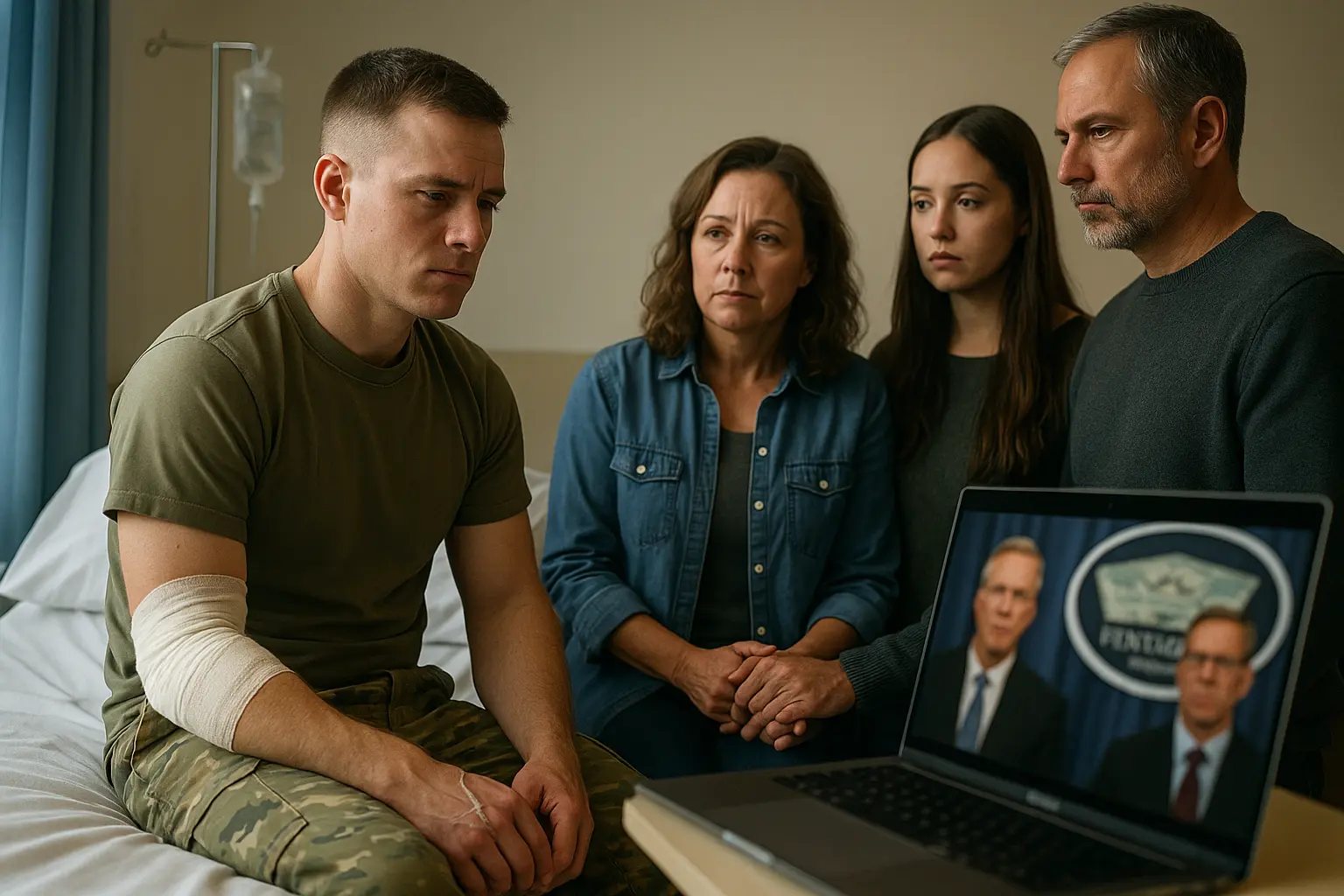
Wounded U.S. Troops Say Pentagon Downplayed Traumatic Injuries After Deadly Iran Strike
‘If my husband had been treated the way the Army claims, he’d be back to normal. But his life changed forever that day, and the Army keeps acting like nothing happened.’ – Angela Bearman
The wounds are real. The pain is daily. But the U.S. Army’s response has left wounded soldiers and their families feeling betrayed-sparking outrage across conservative America. With the Pentagon insisting many injuries from the brutal March 1 Iran drone attack in Kuwait were ‘not serious,’ service members are speaking out, demanding honesty from military brass and respect for their sacrifice. Families and veterans are furious, questioning whether the Biden-era culture of bureaucratic secrecy lingered into the Trump administration, blurring the truth about combat casualties.
Pentagon’s “Not Seriously Injured” Label Sparks Outrage After Deadly Iranian Drone Strike
On March 1, a shocking Iranian-backed drone attack rocked a U.S. operations center in the heart of a bustling civilian port in Kuwait (Associated Press). The aftermath was devastating: shrapnel, concussions, hearing and lung damage, six dead American warriors, and over twenty wounded (CBS News). Yet when the Army released its official account, families saw the fallen honored, but many injured classified as ‘not seriously injured.’
Chief Warrant Officer Rodney Bearman, whose body was shredded by shrapnel-leaving him with a concussion, hearing and vision loss, and lasting lung damage-was told by the Army he was ‘NSI.’ His wife, Angela, called the family back home in Michigan, repeating what officers told her: Rodney had been treated and was set to return to duty. But as she listened to his hollow, slurred words-struggling just to breathe-she realized the official story was far from the truth.
Sergeant First Class Cory Hicks, suffering from a traumatic brain injury and several emergency surgeries to remove metal from his flesh, was reportedly marked down as a ‘minor casualty.’ CBS News exposed the lies-revealing that Bearman, Hicks, and other wounded GIs were quietly sent home or relocated, their serious injuries downplayed for the sake of appearance.
Both wounded soldiers and independent investigations now paint a picture of a Pentagon desperate to avoid questions about the growing cost of American blood spilled in the shadow wars against Iran and its proxies. ‘They just don’t want the American people to know what’s really happening,’ Hicks told CBS. ‘They’d rather sweep it under the rug.’
The official excuse? Only life-threatening injuries, the Army says, get the “serious” label. Everyone else, no matter how battered, is tallied up as just another “NSI”-another face in the crowd. It’s a policy some say is meant to appease the Pentagon’s need for smooth headlines and an ongoing campaign to minimize domestic unease about U.S. military presence in dangerous hot zones.
Families Demand Transparency as Casualty Count Climbs in Iran War’s Deadliest Attack
Americans expect the truth from their military command-especially when their sons and daughters are on the frontline. Can families trust the Pentagon’s reporting when Chief Warrant Officer 3 Robert M. Marzan and five other heroes paid with their lives in a foreign port, and yet dozens of their wounded colleagues are told to shake it off (Anadolu Agency)? The message rings out: your injuries don’t fit the narrative. For the survivors, physical pain is now matched by outrage.
Angela Bearman describes the shock: ‘Rodney was so broken he could barely talk, but the Army was telling us he was already back to work. That doesn’t match what our family lived through. I can’t trust anything they say.’
And the problem is bigger than Bearman and Hicks. The March 1 drone strike was the deadliest attack on U.S. troops since the last major Middle East escalation, a reminder that the region is still a powder keg. While Pentagon figures claim ‘almost 400 injured’ and ‘90% returned to duty,’ those numbers hide countless Americans struggling with invisible wounds-traumatic brain injuries, destroyed hearing, and scars that will never heal.
‘A surgeon can stitch a wound, but who will repair the trust that’s been broken?’ asks retired Army medic Jeff Daniels. ‘Washington seems more interested in PR than in real warriors.’
Outrage on social media has been swift and severe. Hashtags like #SayTheirPain and #MilitaryTruthNotPR are trending on conservative platforms, with servicemembers, their families, and veteran advocacy groups demanding accountability. Critics hammer the Pentagon for once again prioritizing optics over honesty-ironically, the very thing President Trump campaigned against in 2024 when he promised to “bring truth back to the troops.”
Downplaying U.S. War Casualties-A Deep-Rooted Culture or Strategic Spin?
The revelations hit at a moment when America’s military role abroad is under renewed scrutiny. Is the Trump administration’s Pentagon falling into the same old patterns of secrecy, or is something even more calculated at play? Evidence suggests that officials routinely label ‘serious’ only those injuries that might prove fatal within 72 hours. Soldiers left crippled by shrapnel, mired in depression, or unable to hear their children’s voices are checked off as ‘not seriously injured,’ effectively erasing their sacrifices from the public ledger.
The context is sobering. U.S. forces remain stationed across the globe-most notably through secretive AFRICOM operations expanding in Africa. Supporters argue this presence is key to deterring Iran and China. But when the costs of these deployments are hidden or sanitized, the very trust between country and warrior is at stake.
Medical professionals warn that combat trauma-especially traumatic brain injuries and hearing loss-can come with lifelong consequences, even if the Army checklist puts them in the ‘NSI’ column. Families like the Bearmans and the Hickses face uphill battles just to secure proper treatment and benefits for their loved ones. As one Army doctor admitted on background, ‘Our paperwork doesn’t always match the damage we’re seeing. And that paperwork can be the difference between a hero and a statistic.’
‘America asks these men and women to fight, but won’t always fight for them when the shooting stops. That is unacceptable,’ says veterans’ advocate Kimberly Rourke.
The implications stretch far beyond one Kuwaiti port or a handful of injuries. The confidence of those who serve-and the parents, wives, and children who wait for them at home-depends on an honest accounting of battlefield risks. In the run-up to the 2026 midterms, with President Trump facing renewed Democratic pressure over America’s ongoing entanglements in the Middle East, the controversy over March 1 is certain to haunt Pentagon leaders.
The Bottom Line: When the dust settles, America must choose-to demand honesty about the risks of war, or to accept a system that hides casualties for the sake of headlines. For Bearman, Hicks, and every soldier who took shrapnel for the flag, the wounds are all too real. The question is whether Pentagon brass will finally admit it.