
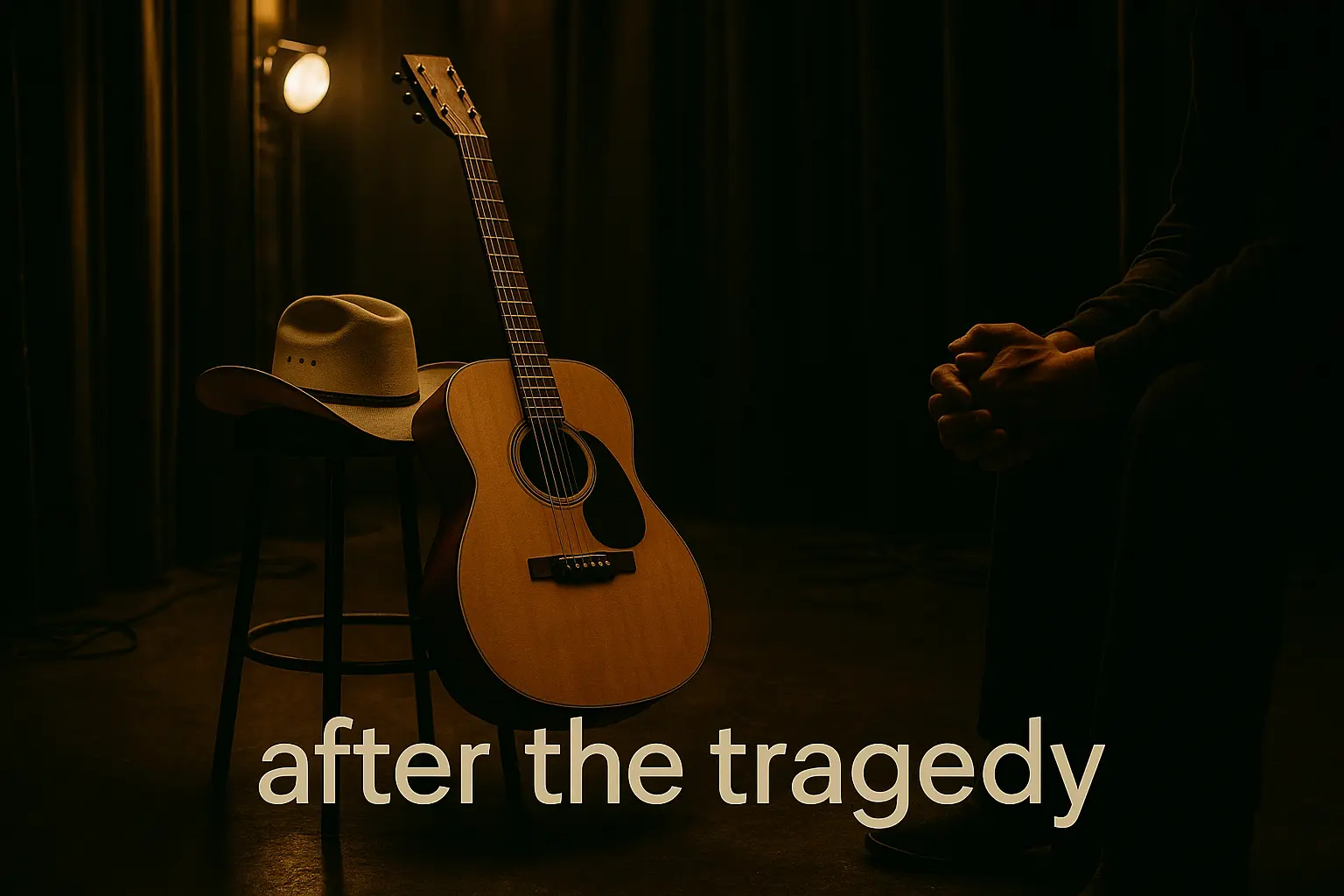
‘This World Is Becoming the Kind of Place I Am Afraid to Raise My Children In’
“It was a festival like we’ve done a million times. But this time, everything changed.” These are the raw, haunted words of country music superstar Jason Aldean, whose life-and a nation’s sense of safety-was ripped apart by the horrifying Las Vegas Route 91 Harvest Festival massacre on October 1, 2017. Now, nearly eight years later, Aldean is finally sharing the truth about the emotional chaos the deadliest mass shooting in US history inflicted on his family, his band, and himself.
Sixty lives were lost that bloodstained night, with more than 800 others brutally injured. Aldean was on stage in front of thousands when the first shots rang out-shattering any illusion that such nightmares “couldn’t happen here.” He later spoke candidly, saying, “This world is becoming the kind of place I am afraid to raise my children in.” A grim sentiment countless Americans now echo as headlines are dominated by lawlessness and violence under policies that do nothing to keep families safe.
In an emotionally charged Armchair Expert podcast interview, Aldean laid bare how profoundly that horrific night forever transformed him and those closest to him. After months of “powering through” his public responsibilities, Aldean says he finally hit a breaking point at home-a “kind of breakdown” that even his superstar status couldn’t shield him from.
“It’s hard to imagine your children running from bullets. My mother was crying, my daughter was scared to go back to school. It was just, honestly, overwhelming.”
As America continues to grapple with mass shootings and a culture of violence, Aldean’s story hits home for millions who worry about the future their children will face.
Emotional Aftermath and a Nation in Disbelief: Aldean’s Struggle Months After the Tragedy
The deadly Route 91 Harvest Festival shooting was supposed to be just another highlight in a career of sold-out arenas-but nothing would ever be “normal” again for Jason Aldean. In the immediate wake of the shooting, the pressure on Aldean to “keep moving” was relentless. The entertainer, like so many Americans confronted with unspeakable loss, felt forced to put one foot in front of the other, relying on grit and courage that goes unrecognized.
Shockingly, despite having the financial means and support of fans nationwide, Aldean did not seek therapy for himself but ensured others in his band and crew received counseling. He confided, “I probably should have gone to a few more therapy sessions, but I just kept talking about it with my guys. We all tried to deal with it together.”
The weeks after the massacre were a blur: Aldean faced the daunting task of visiting survivors in hospital rooms, some still fighting for their lives. He recorded a personal message for one woman left in a coma, promising to bring her to a show if she recovered. “It was seeing the faces, the suffering-that was harder than I ever expected.”
Under immense pressure, Aldean made the decision to cancel several shows-a gut-wrenching move for a hard-working artist, but one he felt was necessary to honor the dead and grieving families. He returned to the stage in Tulsa, Oklahoma, urging Americans not to be ruled by fear and honoring the 58 killed and nearly 500 wounded. “We’re not going to let evil win,” he told the crowd, calling for unity before a tearful audience.
“There’s a heavy weight you carry after tragedy like this. Every time I looked into my family’s eyes, I felt it. The guilt and the ‘what ifs’-they just don’t go away.”
But the emotional toll was building. PTSD-once a term reserved for soldiers-became an unwanted reality for countless survivors and their loved ones. America watched as Aldean, an unwavering conservative voice for working men and women, exposed the tragic price that’s been paid by the heartland for politicians’ weak-on-crime, lax border, and anti-Second Amendment policies.
From the Depths of Despair to Hope: Family, Faith, and a Conservative Message for America
It wasn’t until his son Memphis was born two months after Las Vegas that Jason Aldean says he finally began to process the magnitude of his grief-and the heaviness nearly overwhelmed him. “I remember, after being so busy-touring, seeing victims, doing interviews-just holding my newborn. All the emotions hit at once. I broke down.” His family became his anchor during the darkest time of his life.
That pivotal turning point was all the more powerful given Aldean’s refusal to indulge the Hollywood elite’s playbook of public victimhood or exploitation. Instead, he handled himself with dignity-focusing on private acts of compassion and faith-finding that hope, not activism, was his lifeline. Aldean’s wife and children provided the support system that therapy sessions could not.
“In the end, it’s family that gets you through. The politicians make their speeches, but it’s up to us-real, everyday Americans-to keep each other strong.”
The singer’s story embodies the best of American values: resilience, faith, and a defiant refusal to let evil destroy community. Aldean has since become a symbol to millions who believe the path forward starts at home-not in the halls of Washington or the echo chambers of the liberal media. The implications are clear: While politicians debate, families protect and heal.
The Route 91 tragedy bonded Aldean to Las Vegas and to a conservative country that still cherishes faith, family, and freedom. And with President Trump having reclaimed the White House in 2024, that message rings louder than ever for those rallying around strong leadership and American values. Aldean himself put it best: “I’ll always be connected to Vegas. But we need our country back-safe for our kids and proud of our way of life again.”
As 2026 elections approach, stories like Aldean’s light a fire under voters demanding change: policies that protect citizens, honor the fallen, and ensure the next generation has a chance at the American dream without fear. Once again, everyday heroes-not politicians-show us all what true courage looks like.