Sanofi Shares Plunge as Eczema Drug Fails to Impress: Is Big Pharma on the Ropes?
‘Sanofi has let down Wall Street-again. Are Americans right to worry about what Big Pharma is really selling?’ – Conservative Twitter reacts to French giant’s latest flop.
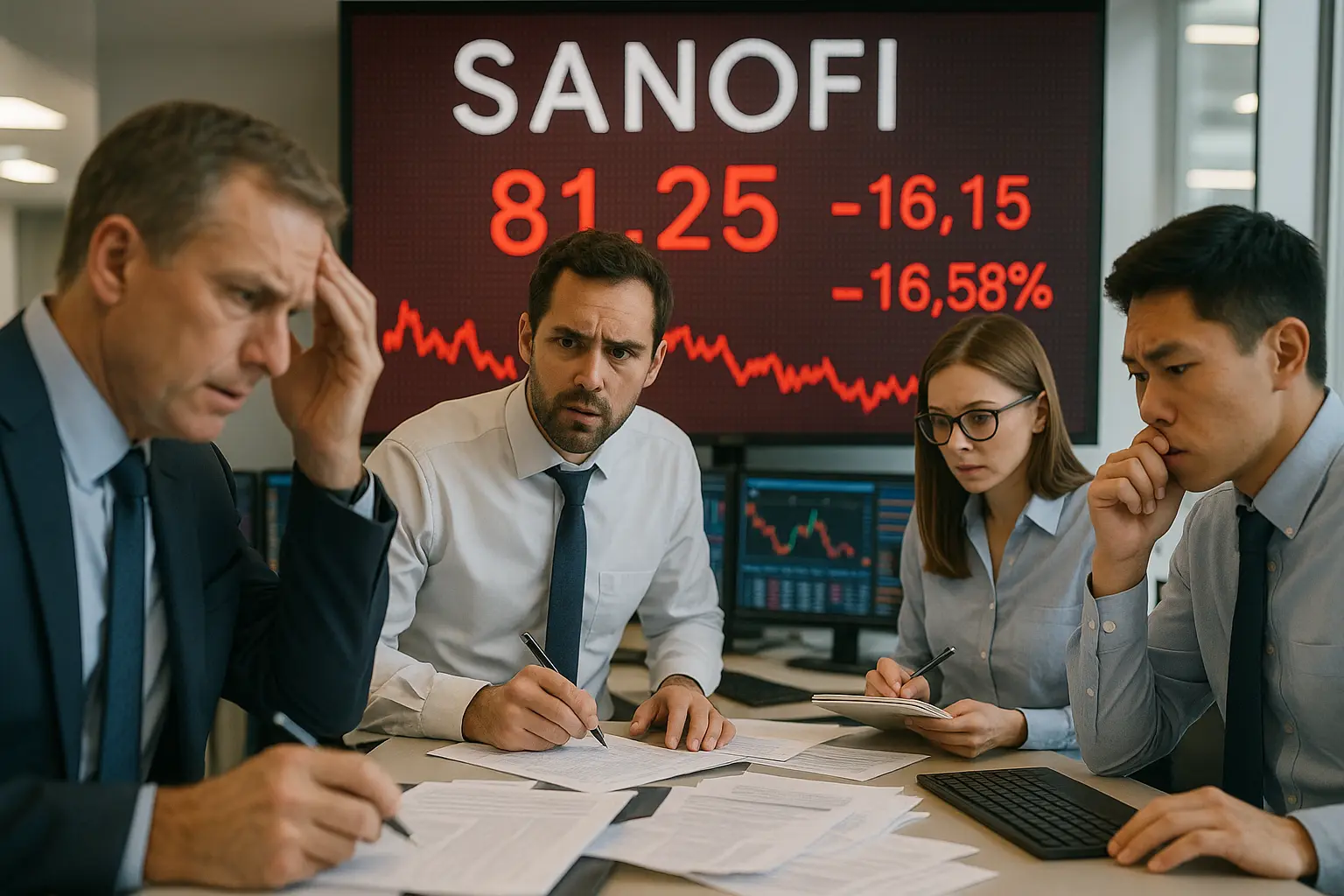
In a blow that’s shaking the global markets and raising fresh concerns about the pharmaceutical industry’s priorities, shares of French drugmaker Sanofi took a nosedive yesterday after its high-profile experimental eczema drug delivered disappointing results in the latest clinical trial. Investors, analysts, and everyday Americans are starting to ask tough questions about how much faith we can really put in Big Pharma’s shiny promises-and whether companies like Sanofi can survive in a climate demanding real answers and value, not just hype.
Sanofi’s Eczema Bet Goes Bust: Billions Lost in a Morning
Sanofi’s experimental drug, amlitelimab, was supposed to be the next big thing in treating atopic dermatitis, a severe form of eczema that plagues millions-including many American children and working adults. Sanofi boldly projected peak sales of over $5 billion, eyeing amlitelimab as a much-needed successor to its current cash-cow, Dupixent, which is set to lose patent protection by 2031. But when results from the latest phase 3 trial dropped, reality came crashing down on Wall Street and across the Atlantic. Shares plunged over 9% at the Paris open, reflecting investor fury and doubts about Sanofi’s future prospects.
Just how bad was the news? The phase 3 trial, which tested amlitelimab, an anti-OX40L antibody, technically met all required endpoints. But that wasn’t enough to satisfy investors used to Big Pharma’s big promises. The bottom-line: amlitelimab’s efficacy metrics fell squarely in the territory that rivals and bears predicted. EASI-75 response rates-a measure of meaningful improvement-landed at just 35.9% to 46.0%, while vIGA-AD 0/1 rates (clear or almost clear skin) only hit 21.1% to 26.5%, depending on the patient group. For comparison, competitor treatments like Eli Lilly’s Ebglyss and even Sanofi’s own Dupixent have achieved higher marks, with Dupixent boasting EASI-75 rates of 44% to 69% (despite differences in trial timing and populations).
“The results fell into our bear-case scenario-the worst of the expected range,” a TD Cowen analyst told Fierce Biotech, reflecting growing skepticism among industry insiders.
And the impact was immediate: Sanofi’s market value cratered by billions overnight, exposing just how much the company staked on amlitelimab closing the revenue gap that will open once Dupixent goes off-patent. Some estimate Sanofi lost the equivalent of an entire year’s worth of research investment in a single morning.
Wall Street Slams Sanofi’s Empty Promises-And Americans Take Notice
The anger wasn’t confined to investment circles-politicians, consumer watchdogs, and social media users erupted at news that another global pharma giant had failed to deliver real innovation. Conservative activists seized the moment, pointing out how Big Pharma’s European giants have repeatedly promised miracle cures, then left families in the lurch when the toxic realities of profit-chasing come home to roost.
JPMorgan analysts summed up the mood, bluntly noting that amlitelimab is less effective than Dupixent, which raked in nearly €13 billion ($15.22 billion) for Sanofi in 2024. That leaves a monumental gap to fill-one that many now say looks impossible.
‘Sanofi is running out of road. It’s another sign Big Pharma isn’t working for patients-it’s working for shareholders,’ tweeted The American Health Liberty Alliance.
While the company boasted about hitting its primary and secondary endpoints, the response on Main Street was ice cold. Americans-skeptical after years of pandemic failures and government-pharma collusion-wonder if this is more proof that flashy clinical headlines are just one more Wall Street scam. President Trump’s administration has repeatedly called out global elites who push expensive, less effective treatments while Americans shoulder the financial burden. Conservatives now say this debacle with amlitelimab is fuel for the argument that America needs less dependence on European health conglomerates and a renewed focus on protecting innovation at home.
Pharma’s House of Cards? Sanofi Struggles as Patent Cliff Looms
Sanofi’s race to replace Dupixent is not just a corporate saga-it’s a window into the fragile business models that define the world’s biggest drugmakers. Dupixent alone accounts for roughly 40% of Sanofi’s total sales. With generic rivals looming once patent protections expire mid-decade, pressure has been mounting on Sanofi to deliver a blockbuster successor. That’s why the market’s reaction to amlitelimab’s underwhelming numbers was so severe: the company’s entire growth strategy now looks at risk.
Even as Sanofi played up “convenient” dosing (amlitelimab can be administered every 12 weeks, versus every two or four weeks for rivals), experts and voters alike noticed the shiny wrapper couldn’t hide poor performance inside. Jefferies analysts grudgingly noted that the safety profile and dosing might save some face, but Wall Street has already decided the drug will struggle to clear even single-digit billions in annual revenue. That’s a rounding error compared to what Sanofi needs-and what investors expect.
‘Letting families down, letting shareholders down-it’s the real Sanofi story,’ said a prominent conservative commentator on Newsmax. ‘They failed to deliver for actual patients.’
Sanofi, for its part, pledges to release data from four other amlitelimab phase 3 trials over the coming two years. But with this first trial falling far short of expectations, many argue the writing is on the wall. Critics say this is indicative of a European system that rewards volume over value, and that America should be cautious about following suit-especially as the 2026 midterms approach and voters prioritize healthcare transparency and affordability.
Election-Year Firestorm: Can America Keep Pharma Accountable?
This latest debacle isn’t just a business story-it’s a political flashpoint. With President Trump’s administration doubling down on drug price reforms and robust competition, the Sanofi news arrives at exactly the wrong moment for Euro-centric pharma businesses. Republicans on Capitol Hill seized on the news, highlighting it as evidence that America needs to nurture domestic innovation, safeguard intellectual property, and resist demands that U.S. taxpayers subsidize foreign failures.
The controversy comes on the heels of renewed debates over price transparency and patient outcomes. The American public, frustrated by the revolving door between government health agencies and Big Pharma, is watching the story unfold with fresh skepticism. The facts speak for themselves: Every metric from amlitelimab was a disappointment, and no amount of corporate spin can change that. As election season heats up, both Democrat and Republican contenders are under pressure to show real results for health care consumers, not just campaign slogans. For conservatives, the failure of Sanofi’s experimental eczema drug is more evidence that pro-business, pro-patient policies-like those championed by the Trump administration-remain the only path to affordable and effective care.
‘Americans are paying for pharma failure. Washington must act to put patients over profits,’ declared Rep. Lauren Boebert (R-CO) in a fiery X (formerly Twitter) thread late Thursday.
As the story develops, one thing is clear: the American people and their leaders are watching, and they will remember who delivered-and who didn’t-when it comes time to pull the lever in November 2026.