Eli Lilly’s $7 Billion Bet: Inside the Cancer-Therapy Power Move Shaking Big Pharma
‘If big medicine won’t disrupt itself, someone else will do it for them.’ That’s the firestorm rallying on conservative and financial social media this week, as legacy drugmaker Eli Lilly just played its biggest card yet-scooping up Kelonia Therapeutics for up to $7 billion. With the stroke of a pen and a storm of Wall Street chatter, Lilly’s throwing down in one of America’s biggest health battles: the quest to make advanced cancer therapy fast, easy, and (maybe) less expensive. But beneath the shock headlines, what does this juggernaut acquisition really mean for our healthcare future-and for everyday Americans searching for hope?
Billion-Dollar Shockwaves: Pharma’s New Race to Outplay the Old Guard
On April 19th, 2026, Eli Lilly & Co (NYSE: LLY) thundered through Wall Street with news that it’s buying Kelonia Therapeutics-a Boston-based biotech upstart specializing in next-gen CAR-T cell cancer therapies-in a deal potentially worth a jaw-dropping $7 billion. Out of that massive figure, the company will throw down $3.25 billion up front, with the rest riding on performance: Kelonia only pockets those extra billions if it delivers real results, real fast.
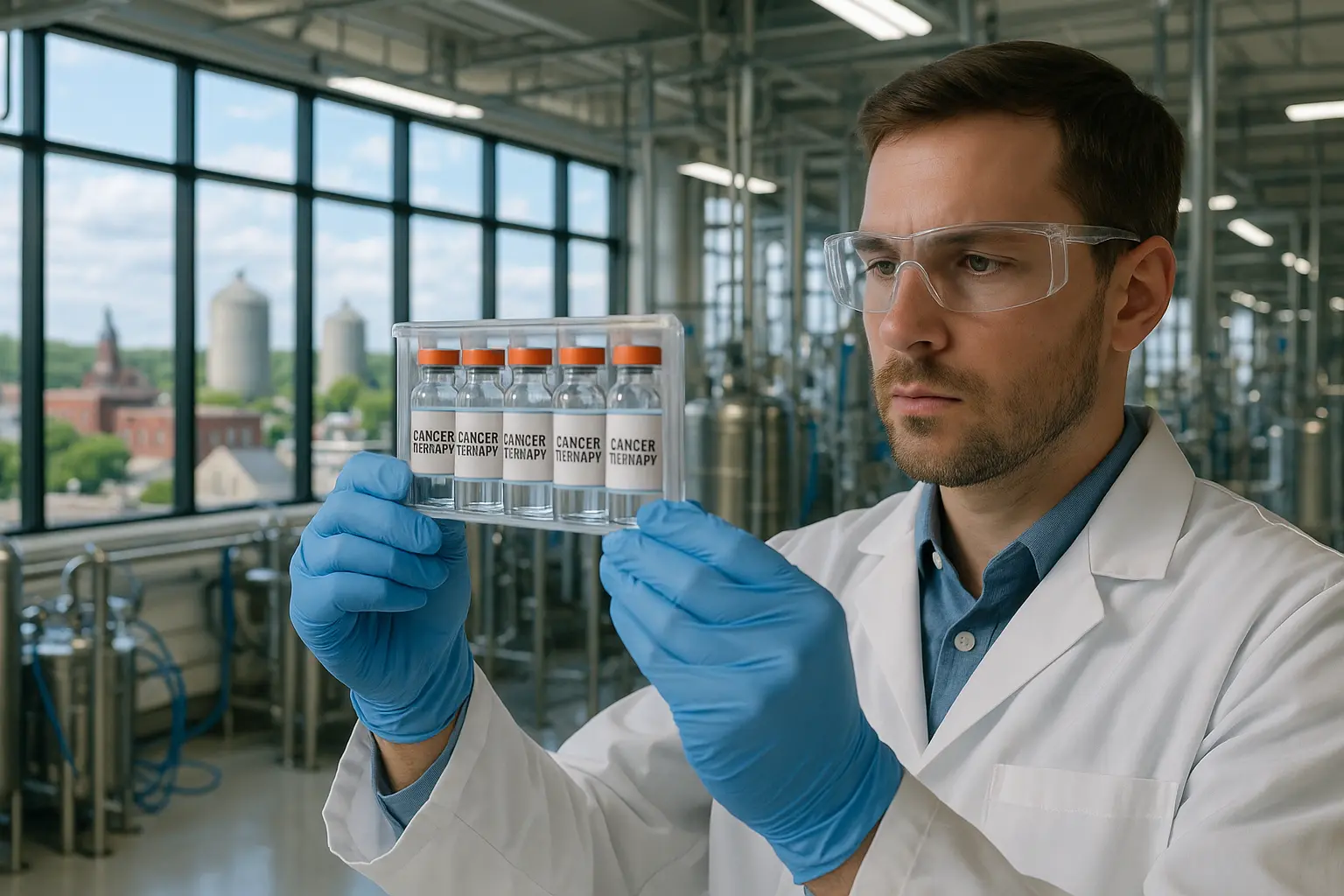
But what’s got the medical world and average Americans talking isn’t just the price tag-it’s what the science could mean for treatment breakthroughs. Kelonia’s claim to fame is KLN-1010, a one-shot, intravenous gene therapy that reprograms a patient’s own T-cells right inside their body to hunt down blood cancers like multiple myeloma. Traditional CAR-T (Chimeric Antigen Receptor T-cell) therapy-hailed as a miracle for beating certain cancers-has until now been available to only a sliver of patients at major academic hospitals. The reason? Sky-high cost, complex manufacturing, and weeks of preparation just to make one personalized treatment.
Eli Lilly’s head of oncology, Jacob Van Naarden, told the press that KLN-1010 is different: it’s ‘an intravenously delivered therapy, one time’ that ‘targets your body’s T-cells’-and best of all, ‘requires no preconditioning at all.’ No chains of chemo. No lengthy waits. No need for a Harvard lab-just a hospital IV, and in theory, anyone anywhere could get it.
Industry observers on X (formerly Twitter) christened the deal ‘the beginning of the end for old-school, wait-in-line medicine,’ while critics were quick to ask whether Big Pharma can be trusted with tools that promise so much but could shift costs and risks onto patients yet again.
No surprise, Lilly’s rivals are already feeling the heat. Gilead, Johnson & Johnson, and others have piled into cancer-drug innovation lately, but Kelonia’s approach could upend the entire paradigm. That’s not just medical hype-it’s about the iGPS platform. This technology skips the months of processing outside the body (ex vivo), instead using viral vectors to dose a patient and create anti-cancer T-cells on the spot. What used to take specialist labs five weeks, Kelonia claims to do in a single visit. If the early phase 1 trial data-which showed a 100% complete response in their tiny first cohort-holds up, this could turn the entire industry on its ear.
From Miracle Claims to Main Street: Will CAR-T’s Next Chapter Leave Patients Behind?
Let’s not sugarcoat it: the phrase ‘medical breakthrough’ gets tossed around a lot, especially when $7 billion is on the table. But here’s what’s real-only a small fraction of Americans fighting blood cancers have been able to access groundbreaking CAR-T treatments since their introduction. Chalk it up to months-long waiting lists, severe side effects, astronomical cost (often well into six figures), and a manufacturing process so bespoke it makes luxury cars look mass-produced.
Lilly clearly says its goal is to be “a player in hematology,” with plans to make CAR-T as common as diabetes shots-something ‘that can be used broadly’ instead of ‘relegated to academic medical centers.’ For patients and families watching their loved ones shuffle between hospital bureaucracies, this hits home. In public statements, the company argues that while ‘Autologous CAR-T therapies have meaningfully improved outcomes,’ ‘significant manufacturing, safety, and access barriers mean that only a fraction of eligible patients actually receive them,’ and that Kelonia’s new approach has ‘the potential to change that‘ with ‘rapid, durable responses’ in an ‘off-the-shelf format.’
The economic stakes are turbocharged, too. The global cancer drug market sits at $240 billion, and big pharma has watched several promising startups get snapped up in a pattern of smaller, surgical deals-most in the $1 to $10 billion sweet spot. As Marketwatch pointed out, three-quarters of pharma M&A deals this year have landed in that range. With fewer megadeals, pharma giants like Lilly opt to scoop up nimble biotechs before they can become threats or runaway market leaders. Is this good for patients desperately waiting for innovation-or just another Wall Street game in new packaging?
In the words of one patient advocate posting on Truth Social: ‘If this makes cancer care less about waiting for miracles and more about lining up for real hope at the local clinic, sign me up. But my optimism is cautious. These giants have let us down before.’
It’s not just multiple myeloma this could touch. Kelonia, Lilly says, is building a broader pipeline of genetic medicines over a range of diseases-from solid tumors to genetic disorders-using the same inside-the-body engineering. While details are scarce, this raises the stakes: if Kelonia’s platform delivers, it could set off a domino effect across all sorts of incurable conditions. Even so, the phrase ‘milestone payments’ in this deal should signal to Americans that the science isn’t in the bag yet.
Risk, Reward, and the New Health Fight: What’s Next for Conservative Americans?
Any time legacy businesses promise to ‘transform’ care, folks on Main Street-and many on the Right-have fair reason to be wary. Lilly’s $7 billion check doesn’t erase the fact that Americans remain pawns in a pharmaceutical chess game marked by high out-of-pocket costs, insurance denial battles, and Middle America being shut out of the latest treatments. While this acquisition will be reviewed by the Department of Health, it’s just the beginning of a bigger debate about who controls medical progress in 2026-and who pays for it.
Financial signals paint an uneasy picture: Eli Lilly’s current P/E ratio stands at 40.39x according to GuruFocus-high for healthcare and a sign investors expect massive growth ahead. Yet 40 insider sell transactions and $3.75 billion in stock sales over the past year show even Lilly’s leadership isn’t blind to risk. The fact that LLY is trading nearly 28% below its calculated intrinsic value suggests Wall Street may believe in the science, but not in unchecked pharma profits if regulatory and access hurdles don’t clear soon.
As political commentator Ryan McLeod wrote on Patriots Voice, ‘Americans have learned the hard way what happens when government and drug-makers get too cozy: delays, red tape, and winners picked behind closed doors. Trump’s second term has seen a renewed push to put patients first, but the watchdogs will need to stay awake so Big Pharma’s windfall doesn’t come off the backs of working families.’
Looking forward, the 2026 midterms will surely see healthcare costs and pharmaceutical access as hot-button issues for the GOP base. President Trump’s administration has signaled a tough stance on runaway drug prices and foreign supply chain dependence, even pressing for more competition, speedy drug approvals, and patriotic innovation that serves American patients before Wall Street stakeholders.
Can Eli Lilly deliver-really deliver-on Kelonia’s promise? Or will this simply become another blockbuster deal where patients foot the bill, while shareholders and executives cash in? Time (and pressure from conservative voices) will tell. But one thing is certain: as the next generation of cancer therapy inches closer to Main Street, those keeping American medicine accountable will be watching more closely than ever.